Words: Skin & Ink Editorial Staff
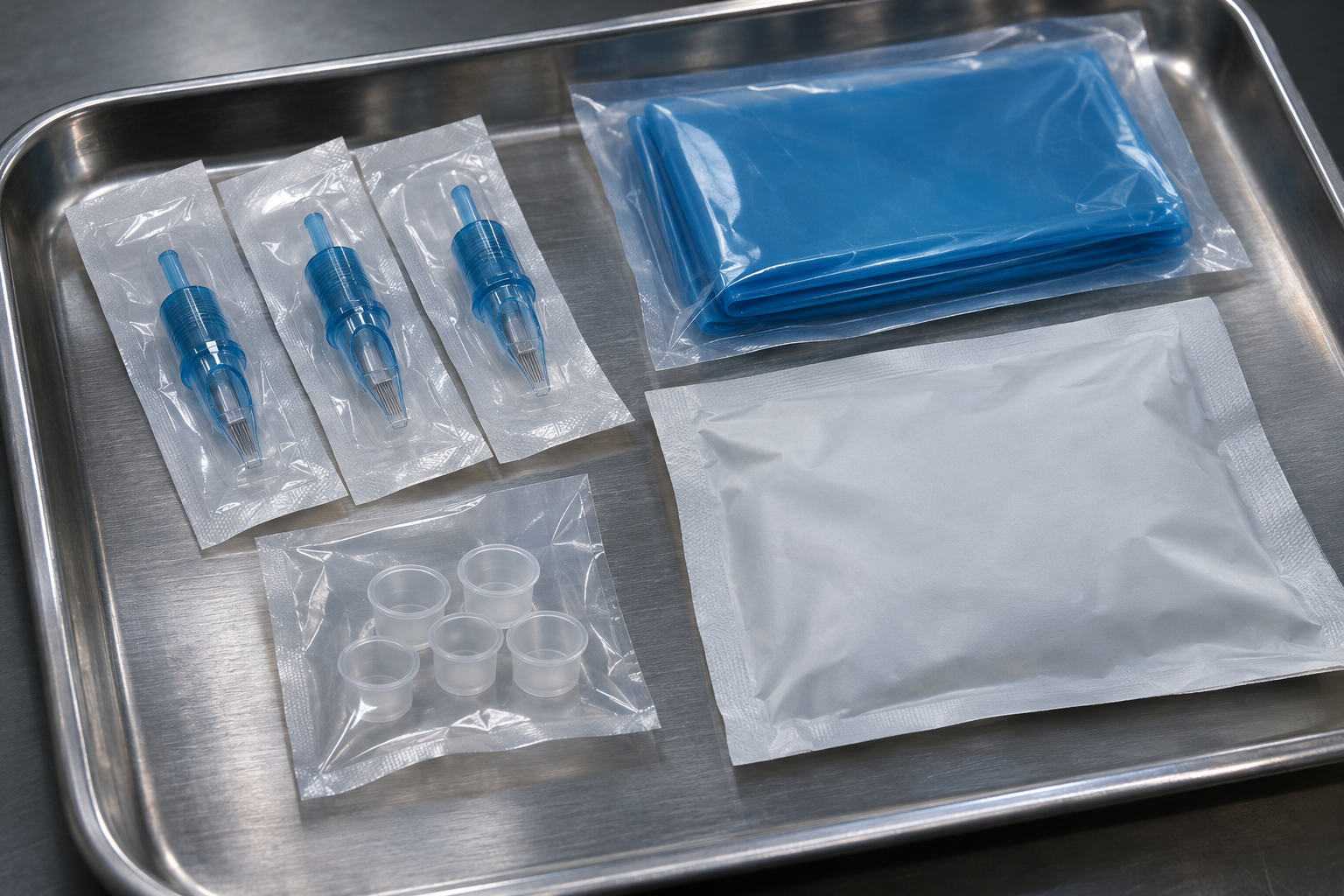
Opening a sealed package in front of a client is a small action with a clear message: this item has not already been used on somebody else. It also makes part of the safety process visible. That visibility matters in tattooing, where a client cannot personally inspect every step behind the appointment.
Single-use equipment deserves attention without becoming a magic word. A disposable item still needs appropriate storage, handling, and disposal. The studio still needs a system for everything that surrounds it. Safety depends on the sequence of work, not on one impressive-looking packet.
Understand the claim
“Single-use” tells you that an item is intended to be used once. It does not establish every other property of that item. “Sterile” makes a different claim. Labels, intact packaging, and the manufacturer’s directions matter, and damaged or questionable supplies should not be treated as acceptable simply because they are new.
As one concrete public-health example, Toronto’s tattoo guidance calls for new, sterile, single-use needles, opened where the client can see, and appropriate sharps disposal after use. Its guidance also addresses hand hygiene, equipment, and other parts of the procedure. Local rules should be checked where the appointment actually takes place.
Watch the whole workflow
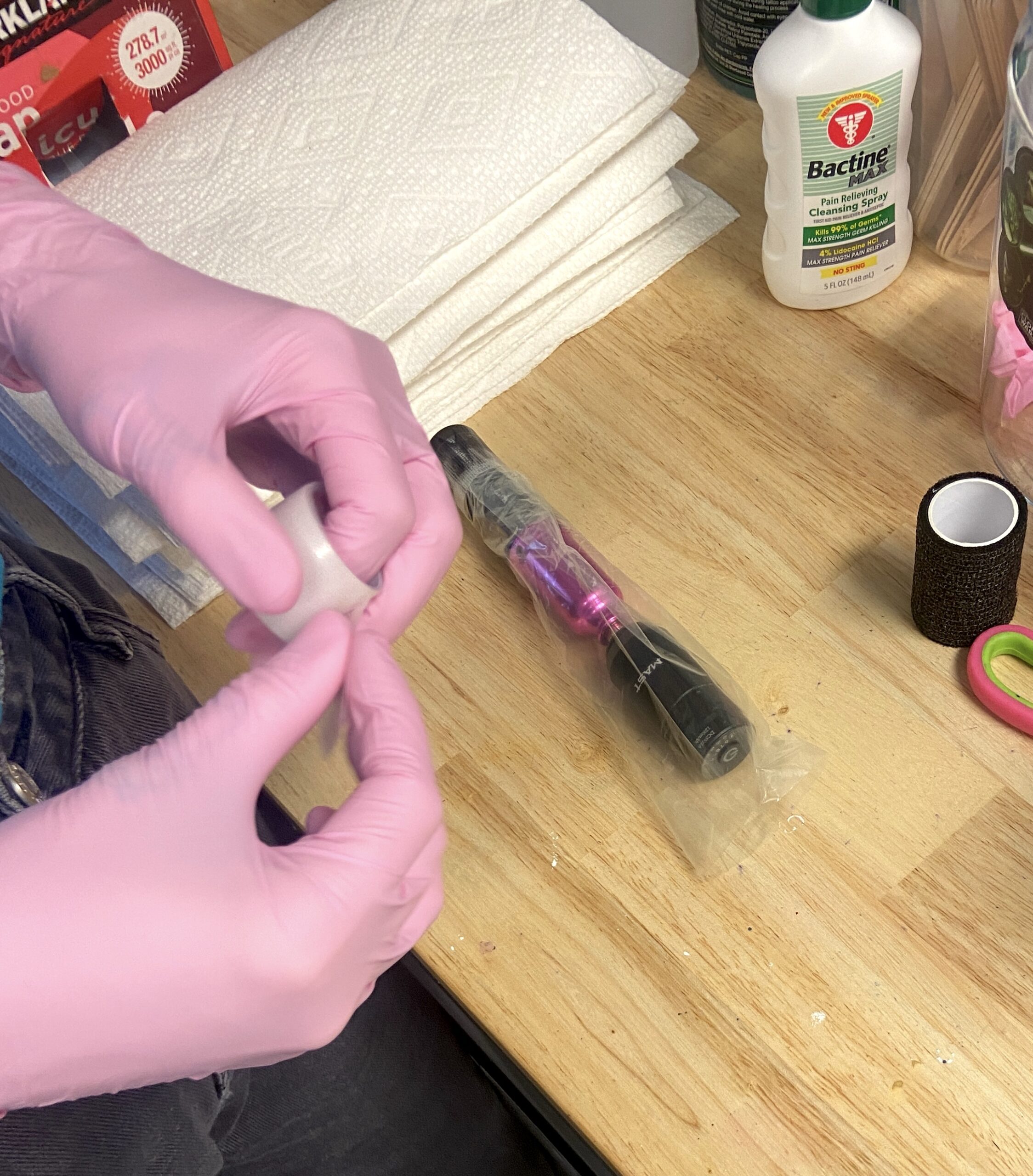
For a client, a reasonable question is how the artist prevents used equipment and contaminated surfaces from coming into contact with clean supplies. You do not need to deliver an examination or pretend to be an inspector. A professional should be able to explain the process clearly and respond to a concern without making you feel foolish.
A studio should also be able to distinguish what is discarded from what is reusable. Different equipment arrangements require different processes. This article is not a substitute for professional infection-control training or the requirements of a health authority. Its purpose is to encourage a complete conversation rather than a reassuring shortcut.
Build the cost into the appointment
Supplies, cleaning, appropriate waste handling, and time between clients belong in the cost of running a studio. Treating them as optional extras creates the wrong expectation. A client should not have to buy a premium tier to receive the studio’s required safety practices.
Purchasing decisions need the same discipline. A cheaper item is not automatically unsafe, and a costly one is not automatically trustworthy. The important questions concern suitability, a traceable supplier, clear documentation, and correct use. An unexplained bargain from an uncertain source deserves scrutiny before it reaches a workstation.
Take waste seriously without improvising
Disposable supplies also create waste. That is a legitimate concern, but environmental ambition must not become an excuse to reuse a single-use item or disregard disposal rules. Studios can examine packaging, ordering, and waste separation within applicable requirements, seeking qualified guidance where needed.
The cultural change worth encouraging is openness. Clients should be able to ask what happens to equipment, and artists should be able to explain the answer in ordinary language. A well-run station does not rely on secrecy to appear professional.
The strongest case for single-use equipment rests on its place in a consistent system. A packet opens, a procedure is followed, an item is disposed of correctly, and the next client starts with a fresh setup. The routine is the point.
Sources