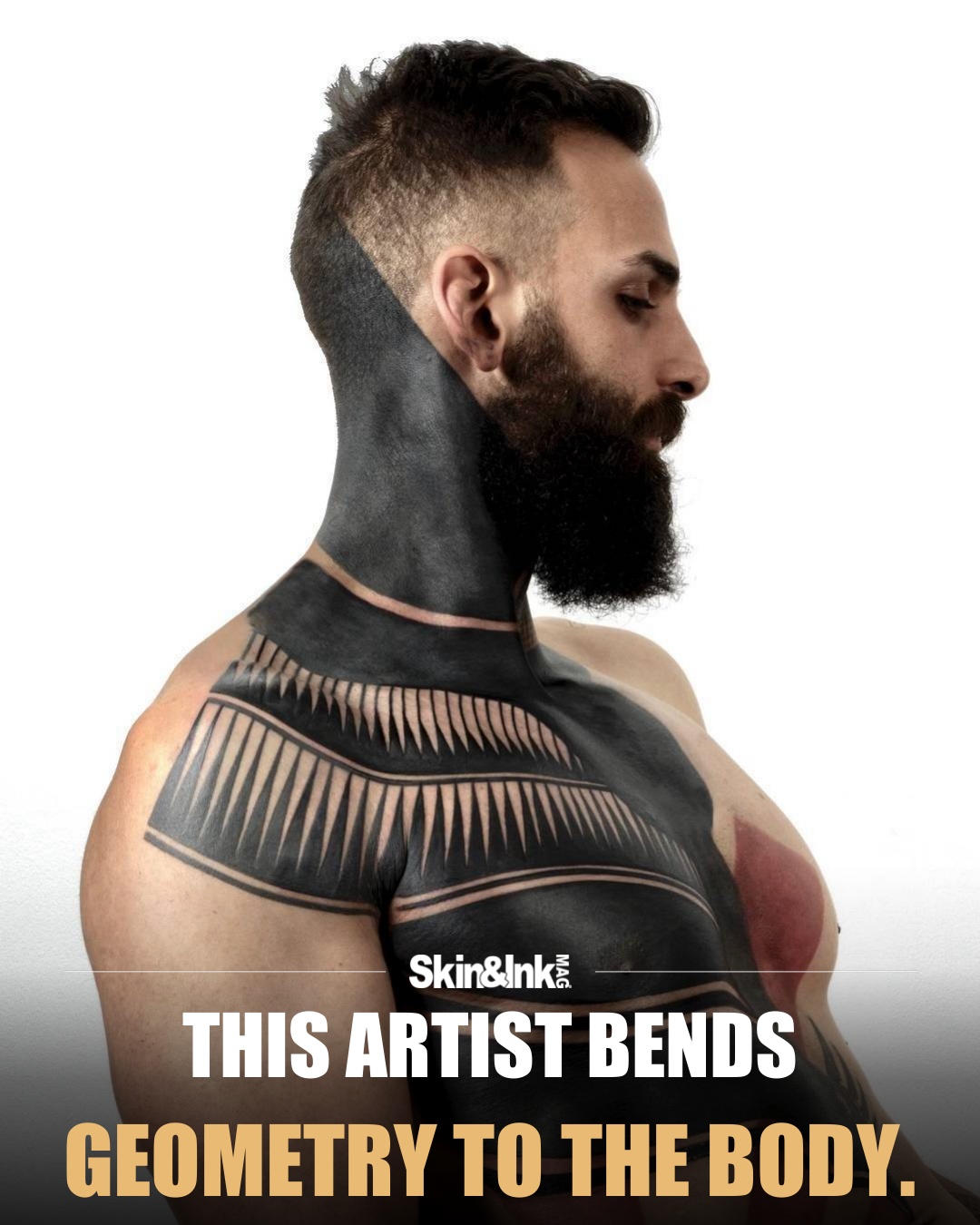
Words: Skin & Ink Editorial Staff
A tattooed person can appear in a promotional photograph, an archive, and a museum exhibition without ever controlling the caption. The setting changes, but the question remains: who is telling the story, and what has the subject been allowed to say?
The South Street Seaport Museum's account of recent acquisitions includes material relating to tattooed performers and tattoo artists. Such objects can preserve evidence of a working life. They also need interpretation. A publicity image was made to attract attention, not necessarily to provide an accurate biography. Treating its sales pitch as a factual account repeats the promoter's priorities long after the performance has ended.
Read the label as carefully as the image
An old photograph may be compelling precisely because little is known about it. Resist filling that silence with a familiar tale of danger, exotic origins, or rebellion. Establish what the object actually tells us: a name, a location, a photographer, a date, a printed claim. Keep those facts separate from later interpretation.
Museum display offers an opportunity to make that distinction visible. A caption can explain that an image was promotional, that an identity is uncertain, or that a story circulated without reliable evidence. Uncertainty does not weaken an exhibition. It gives the visitor an honest account of how historical knowledge is assembled.
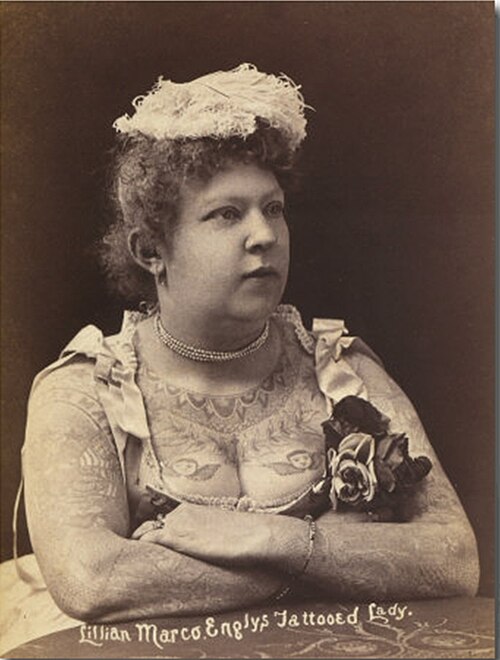
The same discipline should apply to a tattoo's maker. Credit the artist when known, distinguish them from the photographer, and avoid assuming that the most famous person in the record did every part of the work. A performance photograph may document several people's labor while naming only the performer or promoter.
A new room does not settle everything
The University of Hartford's Human Marks exhibition in 2025 presented artists working across tattooing and other studio media. That is a different curatorial proposition from displaying a tattooed person as a curiosity. It invites viewers to consider artistic choices, materials, and ideas rather than treating the body as the entire attraction.
Yet a gallery still makes choices about what viewers see. A photograph flattens a tattoo and fixes one moment in its life. A framed drawing may have been designed for a client, a wall, or another purpose entirely. Explain that context instead of allowing the frame to erase it. The object becomes richer when its intended use is visible.
Let people remain participants
For contemporary subjects, consent should reach beyond obtaining a photograph. Discuss the caption, the audience, the duration of display, and any identifying details. A wearer may agree to show the artwork without agreeing to have a private experience interpreted for strangers.
Good curation does not need to claim that the museum finally made tattooing respectable. Artists and collectors were making consequential work before an institution chose to exhibit it. The institution's contribution is care: preserving evidence, checking claims, crediting makers, and sharing authority. The most revealing display may be the one that admits how much a person still holds outside the frame.
Sources
South Street Seaport Museum, Deepening the Story
University of Hartford, Human Marks: Tattooing in Contemporary Art