Words: Skin & Ink Editorial Staff
An image generator can produce a polished-looking tattoo concept before a client has explained why they want it. That speed can be useful for exploring possibilities. It can also disguise how many decisions remain: whether the image fits a body, whether its details make visual sense, and what the artist is being asked to claim as their own work.
Tattooing still requires someone to take responsibility for those decisions. A compelling picture is only a proposal. The tattooer and collector need to understand how it was made and what must change before it becomes a design intended for skin.
Separate the stages of authorship
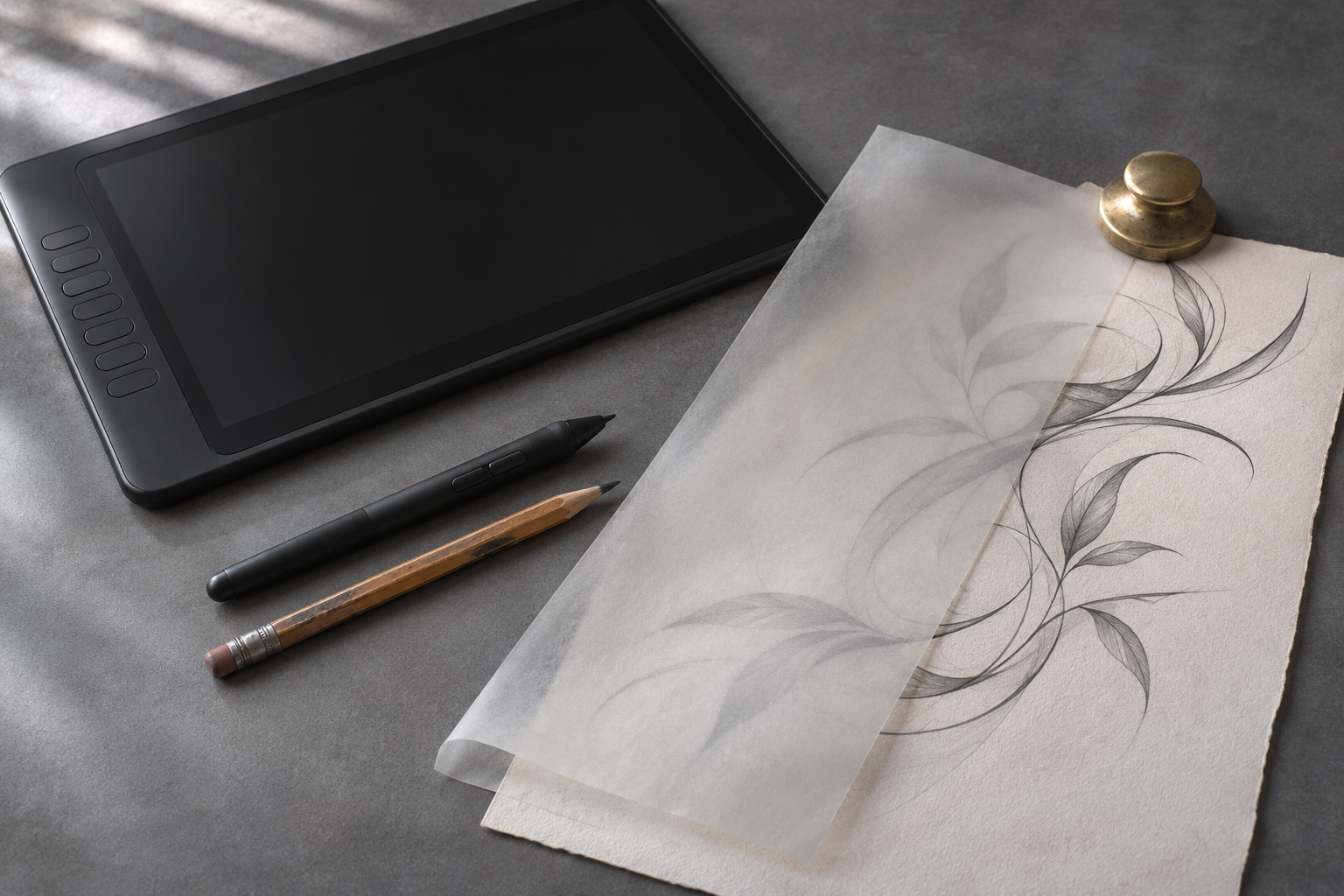
A useful conversation distinguishes reference generation, composition, drawing, and tattoo execution. An artist may use a generated image to explore a mood, then build a substantially different drawing. Another may trace an output closely. Those processes should not be described as identical simply because both end with a tattoo machine in someone’s hand.
Keep records of meaningful drawing decisions. They help explain the process to a client and make revisions easier. A saved output by itself does not show how the artist resolved anatomy, spacing, or conflicting details. Nor should a smooth rendering discourage scrutiny. Inspect hands, lettering, repeated ornaments, and overlapping forms as carefully as any other reference.

The legal discussion needs equal precision. In its 2025 copyrightability report announcement, the U.S. Copyright Office said protection depends on sufficient human authorship; prompting alone does not supply it. Human creative arrangements or modifications can matter. That principle does not determine the legal status of every tattoo or settle questions about training data.
Ask before uploading someone else’s work
A client’s private photograph, a custom drawing, and a culturally specific motif raise different concerns. Before putting material into a service, consider whether the person who supplied it agreed to that use and what the service’s current terms permit. A studio should not assume that permission to discuss a reference includes permission to upload it elsewhere.
Avoid selling a generated imitation as an authentic design by a named artist. More broadly, an artist can choose to develop their own visual language instead of using another living maker’s name as the main instruction. That is an ethical recommendation about credit and professional respect, not a claim that every stylistic resemblance is unlawful.
Give the client an honest choice
A clear studio policy can explain whether generative tools enter the design process and at which stage. Some collectors will welcome them; others will prefer an entirely hand-developed approach. Discussing that preference before accepting the project prevents a dispute after the client believes they have commissioned something different.
Generated designs should be shown as concepts, not passed off as photographs of completed tattoos. A portfolio needs to distinguish what has actually been tattooed from what exists only as an illustration. That distinction protects clients and artists alike.
The practical standard is simple enough to apply without settling every debate about technology: understand the references, disclose the process honestly, make deliberate design decisions, and take responsibility for the finished work. Speed is valuable only when it leaves those obligations intact.
Sources
U.S. Copyright Office: 2025 copyrightability report announcement