Words: Skin & Ink Editorial Staff
A full calendar looks like success until the artist carrying it cannot comfortably get through the week. Tattooing asks for precision, concentration, and sustained physical effort. A career plan that counts only clients and income leaves out the person whose body makes both possible.
Research gives a reason to take that concern seriously. A study archived by CDC examined discomfort and working postures among tattoo artists and identified substantial musculoskeletal demands. It does not predict any individual's future. It does challenge the idea that pain is merely a private weakness an artist should ignore.
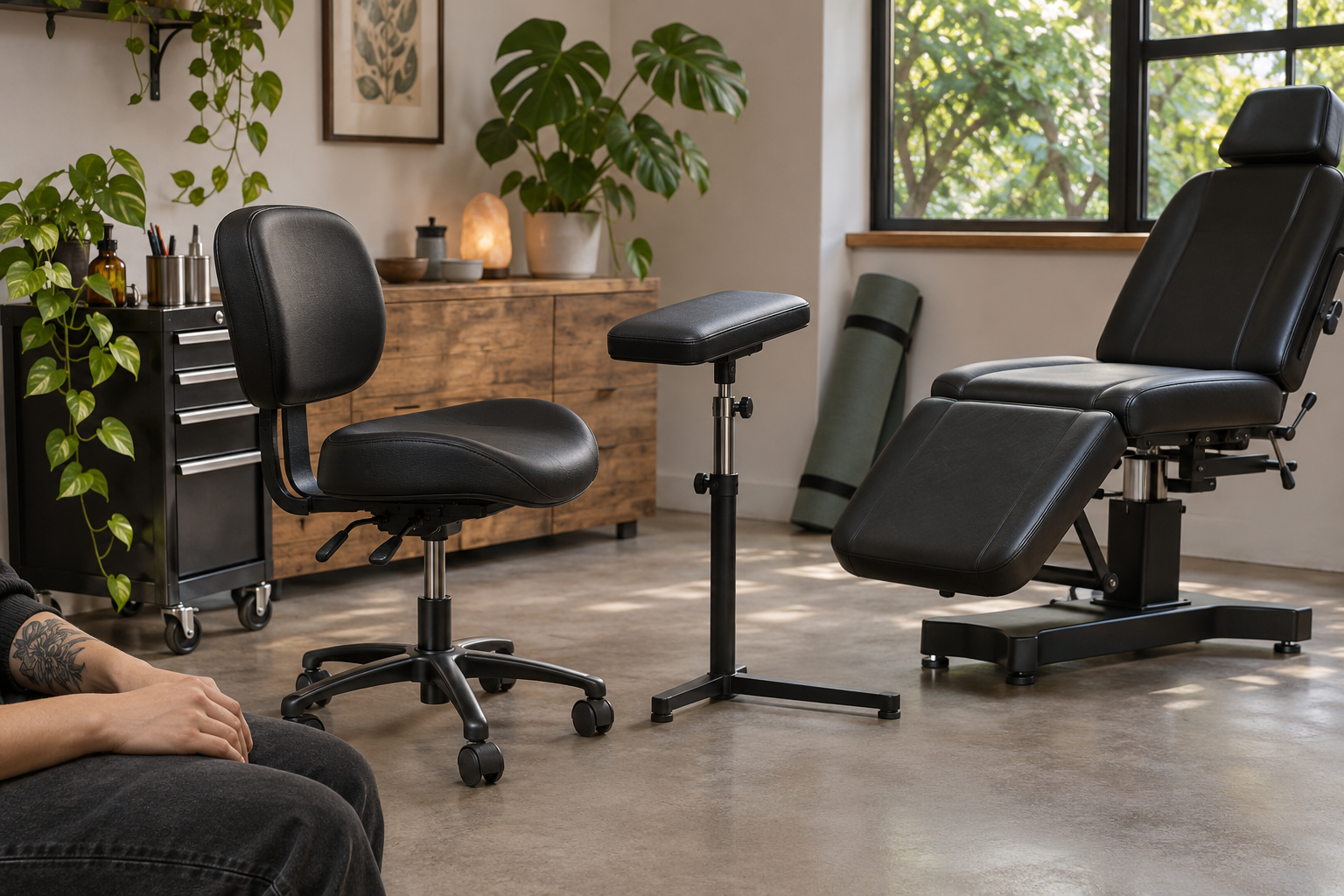
Build the station around the work
The arrangement of a client, chair, light, and equipment can determine how much reaching or bending a session requires. Review the whole setup rather than assuming an expensive chair will solve every problem. Can the client be repositioned? Is the light forcing the artist to lean? Does a frequently used item sit just beyond a comfortable reach?
A qualified occupational-health or ergonomics professional can help evaluate persistent problems. New pain, numbness, or loss of function deserves medical assessment rather than an internet diagnosis or another improvised workaround. No single posture, stretch, grip, or machine is a guaranteed solution for every artist.
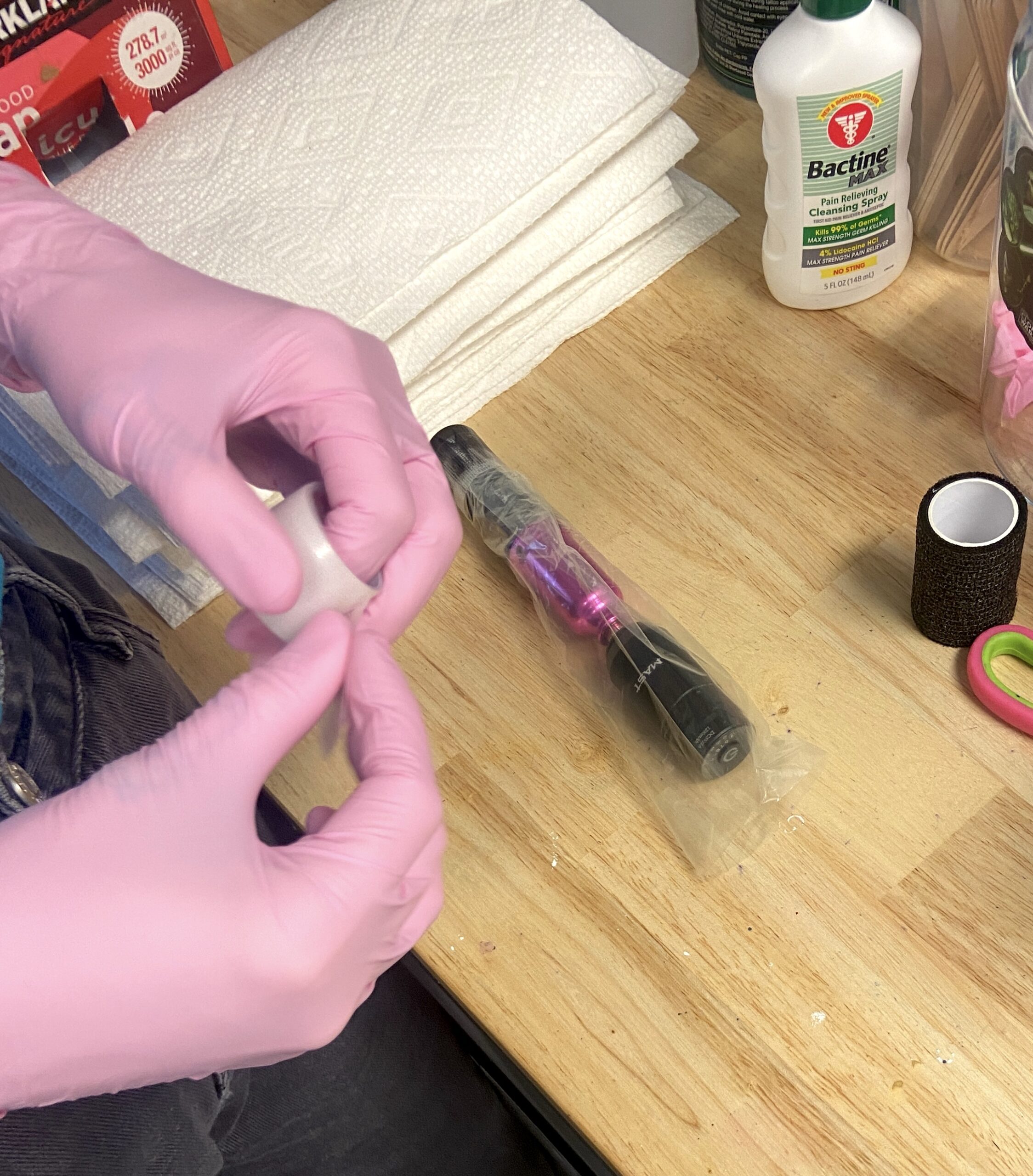
Breaks need space in the estimate. If the appointment can only succeed when neither person moves for hours, the estimate is missing something. A discussion before the session makes pauses part of the plan instead of a disruption the artist or client feels guilty requesting.
Protect the calendar from ambition
It is tempting to price a month around the maximum number of sessions the artist could theoretically complete. A more useful budget also allows for cancellations, administration, illness, and time away. The difference between those two calendars can determine whether a short absence becomes a financial crisis.
This is a planning exercise, not a promise that every artist can immediately afford fewer hours. Start by identifying the actual costs and pressure points. Professional financial advice may help clarify insurance, savings, taxes, and retirement options suited to the person's location and circumstances. Products and protections vary, so generic advice should not be mistaken for a personal plan.
Leave room to change
A sustainable career can look different at different stages. Someone may reduce large projects, teach within their competence, make prints, or take on studio administration. Each option has its own demands and uncertain income. Building a second activity slowly offers more information than assuming it will replace tattooing whenever needed.
The central measure is whether the working arrangement remains workable for the human being inside it. High demand is valuable, but it cannot be enjoyed indefinitely if every booking consumes the recovery needed for the next one. Planning for comfort, absence, and change treats a long career as something worth designing, rather than something to survive by force.
Sources