Words: Skin & Ink Editorial Staff
An artist can finish a careful tattoo, publish a photograph, and receive almost no visible response. Another post can attract thousands of views without producing one suitable booking. Those possibilities expose a basic problem with treating a social feed as the studio’s business dashboard: attention and appointments answer different questions.
Social platforms can introduce artists to clients who would never walk past their door. That is a real opportunity. The risk is allowing distribution on someone else’s platform to become the only route by which a client can find the work, understand the process, and make contact.
Measure the path to an appointment
Meta describes its Facebook and Instagram ranking systems in terms of signals and predictions about content people may value. Those systems are not professional assessments of tattoo skill. A strong response to a post should not be mistaken for independent verification of an artist’s quality.
For a studio, more useful questions begin after discovery. Did a visitor reach the portfolio? Could they tell where the artist works? Did they find clear booking instructions? Did the inquiries match the work the artist wants to do? A modest audience with that information can be more commercially useful than a much larger audience without it.
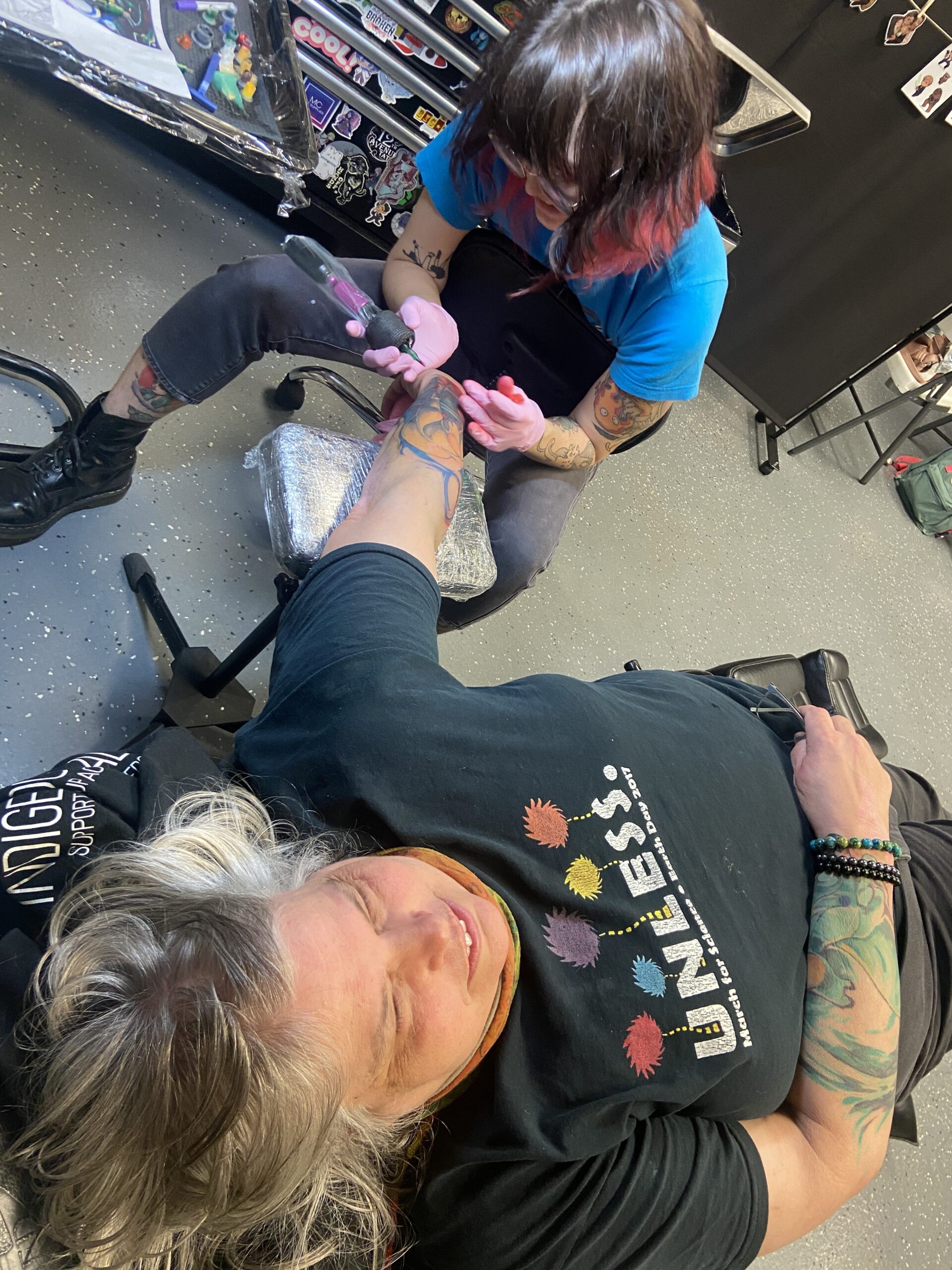
Keep a simple record of where booked clients heard about the studio, if they are willing to say. Compare actual appointments rather than guessing from likes. Avoid collecting unnecessary personal information. The purpose is to understand whether a channel helps people reach the right artist, not to build an intrusive profile of every visitor.
Make the portfolio independently useful
A basic website can hold healed examples, artist biographies, booking steps, studio policies, and contact information in a stable arrangement. It need not imitate a social app. Its advantage is that a visitor can find a particular answer without scrolling through months of unrelated posts.
Keep copies of photographs, captions, permission records, and important business information outside the platform. Maintain a contact route clients can use if an account becomes unavailable. An email list may help where people have actively agreed to receive it, but an existing client’s address is not automatically permission to send promotions.
Give content a workable limit
An artist cannot spend the same hour drawing, tattooing, and editing a promotional video. Set a realistic amount of time for publishing and evaluate what it achieves. A repeatable routine built around work already being documented may be more sustainable than constantly inventing performances for the camera.
Collaboration can reduce the burden. A studio may share photography duties or keep a common schedule for announcements, while preserving each artist’s identity and getting client permission. The system should support the work rather than turn every appointment into a production set.
No marketing arrangement removes uncertainty. A stronger one gives a studio several ways to be found and a clear way to be booked. Let the feed introduce the art. Build enough of the business elsewhere that a quiet week online does not become a verdict on whether the artist deserves to survive.
Sources
Meta: How AI Influences What You See on Facebook and Instagram