
Words: Skin & Ink Editorial Staff
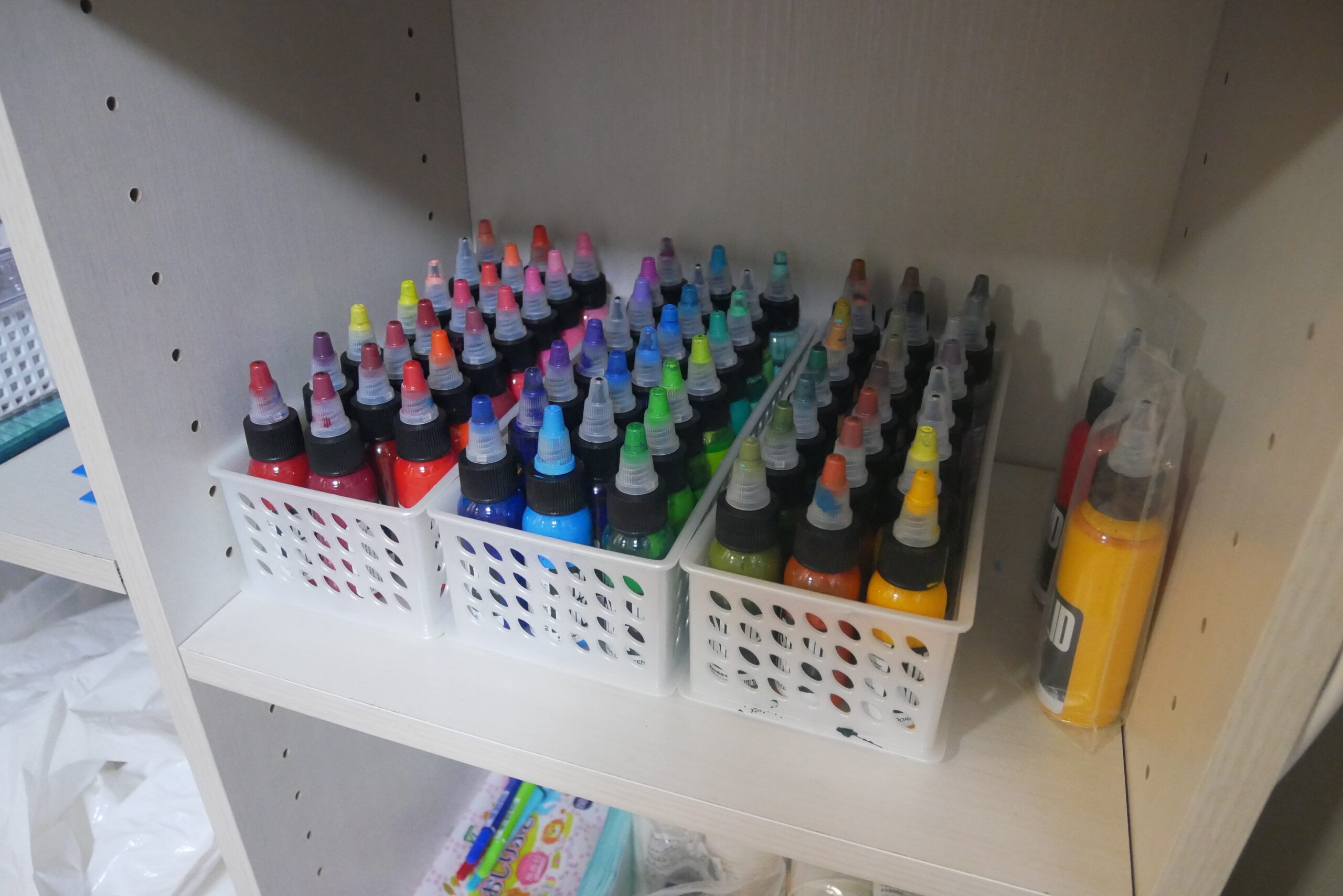
A bottle of tattoo ink carries several kinds of information at once: a color name, a brand identity, a batch reference, and sometimes a collection of reassuring claims. Those details should not be treated as interchangeable. A shade can look excellent in a photograph while leaving important questions about the product unanswered.
Ink includes color-producing material and a liquid formulation that allows it to be used. The exact composition is a product-specific question. A general article cannot identify the contents of every black, red, or blue ink, and a dramatic description of one ingredient should not be substituted for an examination of the actual formulation.
Start with the specific bottle
An artist should be able to identify the manufacturer and product used, rather than relying on a nickname for a color. Batch information matters when a safety notice concerns a particular production run. Keep product documentation connected to purchasing and studio records so a question can be answered later.
Labels and manufacturer documents are a starting point, not an independent safety test. If a claim is unclear, ask what it means and what supports it. Does the statement describe ingredients, manufacturing, packaging, or a particular test? A claim about one of those things does not automatically establish the others.
Separate reassuring language from evidence
“Vegan,” “organic,” and “sterile” describe different questions. None should be used as a general synonym for harmless. The point is not to dismiss those terms; it is to require a specific, supportable meaning before allowing them to carry more reassurance than they can justify.
The FDA has reported microbial contamination in sealed tattoo ink bottles. That finding makes an important distinction: an unopened container is not, by itself, proof that a product is free of contamination. Manufacturing and handling deserve attention alongside the artist’s work at the station.
Understand what regulation does and does not say
In the United States, the FDA treats tattoo inks as cosmetics and their pigments as color additives. Its fact sheet states that no color additive is approved for injection into skin. That is different from an individual studio’s authorization to operate. Buyers should be skeptical of a vague “FDA-approved ink” claim and check the exact basis for it.
Rules and product restrictions differ across jurisdictions. A label associated with one market should not be assumed to satisfy another market’s requirements. Artists need current information from the relevant authorities, and clients should not be expected to resolve a regulatory question from packaging alone.
Keep questions proportionate
A client can reasonably ask what ink is being used and whether the artist keeps product records. The answer should be understandable without becoming a chemistry lecture. If there is a suspected reaction, preserve the product and appointment information for a qualified healthcare professional rather than attempting a diagnosis through brand comparisons online.
Better ink literacy begins with precise questions and traceable answers. It leaves room for uncertainty without turning every unfamiliar ingredient into a threat. A trustworthy bottle is supported by more than attractive color: it belongs to a documented process that can be examined when something needs explaining.
Sources