Words: Skin & Ink Editorial Staff
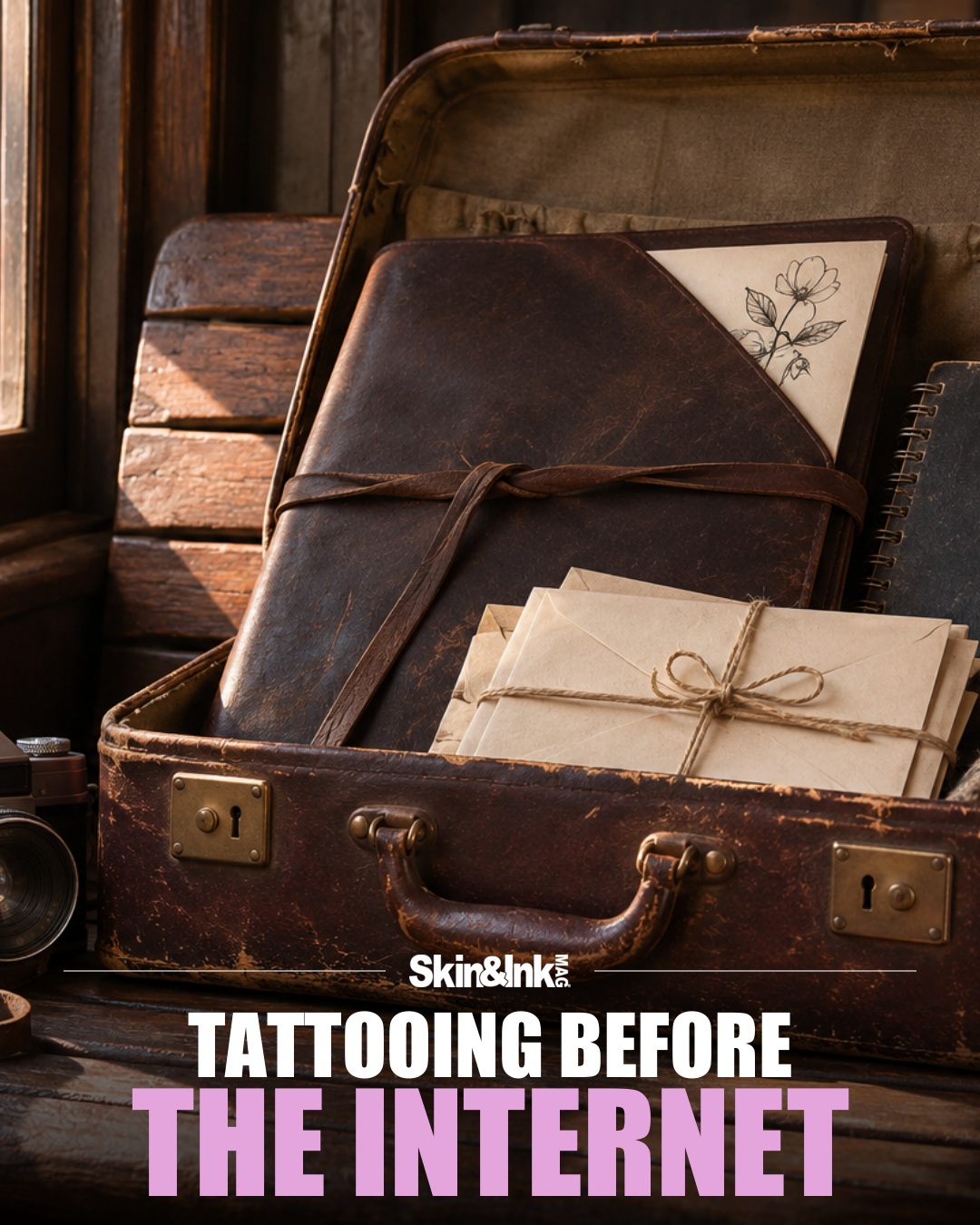
It is easy to imagine the pre-internet tattoo shop as an isolated room, cut off from outside influence until a traveling artist opened the door. Surviving records suggest a more useful question: what routes carried designs, equipment, and reputations between people before a searchable feed made those routes seem effortless?
A printed flash sheet, a supplier’s address, a dated photograph, or a letter can offer part of the answer. Each is evidence of a connection. Read together, these objects can reveal a working network without requiring us to turn the past into either a golden age or a story of universal secrecy.
Follow a documented object
The Henry Ford holds a tattoo flash sheet dated circa 1925 associated with Percy Waters. Its collection record places his Detroit supply business between 1918 and 1939 and describes his earlier work in carnivals and New York’s Bowery. The object connects a design with places and a commercial practice rather than leaving it as an anonymous vintage image.
The record is also careful about attribution: it says the original artwork was possibly created by Waters. That small qualification matters. A supplier, seller, owner, and designer need not be the same person. Removing uncertainty from a caption may produce a cleaner story while making the history less accurate.
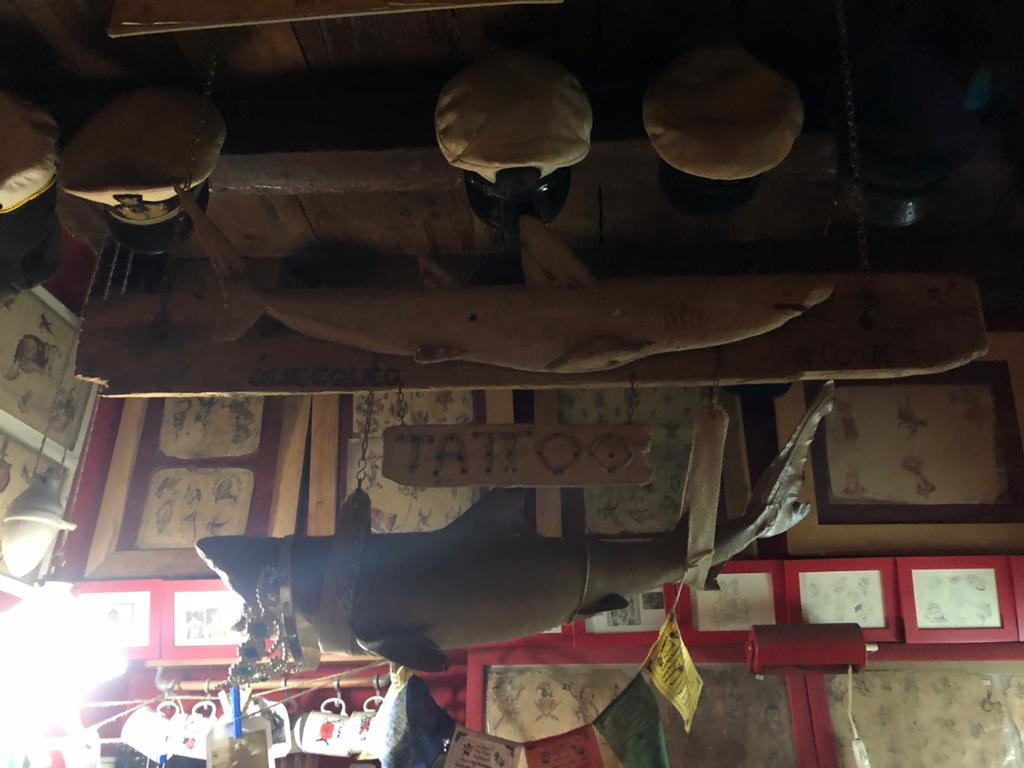
A similar approach can be used with studio ephemera. An address on a card can be checked against other dated records. A photograph can be compared with an identified shop interior. An advertisement shows what a business chose to claim at that time; it does not automatically prove every claim in the advertisement.
Learning left uneven traces
A surviving drawing may show what circulated without explaining how someone learned to apply it. A remembered apprenticeship can describe one relationship without establishing a universal system. Historians and collectors should resist filling those gaps with a single romantic account of how everyone earned a place in the trade.
Ask what evidence would change the story. A letter might complicate an artist’s later recollection. A collector’s dated tattoo photograph might establish that a design appeared earlier than expected. A person who answered the telephone or managed the books might remember the studio’s daily operation differently from its best-known tattooer.
Recording those perspectives does not diminish the craft. It makes the account more complete. Technical skill, business arrangements, friendship, rivalry, travel, and family labor can all be part of the same working life.
Bring the method into the present
The useful lesson from older networks is not that communication was purer when it was slower. It is that every connection needs enough context to remain understandable. A shared image today still needs names, dates, and permission. An online reputation still deserves to be compared with the actual work and the experiences of people involved.
Before reposting a piece of tattoo history, follow it back as far as the available evidence allows. Keep the original caption and mark uncertain details. The past becomes more interesting when we can see how its people were connected, and more trustworthy when we admit where the connecting lines are still missing.
Sources