Kenji Alucky’s geometric tattoos begin with simple ingredients: dots, lines and areas of black. The complexity comes from how those ingredients relate. A repeated shape changes size, a dark passage gives way to a lighter one, and an apparently flat pattern starts to suggest depth. The work doesn’t need a portrait or recognizable creature to give the eye something to follow.
The selected leg piece is a clear example. Its pattern expands and contracts as it travels along the limb. Repetition establishes continuity, but variations in scale prevent the surface from feeling like a uniform sheet wrapped around skin. The larger shapes provide a first reading. Smaller marks create another layer of activity inside them.
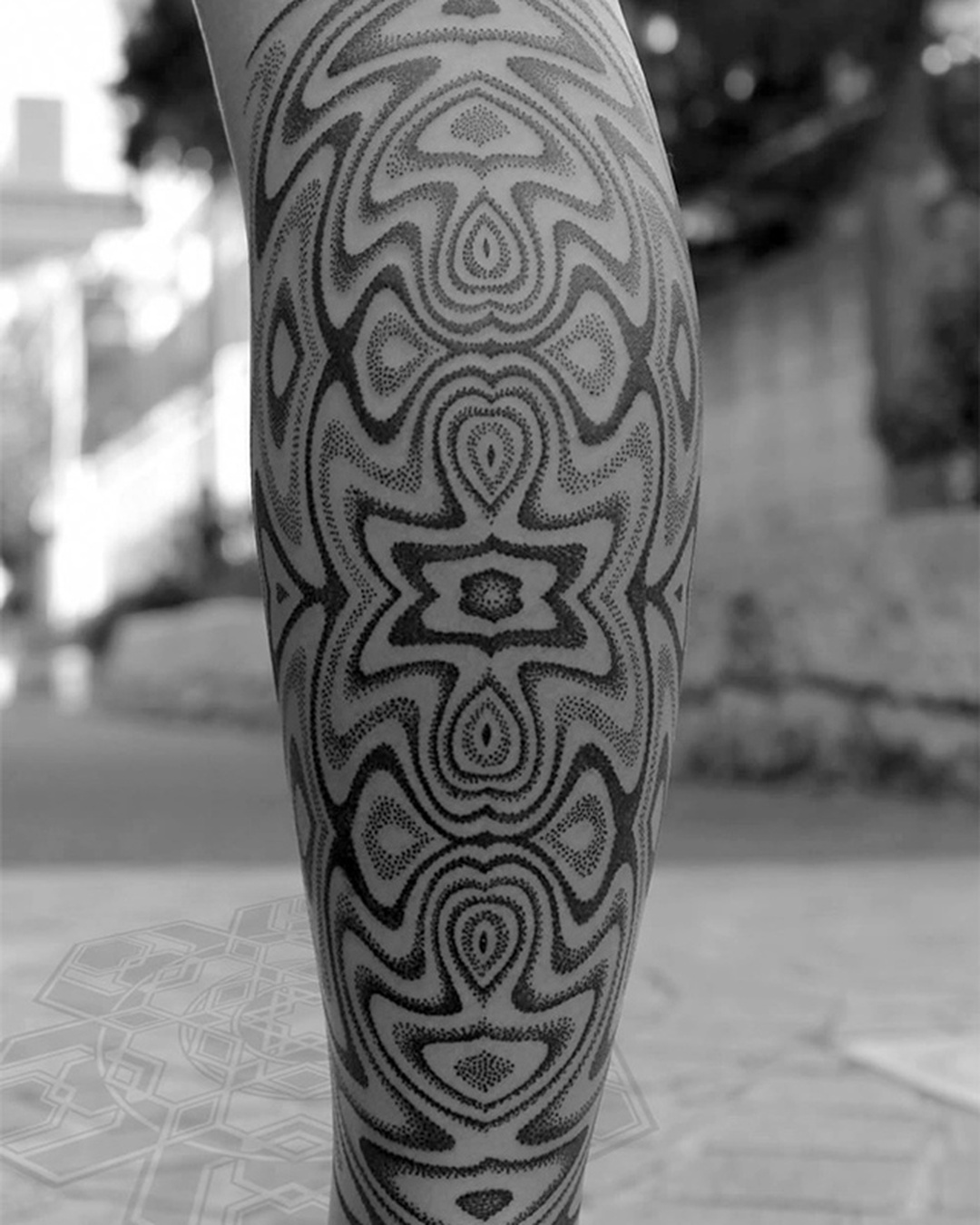
That difference between distance and proximity is central to the appeal. From farther away, the tattoo reads as a connected graphic form. Move closer and the dots and narrow lines become visible as separate decisions. The two readings support each other. Detail adds texture without needing to replace the overall structure.
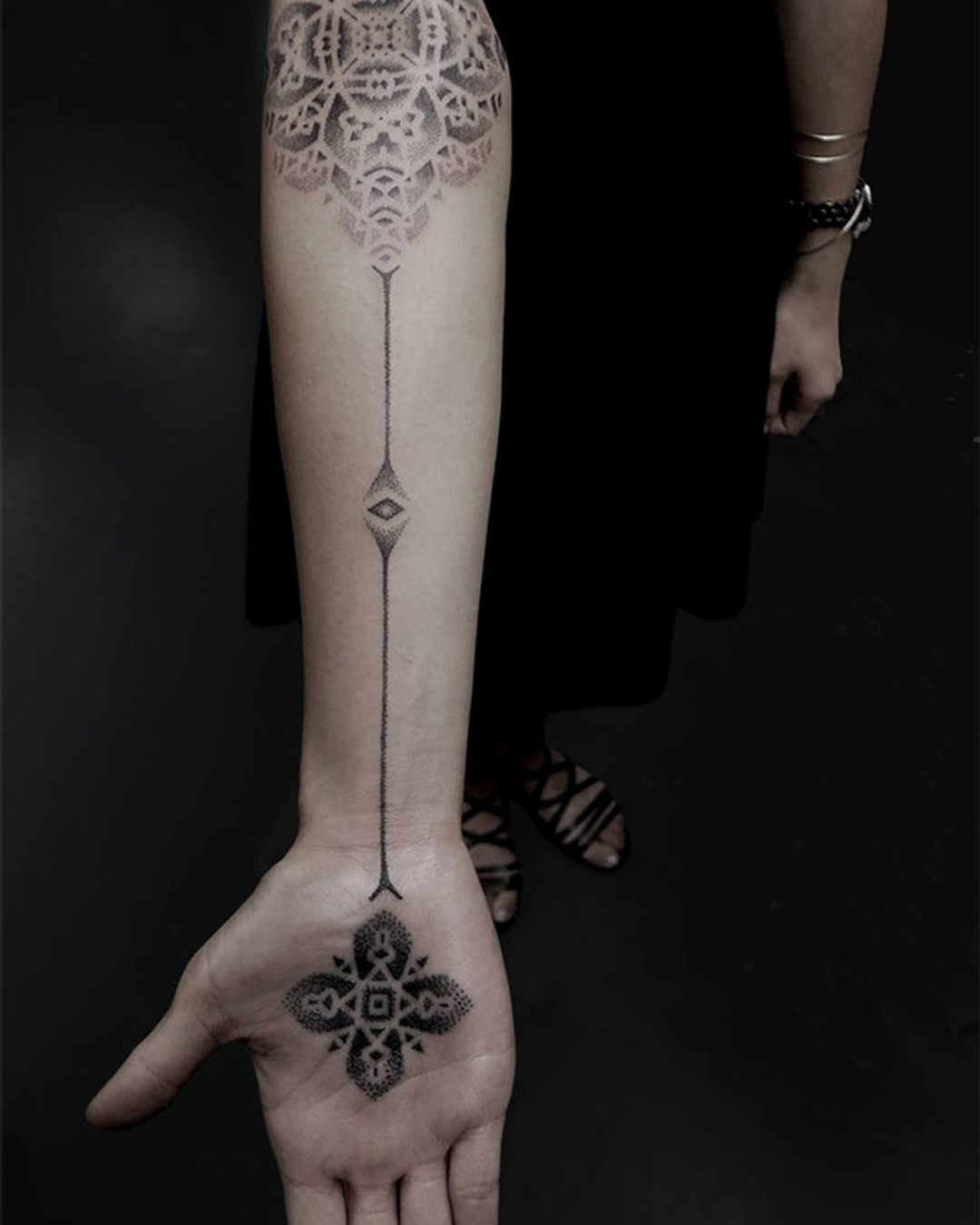
An arm composition takes a more open approach. Ornamental shapes are connected through a long, narrow element, leaving substantial areas of skin exposed. The arrangement directs the eye along the arm rather than filling every available space. Its clarity depends partly on restraint. The uninked areas allow the individual forms to remain distinct.
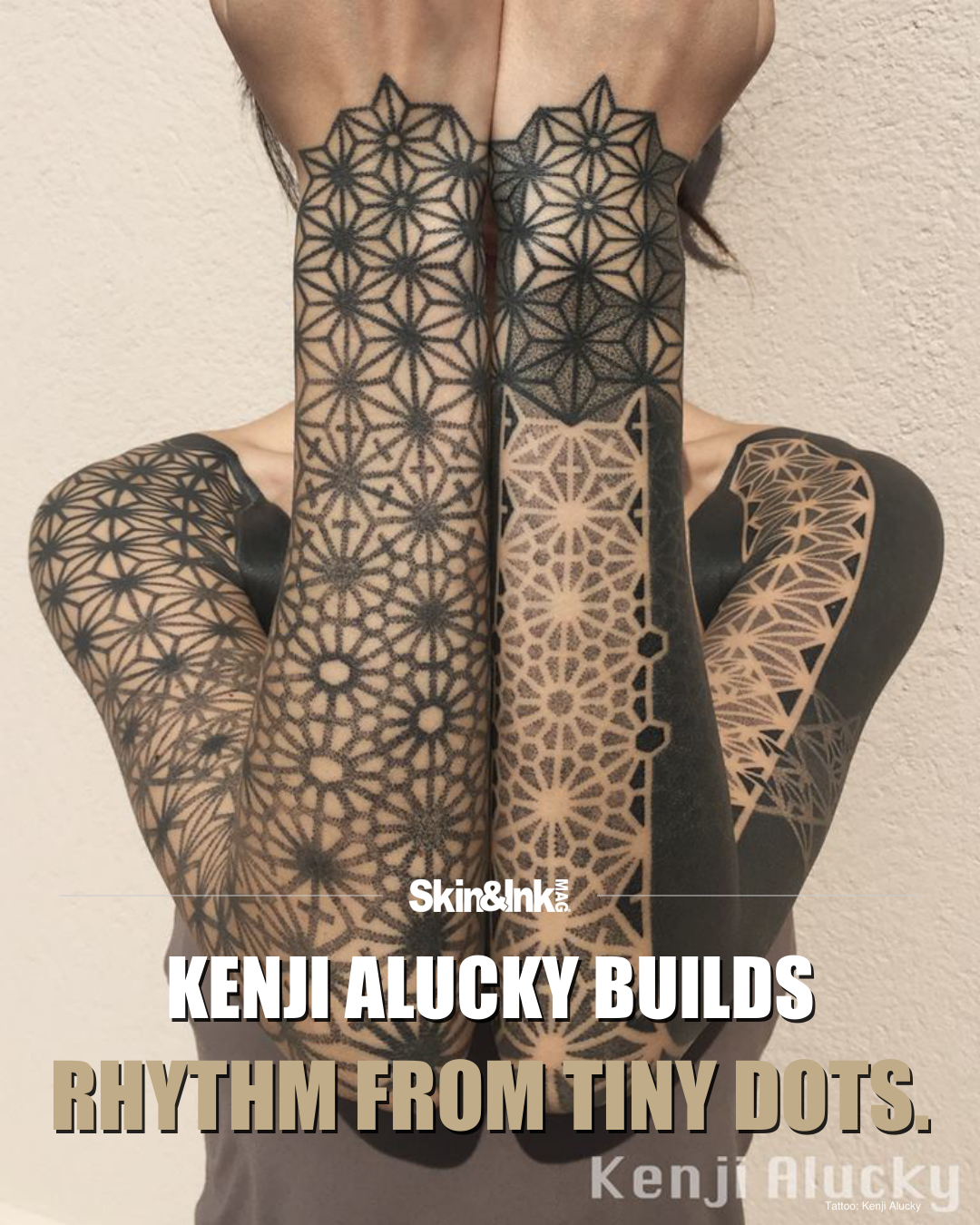
The paired forearms in the cover image offer a different kind of connection. Seen together, the limbs create a larger relationship between their patterns. The photograph is especially useful because it shows how posture affects the reading. Separate tattoos can become part of a shared composition when the body brings them into a particular position.
Alucky’s official biography describes a practice built around geometry, symmetry and dotwork. Those terms identify the vocabulary, but the photographs show the choices inside it. Symmetry doesn’t have to make a design static. Changes in density, spacing and direction can create movement within an ordered structure. The result can feel both controlled and visually restless.
The supporting photographs here come from an older published feature, not a claim about current appointments or the artist’s newest work. They were chosen because they make different compositional decisions visible. There’s no verified ranking of these pieces by engagement. What they offer instead is a focused look at how Alucky uses pattern on skin: one arrangement becoming dense and immersive, another remaining open and directional. The hook isn’t geometry for its own sake. It’s the way a limited set of marks can change the visual rhythm of a body.
Explore more from Kenji Alucky on Instagram.