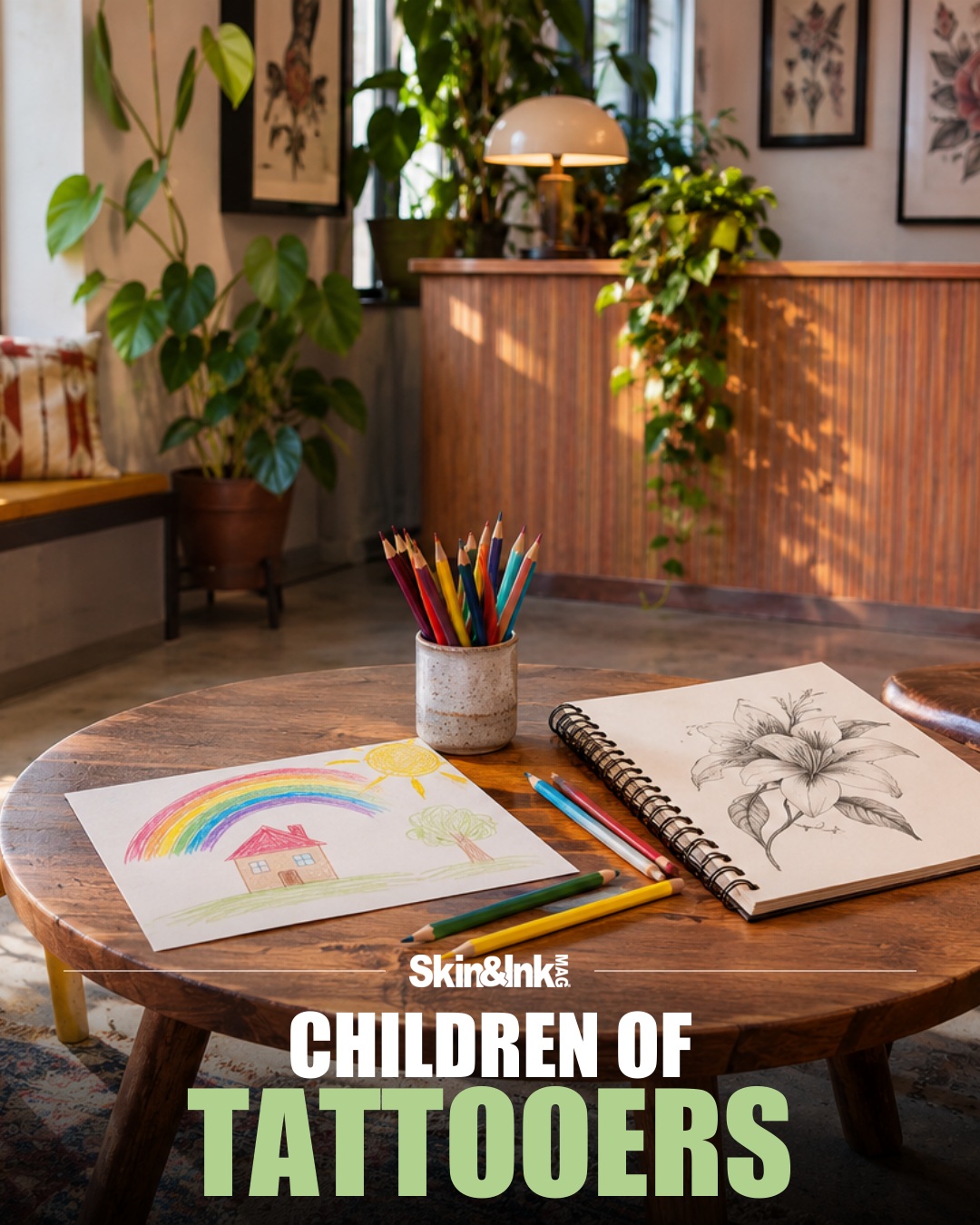
Words: Skin & Ink Editorial Staff
A child can know the sound of a tattoo machine before understanding why strangers find the family business unusual. That familiarity does not tell us what the child thinks of the studio, whether they want to work there, or how they will describe it later. Those answers belong to actual people. They should not be invented to make a charming industry story.
What can be discussed without borrowing a child’s voice is the responsibility of adults. A studio may be central to a parent’s identity while remaining only one part of family life. Making room for that distinction allows a child to be curious, bored, proud, or uninterested without being recruited into a public narrative about inheriting the craft.
Familiarity does not replace boundaries
If children are present at a business, adults need to consider the environment, supervision, applicable rules, and separation from work areas. A tattoo studio is a working environment with clients who are entitled to privacy and practitioners who need to concentrate. The fact that it feels like home to one family does not remove those responsibilities.

Clients should not be expected to entertain a child or accept an audience during a private appointment. Parents should not assume that a child understands which conversations or materials are confidential. Clear boundaries protect everyone without suggesting that the family has to hide the occupation or treat it as shameful.
Let interest remain voluntary
A child who likes drawing does not owe the family a future tattoo career. Nor does a teenager who dislikes the shop reject the parent. Adults can share knowledge without turning every creative activity into a test of potential. There is a difference between inviting someone into a craft and deciding that their talent has already chosen their life.
The same restraint applies online. A photograph of a child holding a sketch may feel harmless to a proud parent, but it can create a public identity the child did not select. Consider what needs to be shared, with whom, and why. Avoid exposing personal details or treating access to the family as part of the studio’s marketing package.
Tell the story with permission
When grown children choose to discuss their experiences, let the account include complexity. They may remember warmth and opportunity alongside long hours or missed occasions. A responsible profile should allow those experiences to coexist rather than requiring either an idealized family legacy or a dramatic rejection of it.
Ask who is being served by the story. If the answer is mainly the studio’s image, the family deserves another conversation before publication. Private memories do not become promotional material simply because they happened around a business.
A healthy legacy leaves room for choice. Children can learn respect for creative work, careful practice, and the people who make it without becoming the next generation of the shop. The strongest inheritance may be that freedom: to understand where they came from and still decide for themselves where to go.