Words: Skin & Ink Editorial Staff
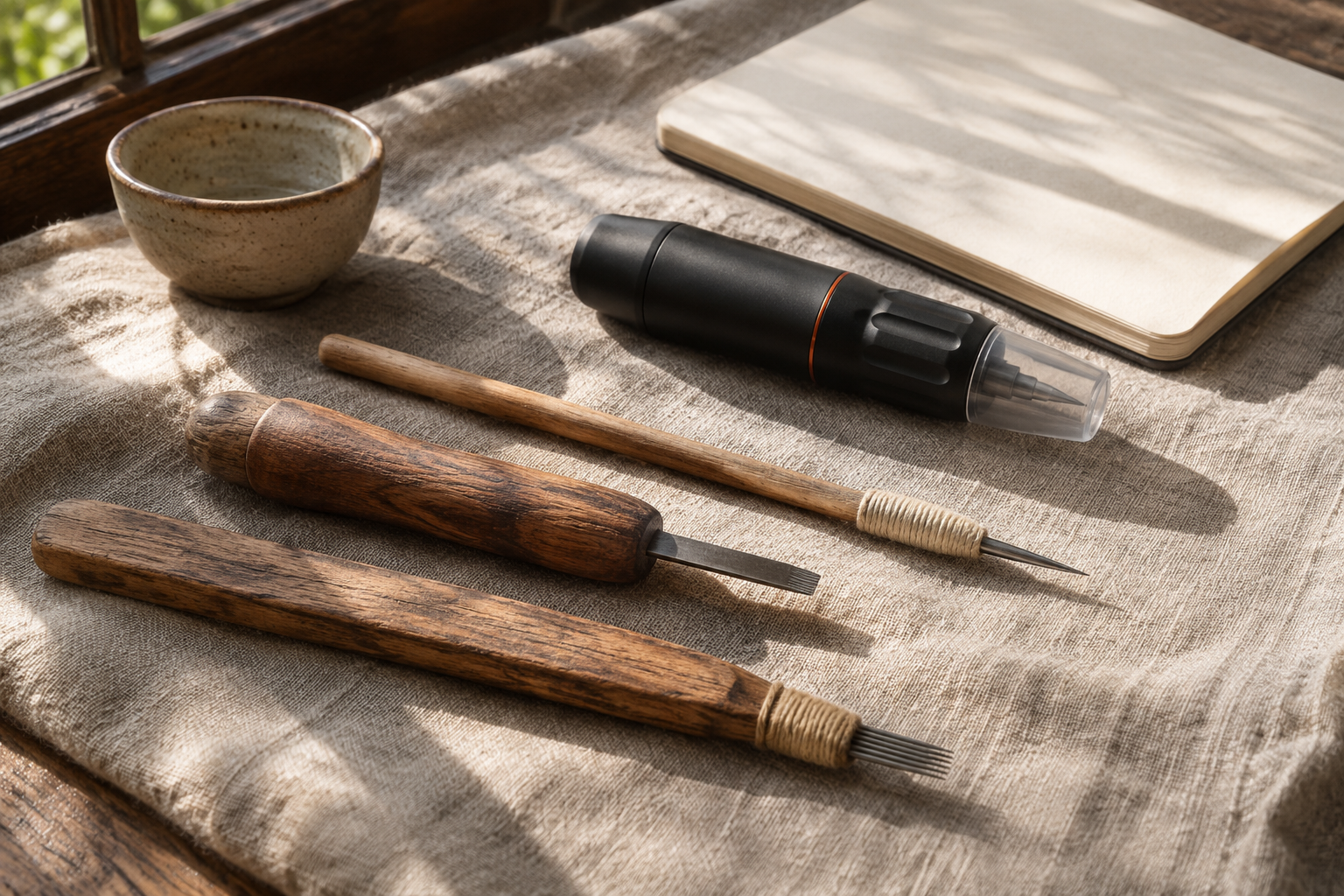
A hand-held tattoo tool can attract more attention than the person using it. Viewers may see an object that looks unfamiliar and immediately reach for words such as ancient or primitive. Those words can make a living practice sound frozen in a museum case. A better question is what the practitioner calls the tool and how it belongs to their work.
Technique alone does not describe a tradition. Two artists may both work without an electric machine while participating in very different forms of training, design, and cultural responsibility. Grouping them together because the tools are manually driven tells us something mechanical and very little about the people involved.
Change is part of the record
Te Papa's account of tāmoko describes changes in materials and methods, including the replacement of bone with metal in some tools during the nineteenth century. That history complicates the assumption that continuity requires an unchanging object. A practice can have a history of adaptation without becoming less meaningful to the people carrying it forward.
For a reader, the lesson is to avoid appointing yourself an authenticity inspector. A contemporary practitioner does not owe an outsider the use of an older material merely because it makes a more striking photograph. Questions about tradition and appropriate practice belong within the relevant community and its knowledge, not in a visitor's preference for a certain look.
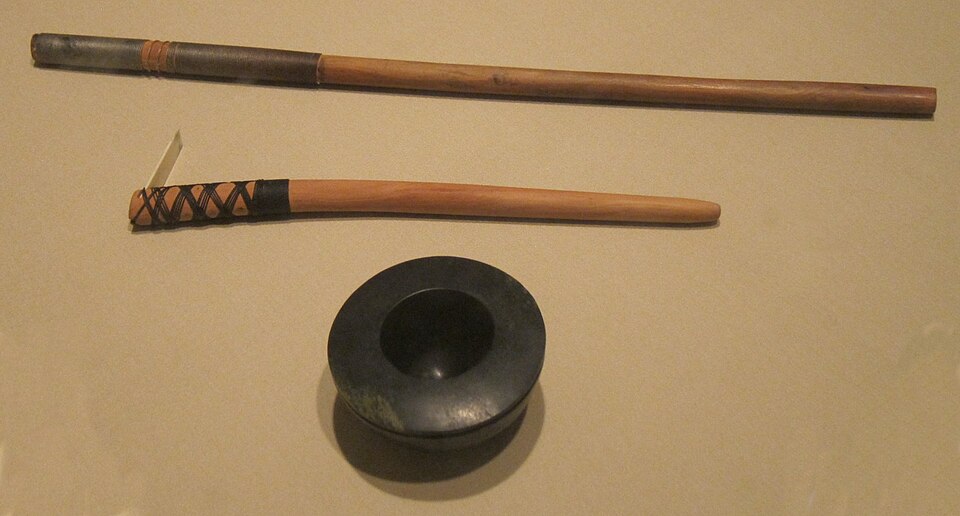
Museum collections can help identify tools, makers, and contexts, but an object label is not a training course. It cannot establish that someone who understands a tool's shape is qualified to use it. Nor does historical documentation provide permission to reproduce a design on another person's body.
Ask about the whole appointment
A prospective client should discuss the artist's experience, the proposed artwork, the expected session, and the studio's hygiene practices. Manual technique does not remove the need for appropriate infection-control procedures or clear aftercare. Avoid judging safety by how modern or traditional the station appears. Ask specific questions and expect understandable answers.
The same applies to comfort and consent. Find out how breaks are handled and how to communicate if the position becomes difficult. Do not assume that a culturally significant appointment requires silence about discomfort, or that stopping would invalidate the experience. The practitioner can explain the actual expectations far better than an online romantic account can.
Photograph with context
When documenting the process, ask permission before recording. Include the artist's preferred name and terminology, and explain what is being shown without turning the client into a prop. A close-up of a tool may be visually strong while omitting the relationship that gives the moment meaning.
The fascination with older methods can become a way of paying attention, provided it leads beyond the object. Study the work, listen to the practitioner, and accept the limits of what a visitor can understand in one session. A living practice deserves room to remain living: taught, debated, adapted, and defined by people rather than by the expectations attached to an antique-looking tool.
Sources