
Words: Skin & Ink Editorial Staff
The decision to remove a tattoo can be straightforward even when the treatment is not. You may dislike the image, want space for a different piece, or simply feel finished with it. None of those reasons requires an elaborate confession. What does require care is the gap between wanting a clean slate and knowing what a particular treatment can realistically deliver.
Begin by defining the goal. Complete removal, partial lightening for a cover-up, and reducing the visibility of one section are different assignments. Tell the clinician which outcome matters and whether another tattoo is part of the plan. A consultation becomes more useful when it has a specific target instead of a vague promise to make everything disappear.
Budget for a course of treatment
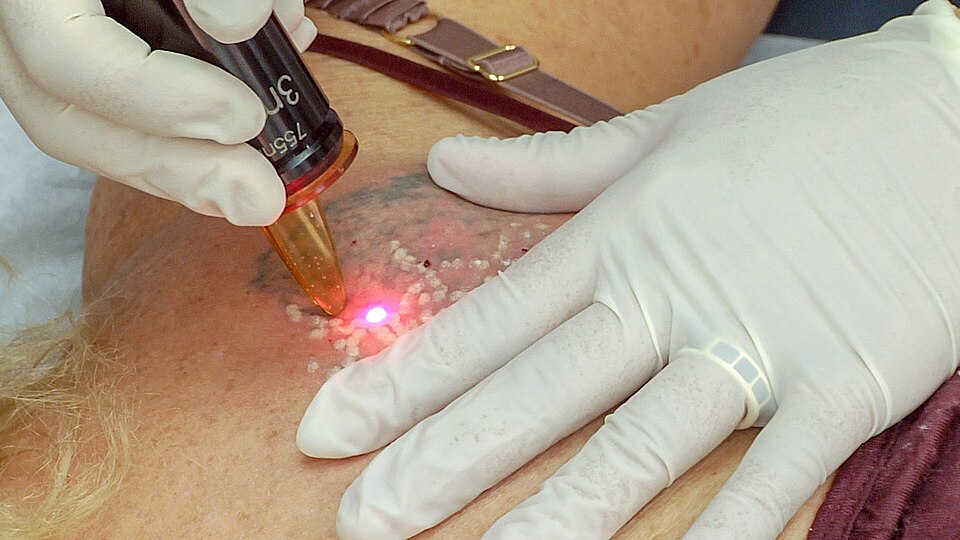
According to the FDA’s removal guidance, laser treatment generally involves multiple sessions with healing intervals, and complete removal is not always possible. That is why a single-session price tells only part of the financial story. Ask for the expected range of sessions, what could change it, and which fees are included.
Do not mistake an estimate for a guarantee. Ask how progress will be assessed and what happens if treatment does not move toward the intended result. If a package is offered, read its conditions before paying. The cheapest advertised session may not be the least expensive path to a result you can accept.
Talk about your skin, not just the ink
A qualified practitioner should assess the tattoo and your skin, explain risks, and describe the approach they recommend. The American Academy of Dermatology emphasizes professional assessment and appropriate laser treatment. Ask about experience with your skin tone and tattoo characteristics rather than choosing solely by a machine’s brand name.
Discuss pain management and recovery in concrete terms. Find out what you will need to avoid, how appointments fit around work or travel, and who to contact if something seems wrong. The time between sessions is part of treatment planning, not an inconvenience to be compressed because a new tattoo appointment is already booked.
Coordinate a cover-up without forcing a deadline
If the aim is a future cover-up, keep the tattoo artist and medical practitioner aligned on the intended outcome. The artist can explain what amount and pattern of lightening may improve the design options; the clinician determines appropriate treatment and healing. Neither should promise the other’s result without that conversation.
Bring photographs, but be cautious about comparisons. Another person’s successful removal does not establish your likely timetable or endpoint. Ask how the proposed plan accounts for the specific tattoo in front of you. A careful explanation may sound less exciting than a dramatic before-and-after, but it gives you more control over the decision.
Starting over can be meaningful without being immediate or perfect. Make room for the possibility of residual pigment, changed plans, or a result that improves the situation without restoring untouched skin. A realistic plan respects your reason for removing the tattoo and the body that has to go through the process.
Sources