Words: Skin & Ink Editorial Staff
When a tattoo reacts badly, the first priority is the person wearing it. Arguments over blame can wait. A client needs appropriate medical help, the artist needs reliable product information, and anyone investigating the problem needs a record that is more specific than “the red bottle we usually use.” Safety becomes easier to manage when that record already exists.
An allergic reaction and an infection are not interchangeable explanations. Similar-looking problems can require different evaluation, and an artist’s familiarity with healing does not replace a clinician’s assessment. Photographs can help document a concern, but they should not become an excuse to diagnose it through messages or promise that a troubling change will resolve on its own.
Make the bottle traceable
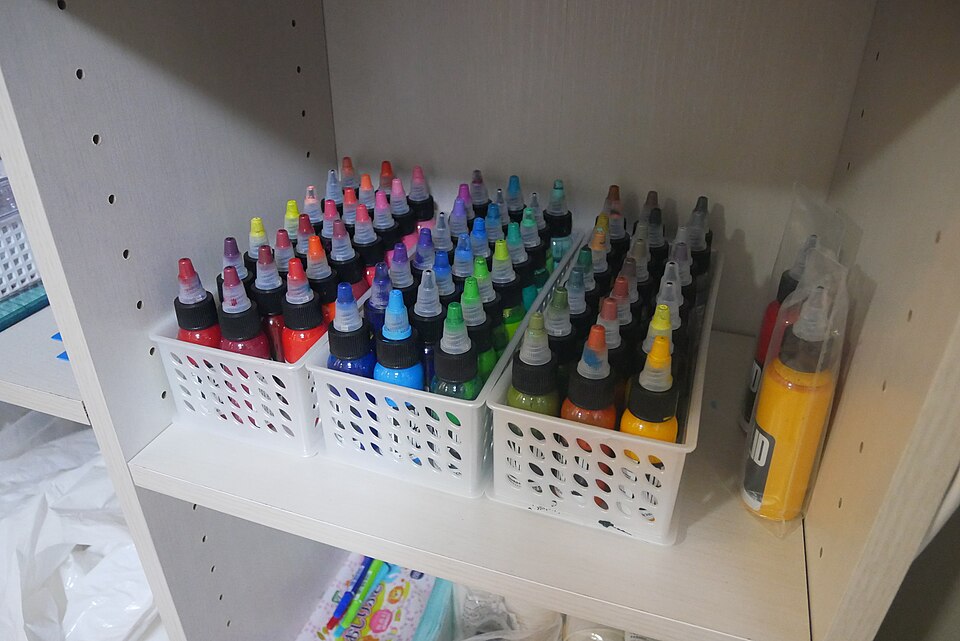
A useful studio record links the appointment to the product manufacturer, color, and lot or batch number where available. Keep purchase and supplier information accessible. Record the actual product used, not a generic description such as “black ink.” A brand can have multiple formulations and batches; the distinction matters when a safety notice identifies only particular stock.
The FDA warns that contamination can occur even in unopened, sealed ink. That is an important limit on the reassuring appearance of a new bottle. Careful work at the station remains essential, but it cannot rewrite a product’s manufacturing history.
Read a recall before acting on a rumor
When a warning circulates, find the issuing authority’s actual notice. Compare the named product, manufacturer, color, lot, and affected dates with the studio’s inventory. Follow the notice’s instructions. Preserve enough documentation to show what was checked and what action was taken rather than relying on a disappearing social-media post.
If an affected product was used, follow the relevant public-health guidance and obtain professional advice on appropriate next steps. Communicate facts clearly. Do not tell clients they are definitely infected because their appointment involved a recalled lot, and do not promise they are safe because nobody has complained. Exposure and diagnosis are different matters.
Keep the client out of the argument
The American Academy of Dermatology describes reactions that can occur immediately or later. A concern should not be dismissed simply because the appointment was weeks, months, or years ago. A qualified clinician can assess what is happening and what care is appropriate.
The FDA advises people reporting a tattoo-related problem to include details about the ink and reaction. Help a client obtain those details promptly. Avoid deleting appointment records or treating a request for information as an accusation. Documentation protects the ability to understand the event, which is more useful than protecting appearances.
A serious safety culture is visible in ordinary habits: identifiable products, organized records, clear referrals, and a response that centers the client’s health. Those habits are less dramatic than a public apology after a preventable information gap. They are also far more valuable.
Sources