Realism can show you something familiar. Carlos Torres uses it to make an unfamiliar scene feel convincing. A face, a hand or a skull gives the eye a recognizable starting point. Then the surrounding forms shift the image into something less straightforward. That tension is where these tattoos become more than demonstrations of accurate shading.
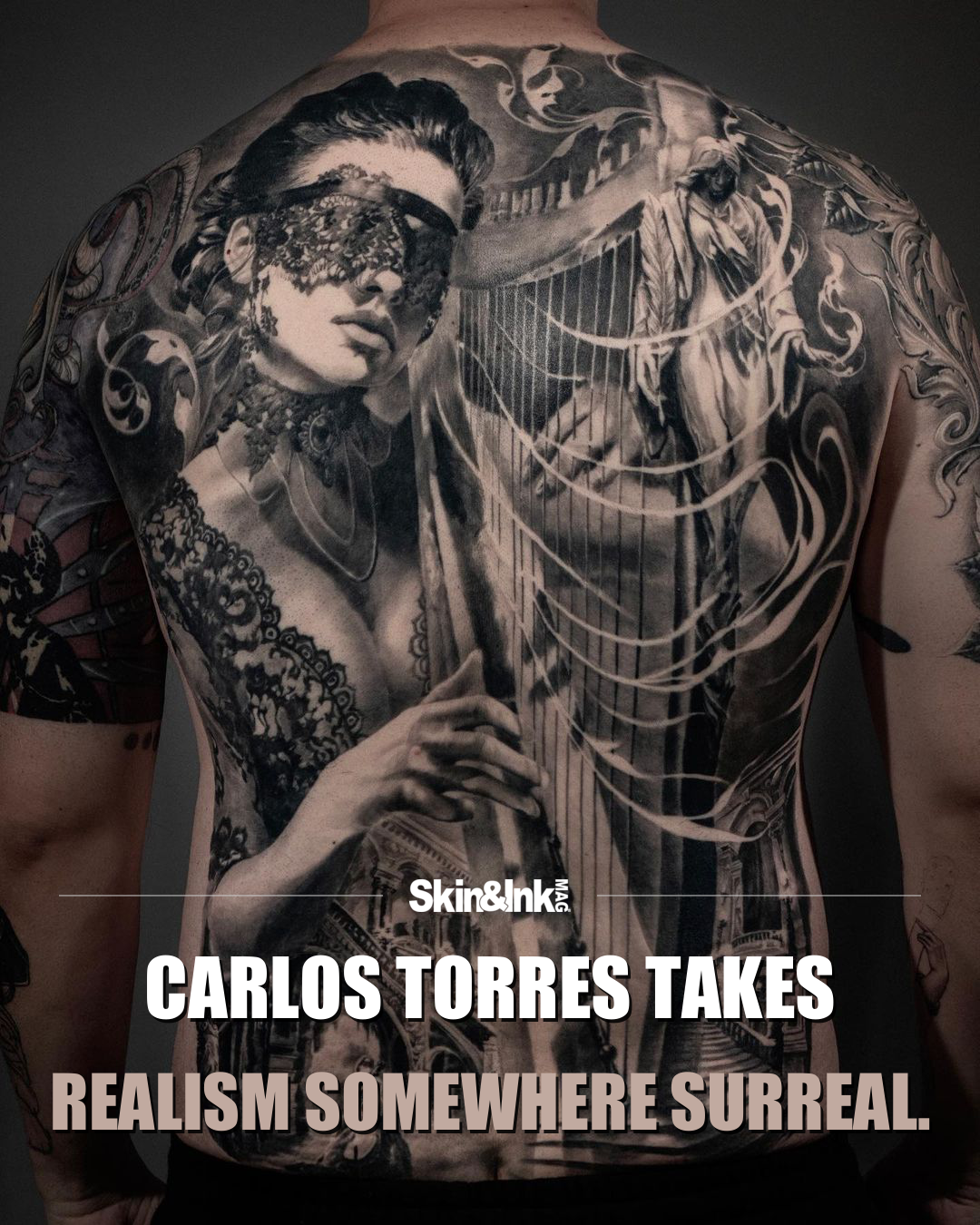
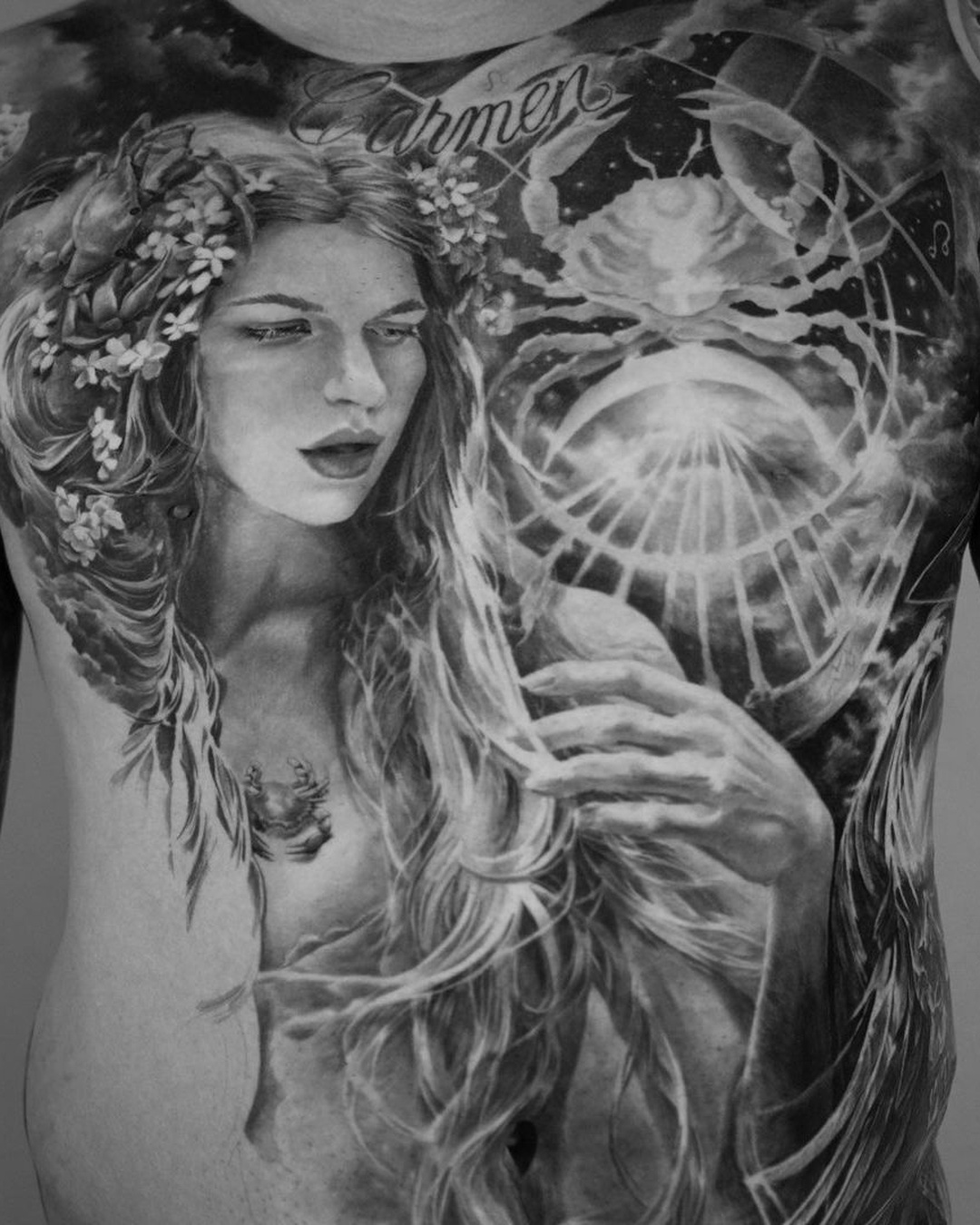
In the selected backpiece, a figure occupies a dense environment of curved structures and layered details. The face gives the composition a human center. Around it, lines and textures create a setting that feels constructed rather than simply observed. You can recognize individual elements without reducing the whole piece to a literal scene.
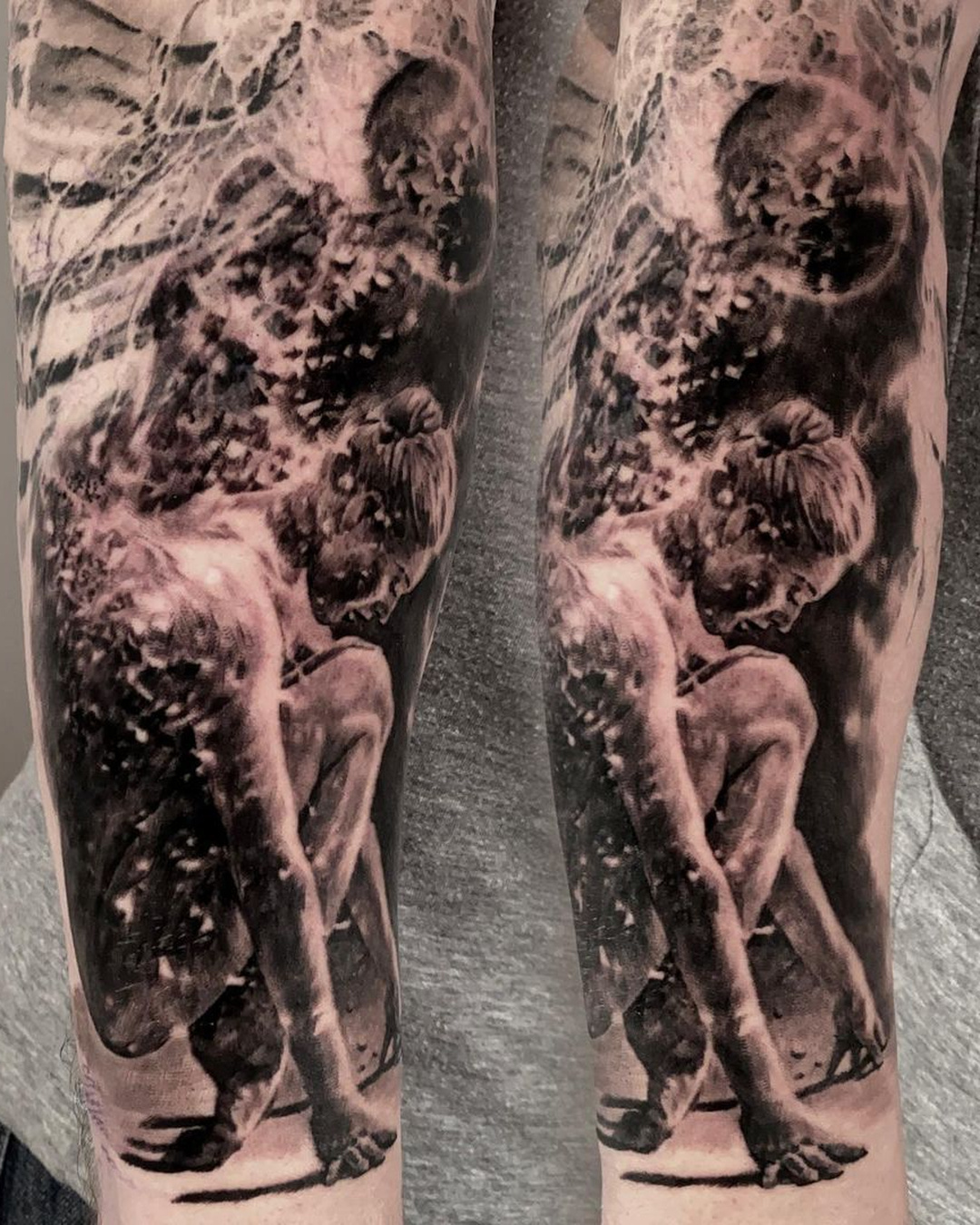
That distinction is important. Surreal imagery still needs visual order. If everything arrives at the same intensity, the viewer has nowhere to begin. Here, changes in value separate the central subject from the surrounding material. Bright passages bring certain forms forward, while darker areas hold other parts back. The image depends on those relationships to remain readable.
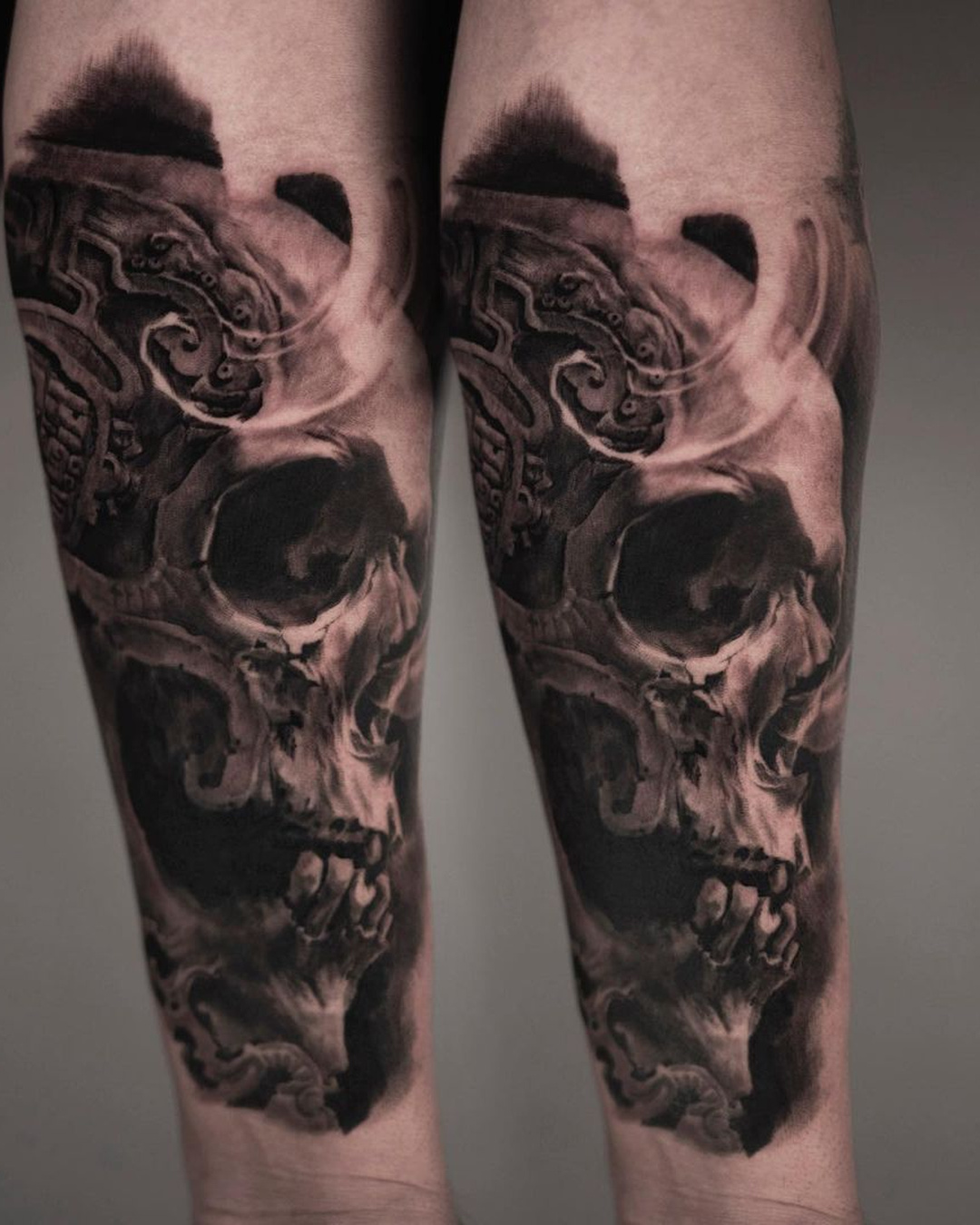
The skull work pushes the same approach in a different direction. Bone provides a recognizable structure, but the treatment isn’t limited to a straightforward anatomical study. Mechanical-looking details, neighboring forms and shifts in texture complicate the reading. The skull becomes an organizing shape inside a larger invention. Its familiarity gives the stranger material something to attach to.
The sponsor portfolio also includes figurative work and a basketball tribute, showing that this visual language isn’t restricted to a single subject. What carries across the selection is an interest in dimensional form and layered composition. Smooth shading can establish a face or body; a sharper edge or busier passage can change the mood around it. Different surfaces do different jobs.
Torres’s own account of his process describes building custom imagery through photography and editing, sometimes carrying those ideas into painting as well as tattooing. That context helps explain why the work can feel staged without feeling random. A composition is assembled to produce a particular relationship between its parts, rather than depending on a ready-made reference to supply the entire answer.
The images selected here offer a way to look at that construction. Start with the clearest form, then follow the connections around it. Notice where a crisp edge gives way to a softer transition, or where an area of detail meets a darker pause. Those choices are part of the storytelling. Carlos Torres’s work catches attention through realism, but it holds attention by making realism serve something less predictable. The familiar gets you into the image. The strange is what keeps you there.
Explore more from Carlos Torres on Instagram.