Words: Skin & Ink Editorial Staff
A tattoo design has to survive a change of medium before it faces a change of decade. The crisp drawing on a screen becomes an image on a body that bends, stretches, catches light, and moves away from the viewer. Thinking about longevity begins with that translation, not with a promise that a particular style will stay unchanged forever.
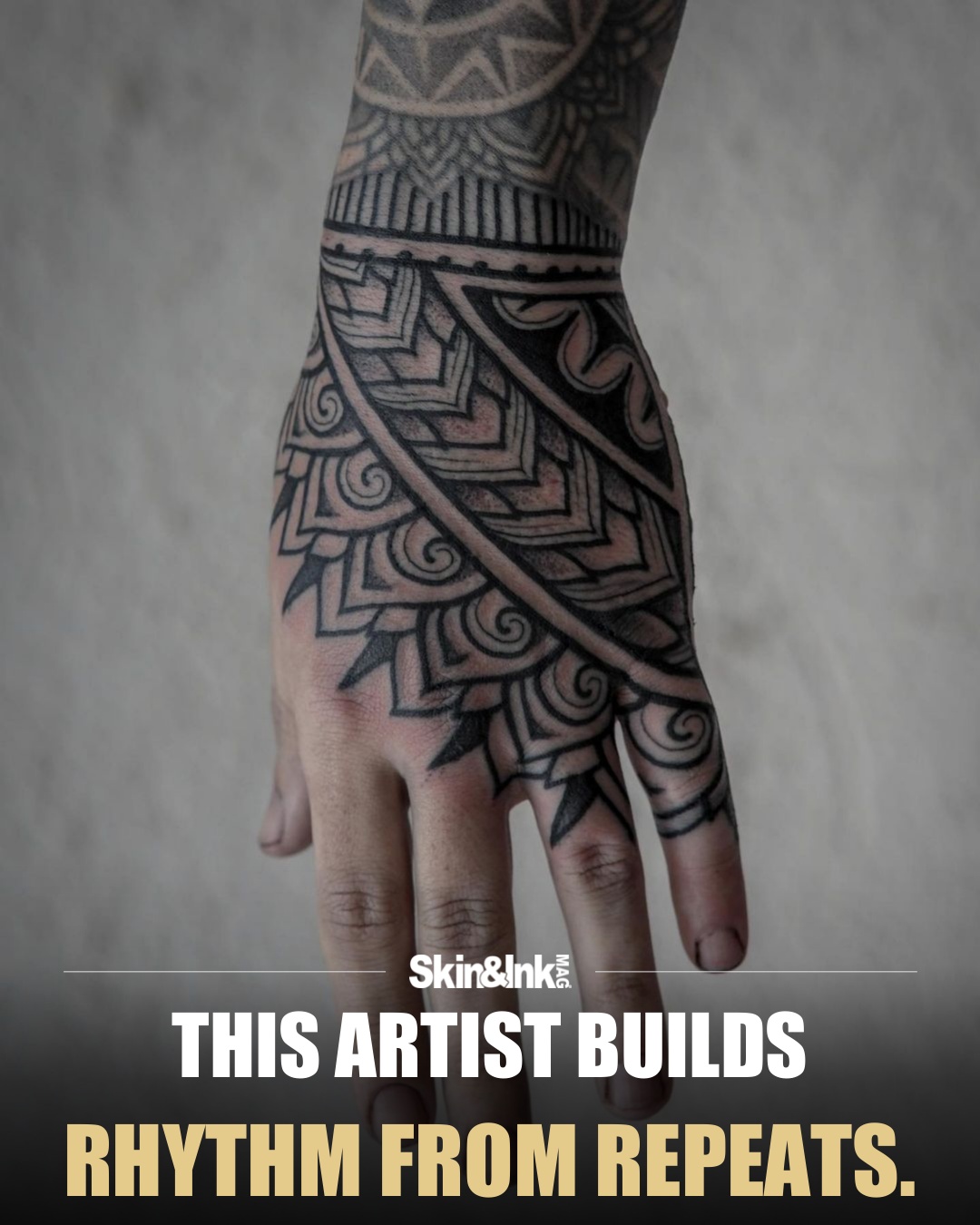
The useful question is what the design needs in order to remain recognizable. A face may depend on a few carefully separated features. Lettering needs spaces that keep one character from becoming another. An ornamental composition needs a rhythm that still reads when the arm turns. These are design problems before they become arguments about fashion.
Give the image room
A consultation should include the tattoo at its proposed size. Enlarging a reference on a phone can make tiny detail feel more workable than it will be on skin. Ask the artist what they would simplify and what they would enlarge. Their explanation reveals more than an unconditional agreement to reproduce everything.
Scale is also personal. A client may prefer a smaller, quieter image even after discussing its limits. The goal is an informed decision, not a rule that every tattoo must become large and bold. An artist should explain the tradeoffs without pretending that design judgment can predict every individual outcome.

Compare examples that answer the question
Healed examples are especially useful when they resemble the proposed work in style and placement. Ask how old the tattoo is, whether it has been touched up, and whether the photograph shows the whole composition. A ten-year-old piece and a newly settled tattoo answer different questions. Neither should be passed off as the other.
Look at readability before zooming in. Does the main shape hold together? Is the focal point clear? Are small elements still distinct enough to do their job? Changes do not automatically make a tattoo unsuccessful. Some designs remain compelling as their surface becomes softer and less sharp.
Protection has a practical place
The American Academy of Dermatology notes that ultraviolet light can fade some tattoo inks and recommends sun protection for tattooed skin. Follow appropriate aftercare for a new tattoo and seek clinical advice about concerning skin changes. No product should be treated as a guarantee of permanent brightness.
Lifestyle belongs in the discussion without becoming a moral test. A person who spends considerable time outdoors needs a realistic conversation about care and expectations. The artist should also consider how the image will sit among existing tattoos and whether future additions might crowd it.
Plan for change without designing in fear
Longevity should make a design stronger, not strip away every interesting choice. Delicate work, broad black areas, color, and restrained detail can each serve a particular intention. The artist’s responsibility is to explain why the chosen arrangement suits the client and what remains uncertain.
A lasting tattoo is allowed to look lived in. The ambition is a composition whose important relationships remain understandable, supported by honest expectations and sensible care. The fresh photograph introduces the work. Years of ordinary movement and wear will supply the rest of its character.
Sources