Words: Skin & Ink Editorial Staff
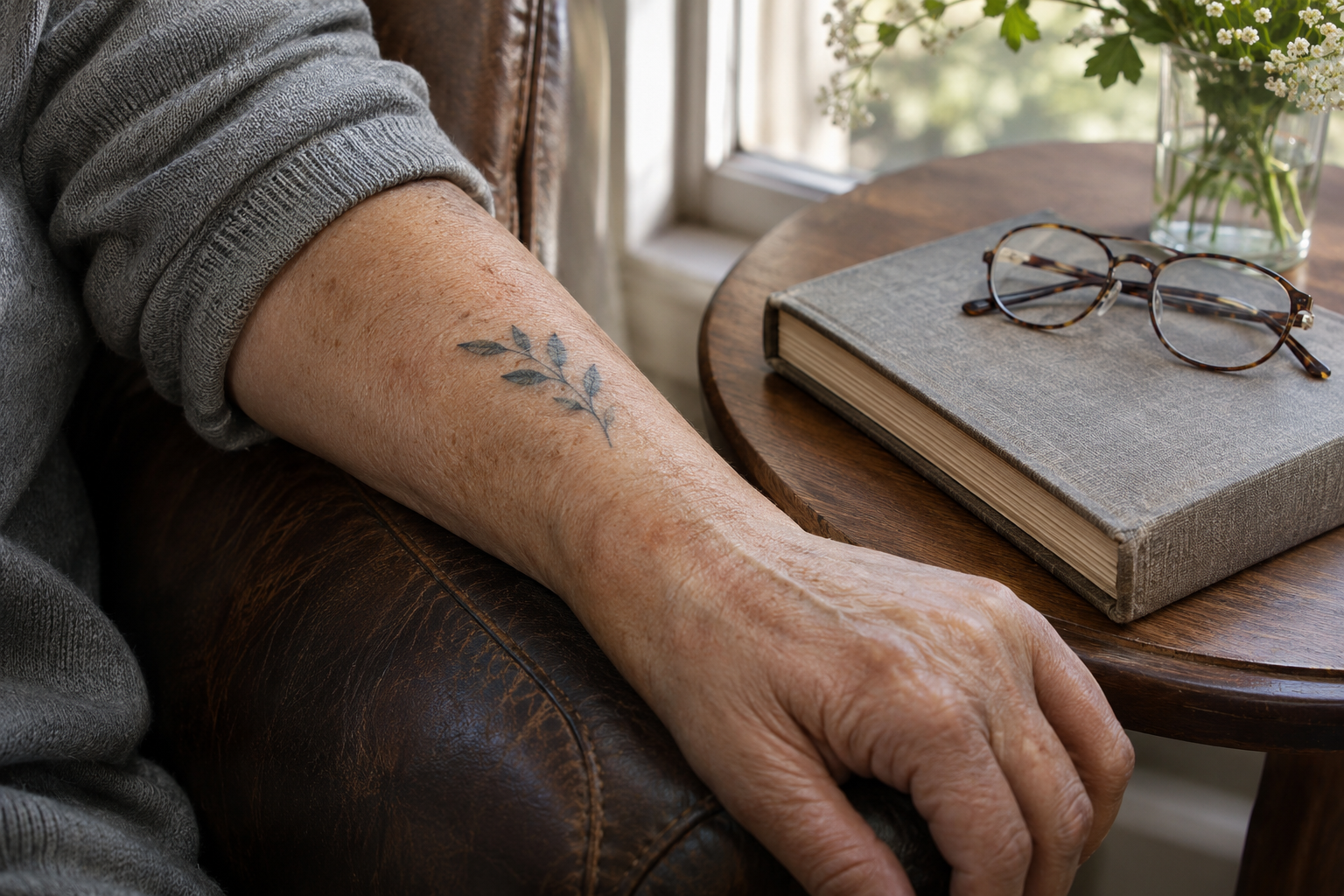
A healed tattoo and a fresh tattoo are different records of the same work. The fresh photograph documents a finished appointment. The healed image shows the drawing living beyond it. Comparing them can be useful, but calling every difference “fading” hides several separate questions about skin, pigment, photography, and the original design.
Begin with the photograph itself. Was the same light used? Is the skin wet in one image and dry in the other? Has contrast been increased? Before attributing a change to biology, eliminate the obvious differences in documentation. A darker exposure can make a tattoo look stronger without altering a single mark on the body.
Permanence involves living tissue
Tattoo pigment is placed below the skin’s surface. Research helps explain why it can remain there despite cellular turnover. A 2018 mouse study in the Journal of Experimental Medicine described pigment being released and recaptured as macrophages were replaced. The authors explicitly left the applicability of that model to humans unresolved. It is useful evidence, not a complete timetable for your sleeve.
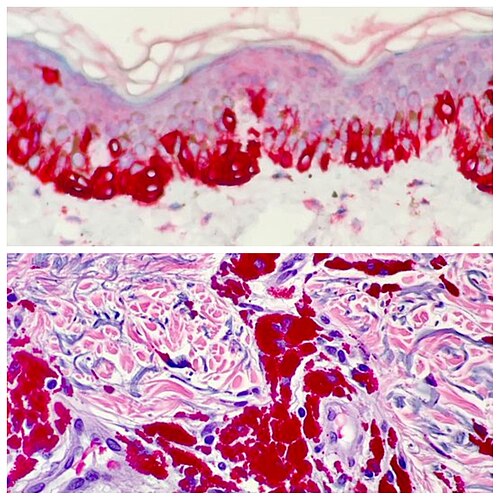
That distinction matters when someone offers a confident prediction about exactly how a tattoo will look decades from now. A cellular experiment cannot tell a client which tiny gap will remain legible or which touch-up they will eventually want. Those practical questions require careful observation of actual healed work, with uncertainty left visible.
Design for change rather than a frozen moment
When reviewing an older tattoo, separate the condition of the skin from the clarity of the drawing. Can you still identify the subject? Do the main shapes remain distinct? Does the composition follow the body? A piece can look visibly older and remain convincing as an image. Another can retain strong pigment while its crowded arrangement makes it difficult to read.
Ask to see an artist’s work at different ages where examples are available. Seek useful comparisons rather than a competition for the oldest photograph. Similar placement, scale, and style will usually support a better conversation than comparing a broad traditional motif with a tiny detailed portrait and declaring one entire approach superior.
Keep a record that can answer questions
Photograph your work after healing and occasionally thereafter, with consistent light and a relaxed pose. Record the date and avoid filters. This modest habit creates something more useful than memory when deciding whether a touch-up, redesign, or no intervention at all makes sense. Do not confuse a preference for a fresher appearance with evidence of poor execution.
If a tattoo develops an unexpected skin change, get medical advice rather than treating it as a cosmetic problem by default. For ordinary aging, begin with an honest conversation about what bothers you and what you hope to preserve. The goal is not to force every old tattoo back into its first-day photograph. It is to make informed choices about a piece that has continued to belong to you while you changed.
Sources
Baranska and colleagues, Journal of Experimental Medicine (2018)