Words: Skin & Ink Editorial Staff
An old tattoo flash sheet can show an eagle, a ship, a sweetheart, and a promise of luck within a few inches of paper. Looking at the images alone tells only part of the story. The sheet was also a working tool: something to display, discuss, choose from, and translate into a tattoo for a paying client.
That commercial life matters. Tattoo history can become a parade of famous names while the ordinary exchange disappears. Someone opened the shop, prepared the station, drew or acquired the flash, welcomed the client, and kept the business operating. The visual record belongs to labor as well as to style.
Start with evidence, not nostalgia
Naval History and Heritage Command's account of sailors' tattoos describes connections between seafaring communities and professional tattooing. It is one documented strand, not proof that a single occupation invented Western tattoo culture. A responsible account leaves room for other clients, makers, places, and circumstances rather than promoting a tidy origin story.
The useful questions are concrete. Where was a shop located? Who could afford its work? Did a drawing travel through a supplier, a visiting artist, a publication, or a personal exchange? Is the claimed date supported by a business record or only by a later recollection? Each answer makes a historical image more specific.
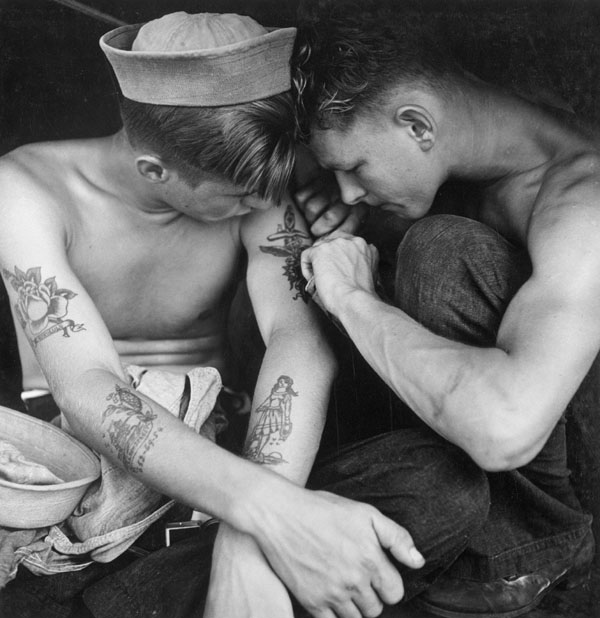
A shop near a port can be discussed as a business in that neighborhood without declaring every customer a sailor. Likewise, a photograph of a tattooed worker does not establish what their tattoo meant. Captions should preserve the difference between what the record shows and what a viewer imagines.
Flash is a record of decisions
A flash design has to function in conversation. A client needs to recognize it, an artist needs to understand how it can be tattooed, and the drawing needs to support a practical decision about scale and placement. Those pressures are worth studying without reducing bold imagery to a lack of sophistication.
Look at how a sheet directs attention. Which shapes remain readable from a distance? How are small areas of color used? Where does empty space separate one image from another? These are deliberate visual choices. Their effectiveness does not depend on a gallery label or an expensive frame.
Reproductions deserve care, too. Record the sheet's maker when known, its approximate date, and the source of the image. Do not remove a signature or sell an anonymous-looking scan as new artwork. Preserving a visual tradition includes acknowledging the people whose drawings helped it circulate.
Keep the work in the history
Romantic language about rough shops and hard lives can make economic insecurity sound like a requirement for authenticity. It is possible to respect earlier tattooers without wishing their difficulties on today's artists. Fair pay, safer conditions, and a sustainable working life do not weaken a craft.
The strongest labor history would connect images with wages, rent, equipment, training, and the communities around a shop. Until those records are available, the honest task is to ask better questions. An old flash sheet is beautiful on a wall. It becomes more interesting when we remember that someone once depended on it to earn a living.
Sources