
Words: Skin & Ink Editorial Staff
A tattoo can carry a story without explaining it to everyone who sees it. A small bird might recall a parent, a place, a joke, or simply a drawing the wearer loved. The visible image and the private meaning do not have to arrive together. That gap is part of what makes tattooing personal.
We lose something when every tattoo is expected to justify itself with a dramatic origin. The question about meaning can become a demand for grief, recovery, or some other intimate experience. A collector should be able to say that a piece looks good and let the conversation end there. Beauty is a reason, not an incomplete answer.
Meaning keeps moving
A design can outlast the explanation that first accompanied it. Someone may keep a tattoo connected to an old relationship because they like the artwork, because it records a particular age, or because removing it has never mattered enough to pursue. Another person may want to cover a technically excellent piece because living with it has become uncomfortable.
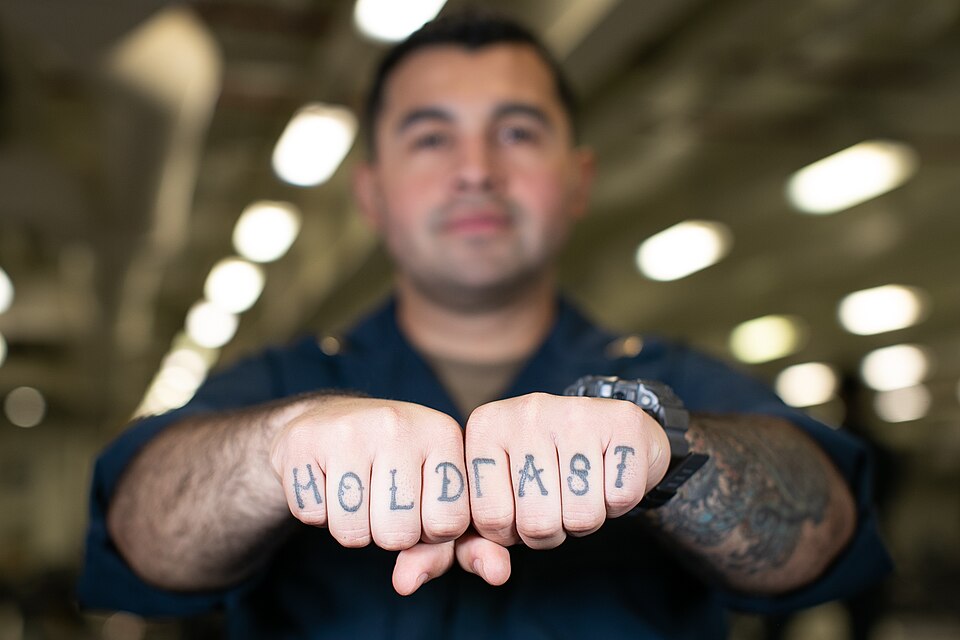
Neither choice requires an outsider's approval. It is tempting to sort tattoos into meaningful successes and regrettable mistakes, but that system makes the viewer the judge of someone else's history. A wearer can feel affection, embarrassment, indifference, and pride about the same piece at different times.
This is also why artists should be careful with promises about transformation. A meaningful appointment may feel important without resolving the experience behind it. Tattooing can be part of a person's way of remembering or expressing themselves. It should not be sold as a guaranteed treatment for grief, trauma, or difficulty with their body.
Design the part that needs to be visible
For a client, the practical challenge is deciding how much of a story needs to become an image. A memorial does not have to contain every date, object, phrase, and photograph associated with someone. One well-chosen element may carry more feeling than a composition crowded with explanations.
Tell the artist what matters and what must remain private. Distinguish essential details from suggestions. Ask how scale, placement, and surrounding space will affect the design. The artist can help translate an experience into a visual decision without needing access to every painful detail that produced it.
A useful consultation also allows humor and uncertainty. People rarely live in one emotional register. A ridiculous tattoo can sit beside a solemn one without undermining it. Collections can be inconsistent because lives are inconsistent; not every arm needs to read like a carefully edited memoir.
The story belongs to the wearer
Publication needs another conversation. Permission to tattoo an image does not automatically settle permission to tell the client's personal story in a caption. Ask what can be shared, which names should be omitted, and whether the photograph should remain private.
The resulting tattoo might become a conversation piece or something the wearer almost forgets is there. It can be an anchor, a decoration, or a record of a person they used to be. Its value does not depend on supplying strangers with an explanation. Sometimes the most respectful response to a tattoo is to appreciate the work and leave the story where it belongs.