Words: Skin & Ink Editorial Staff
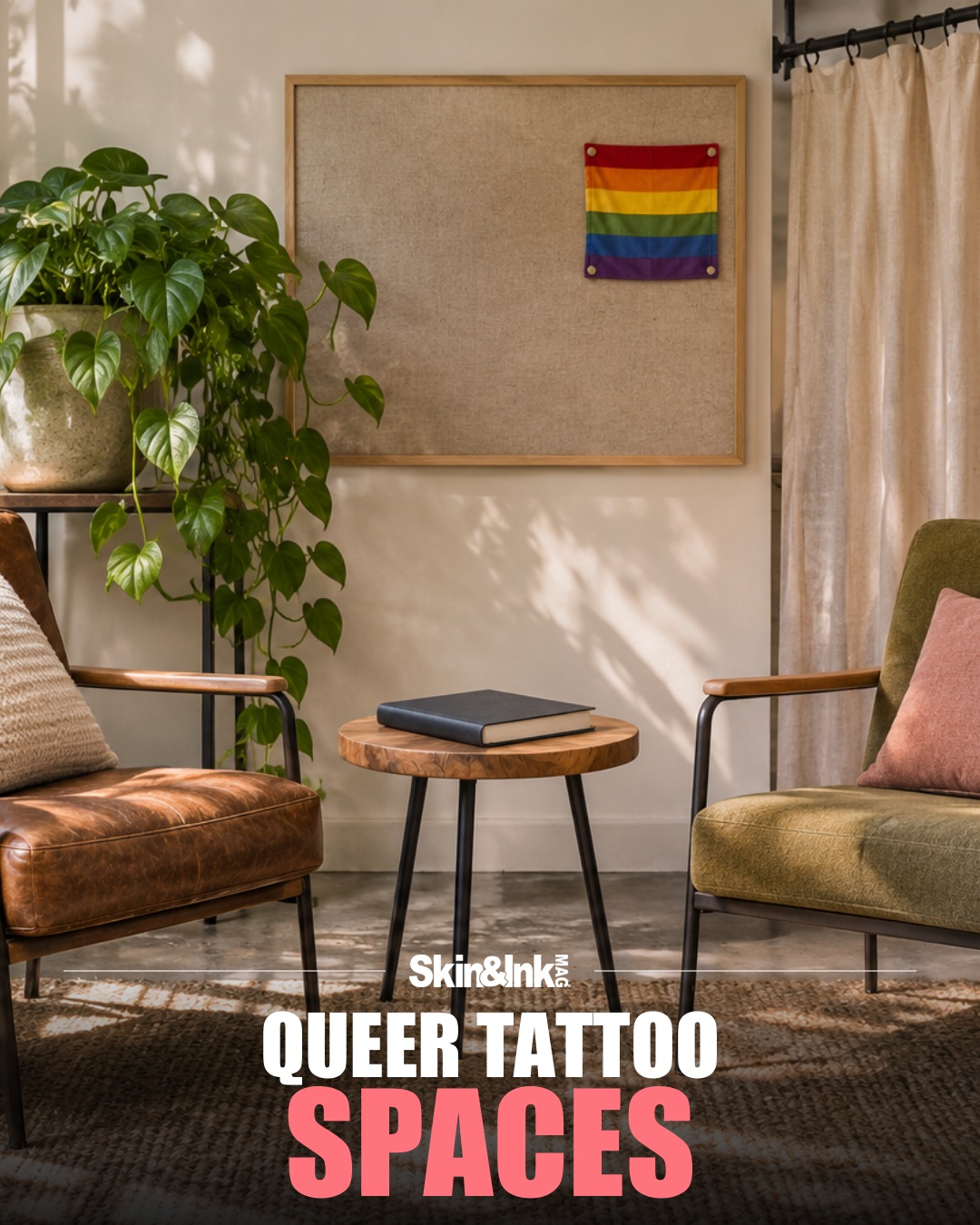
A rainbow in the window tells a client something about a studio's intentions. The appointment tells them whether those intentions hold up. For a queer or trans customer, ordinary details can carry unusual weight: which name gets called across the room, who sees a form, and whether a question about their body is necessary or merely curious.
There is no single queer tattoo experience. People bring different identities, histories, and preferences into a studio. A welcoming practice gives them ways to express what they need without asking them to represent an entire community.
Begin before the stencil
Booking forms can distinguish the name a person uses from any information genuinely required for identification or legal records. Explain why sensitive information is requested and limit who can see it. A person should not have to disclose unrelated personal history to arrange a tattoo.

Pronouns can be invited rather than demanded, and staff can introduce their own without turning the exchange into a test. If someone makes a mistake, a brief correction and changed behavior usually serve the appointment better than a long apology that requires reassurance from the client. The focus should return to the person receiving the work.
Describe the physical setting accurately. Is the tattoo area private or open? Who else may be present? Can a screen be arranged? Is there an accessible entrance and restroom? Specific information lets a customer make a decision. Calling a studio inclusive while leaving practical access questions unanswered asks them to take too much on trust.
Let the client set the story
A tattoo may relate to identity, a transition, a relationship, or none of those things. The artist can ask what matters to the design without making a meaningful disclosure the price of being understood. The client's body does not need to become an educational moment for the room.
Discuss placement, positioning, clothing, and touch in plain language before the session. Ask what wording feels comfortable when referring to the area being tattooed. Offer reasonable choices without assuming every trans or queer person wants the same arrangement. A client can want privacy one day and easy conversation another.
Photography needs its own conversation. Showing a tattoo may reveal a body, a location, or an identity that the person does not want public. A face left out of frame does not necessarily make an image anonymous. Permission for a portfolio image should specify the intended use and remain separate from agreement to receive the tattoo.
Build a way to address mistakes
An anti-harassment statement should explain how a concern can be raised and who will respond. In a shared studio, the policy must apply to guest artists and regular clients as well as staff. A welcoming reputation is fragile if a customer's objection is treated as an inconvenience.
A thoughtful queer tattoo space gives people more control over an already intimate experience. Its value is visible in routine conduct, especially when nobody is watching for a promotional photograph. The strongest welcome makes room for a client to relax, ask questions, and be more than the identity the studio is proud to include.