
Tattooing takes patience, training and responsibility. Where does protecting those standards turn into keeping people out?
TattooBuzzNow! | Opinion & discussion
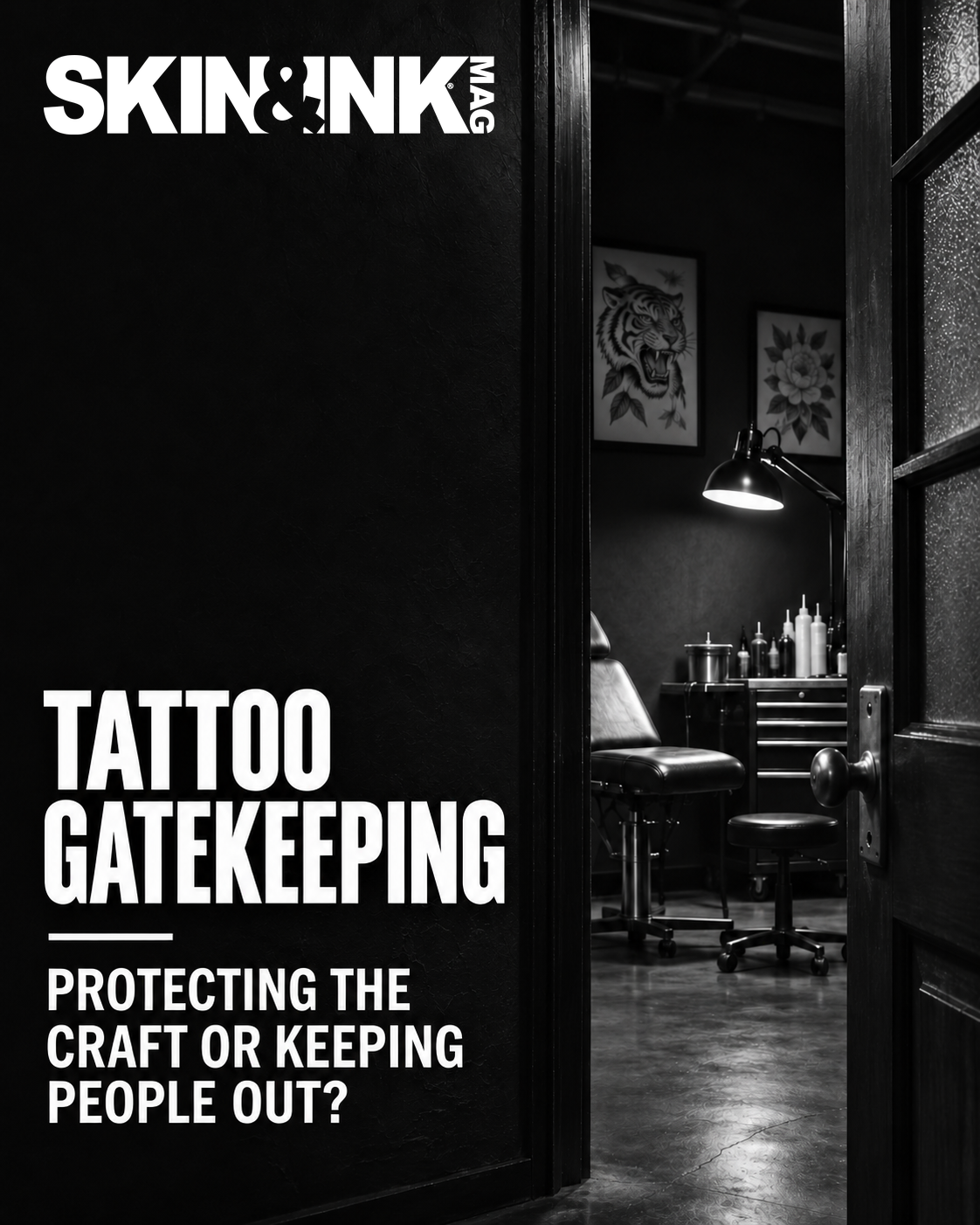
How much of tattooing’s gatekeeping protects the craft, and how much just keeps people out?
It’s a question that deserves more than an argument between people who had it hard and people who want it easier. Learning to tattoo should take work. Clients deserve artists who understand the responsibility of making permanent changes to someone’s body. A good drawing and a machine don’t make someone ready.
But there should be a reason for what we ask of the next person coming through the door. If the only explanation is “I went through it, so you should too,” we need to look harder at what that experience actually taught.
What are we protecting?
Expecting an apprentice to draw, listen, practice and accept criticism is fair. So is requiring them to understand hygiene, avoid cross-contamination and recognize the limits of their ability before working on a client. Those expectations have a purpose.
A mentor should be able to explain what needs improvement and what progress looks like. “You’re not ready” can be an honest answer. It becomes useful when it comes with specific feedback and a way forward.
The same goes for turning someone down. An artist may not have the time, space or ability to teach. Nobody owes every applicant an apprenticeship. Taking someone on, though, comes with a responsibility to actually teach them.
What does the barrier teach?
Cleaning a station can teach someone how a safe studio operates. Repeating a drawing can help them understand why it fails. Watching an experienced artist work can reveal decisions that are easy to miss in a finished photograph.
Humiliation needs a different explanation. So do personal errands that swallow the learning time, moving expectations and an apprenticeship with no clear sense of when instruction begins. What skill is being developed? Who benefits? Would we defend the same demand if it came from a workplace outside tattooing?
Unpaid work deserves that scrutiny too. Calling an arrangement an apprenticeship doesn’t answer what someone is being taught, how much labor is expected or whether the arrangement follows applicable employment rules. Both sides should understand the terms before anyone commits.
A fair chance still has standards
Making the path clearer doesn’t mean promising everyone a place in the industry. It means judging people on expectations they can understand, then applying those expectations consistently.
If a portfolio needs work, say where. If someone needs more drawing experience, explain what to develop. If a shop accepts an apprentice, be clear about the schedule, costs, responsibilities, instruction and how progress will be reviewed.
Newcomers have responsibilities in that relationship. They need to show up, put in the practice, respect clients and take correction seriously. Mentors have responsibilities too. Their experience should help someone become more capable, rather than leave them guessing how to stay in favor.
What deserves to survive?
There is plenty worth protecting in tattooing: care for the work, respect for the people wearing it, knowledge passed between artists and the patience to learn properly. Those things take effort to maintain.
We should be able to question a tradition without dismissing everyone who came before us. We should also be able to value experience without treating every hardship as something worth passing on.
The useful test is simple: does this expectation help someone become a better, safer tattooer? If it does, explain it and stand behind it. If it mainly tests how much disrespect someone will tolerate, why keep it?
Where do you draw the line?
What’s one tattoo industry tradition worth protecting, and one that needs to go?
What did a good mentor insist on that still matters in your work? What would you change for the next person learning? Join the conversation on our Instagram post.
 Join the conversation on Instagram