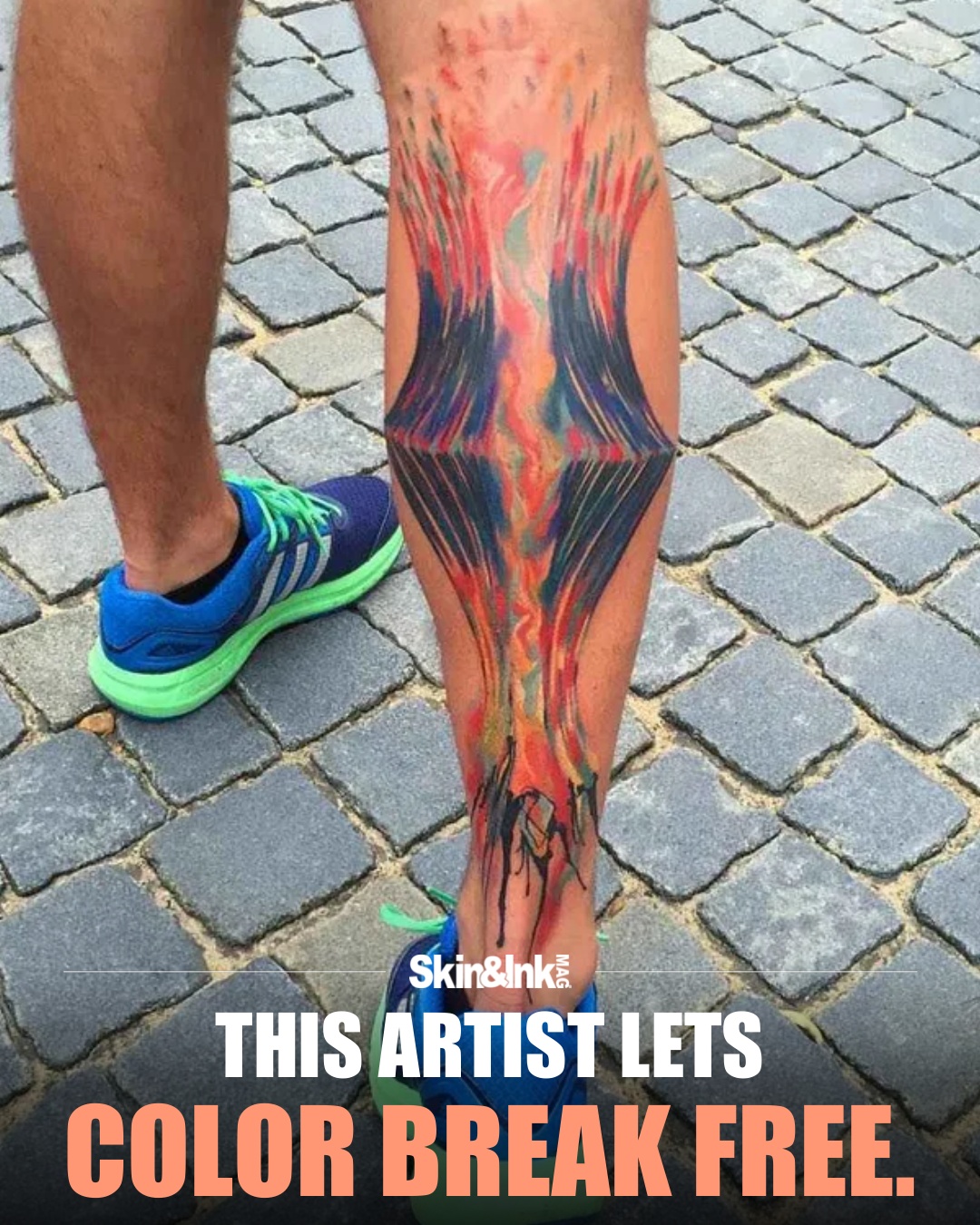
Faceted creatures and luminous color give familiar subjects an unfamiliar charge.
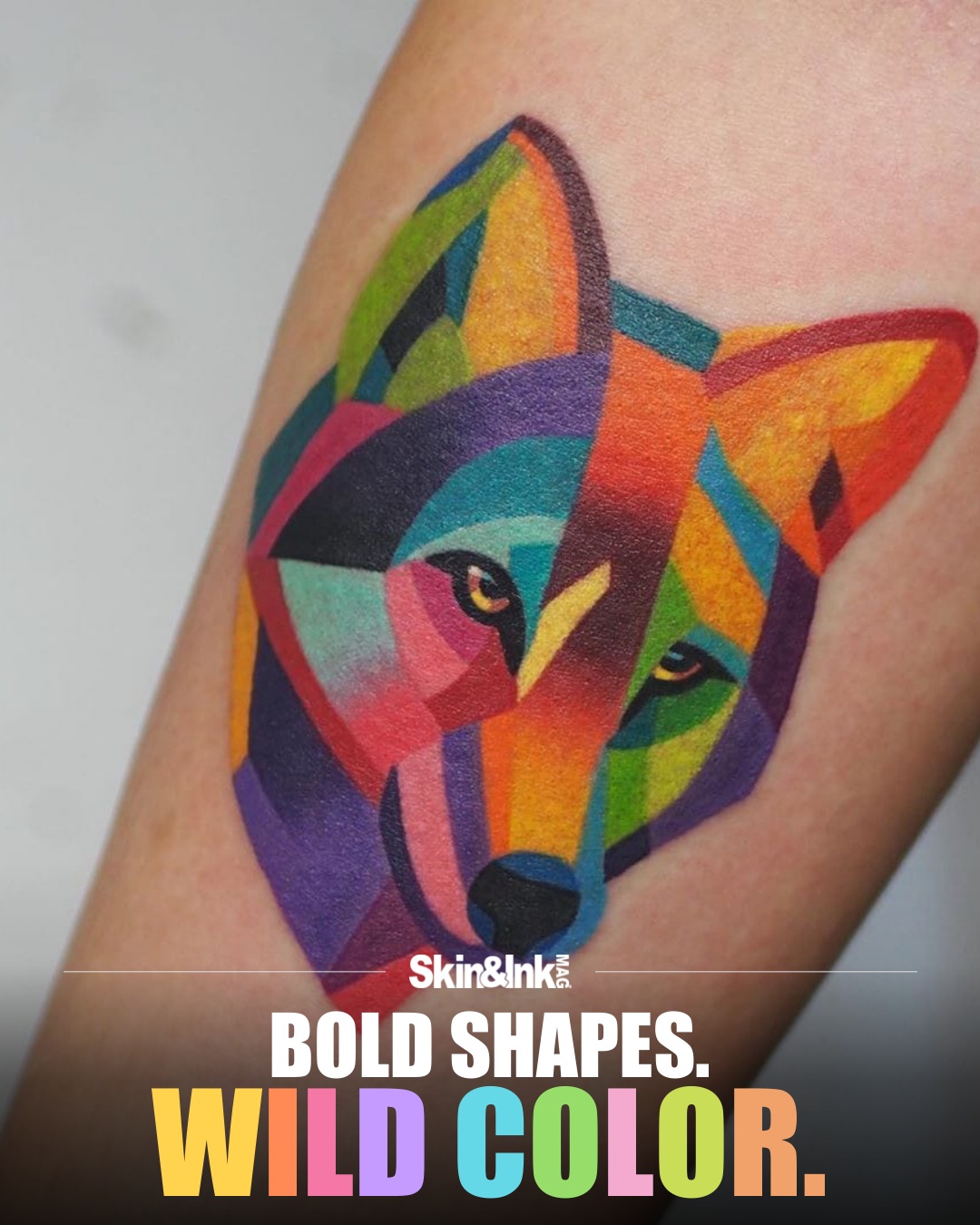
A fox is easy to recognize. Making a fox feel newly invented takes a different kind of looking. Sasha Unisex approaches the animal kingdom through color, breaking familiar creatures into planes that suggest folded paper, cut gemstones, and light passing through glass. The subject stays readable while its surface becomes something wonderfully improbable.
Her documented watercolor-to-tattoo process helps explain that balance. A painting can establish a silhouette, organize the color, and test how one tone meets another before the design reaches skin. In the work collected by Colossal in 2020, animals and flowers retain a strong relationship to those painted studies. The translation keeps the design’s graphic decisions visible.
Consider what a conventional animal portrait asks of shading: describe fur, build volume, convince us the creature could step out of the image. Unisex’s best-known approach gives color a different job. A cool plane can sit against a warm one and make a cheek turn. An angular division can suggest the edge of a muzzle. The eye follows those decisions without needing every hair accounted for.

That economy makes the silhouette important. Bold internal color has somewhere to live because the outer shape is legible. From farther away, the tattoo reads as an animal or flower; closer in, the viewer starts reading relationships between its parts. There are two speeds of attention inside the same image.
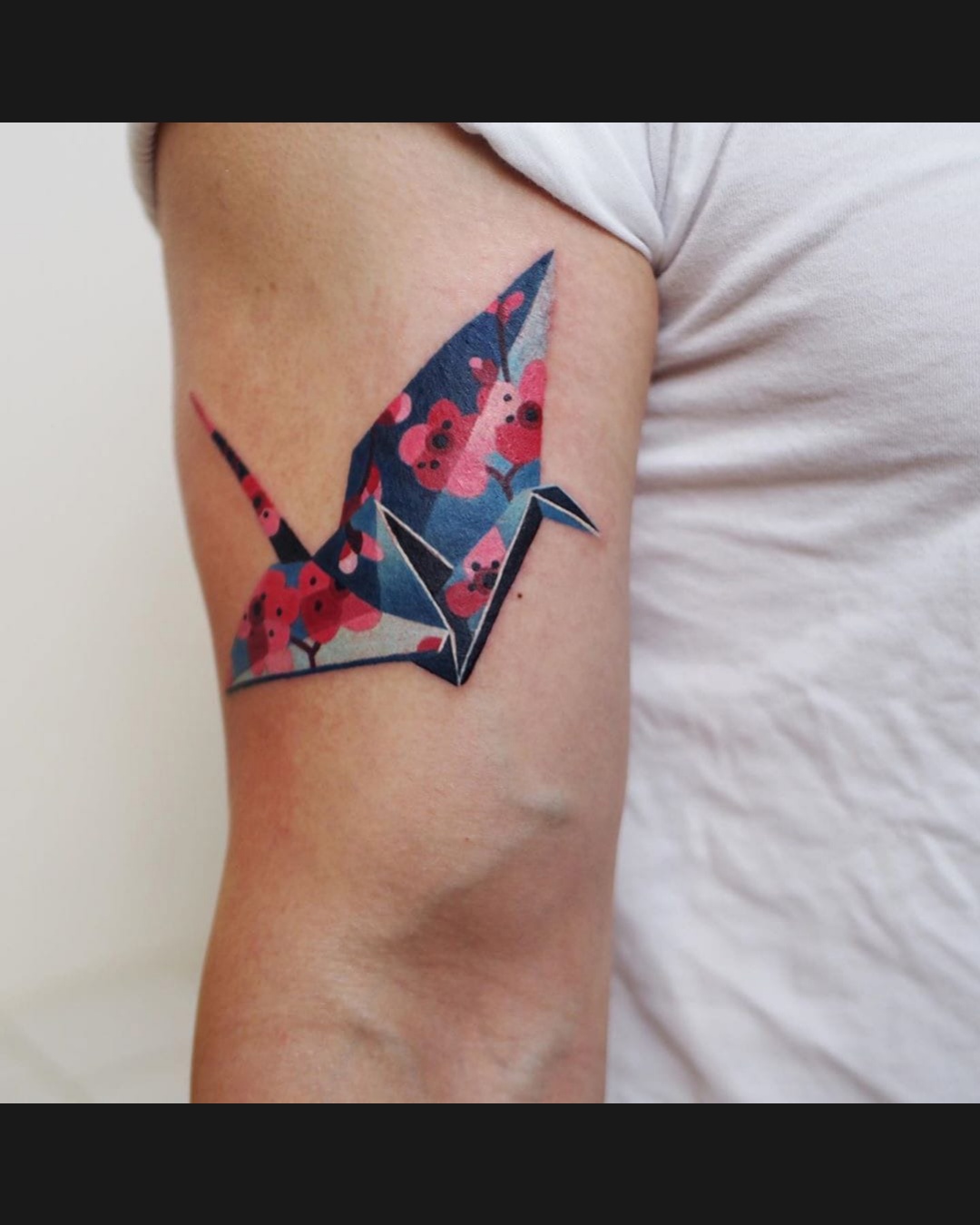
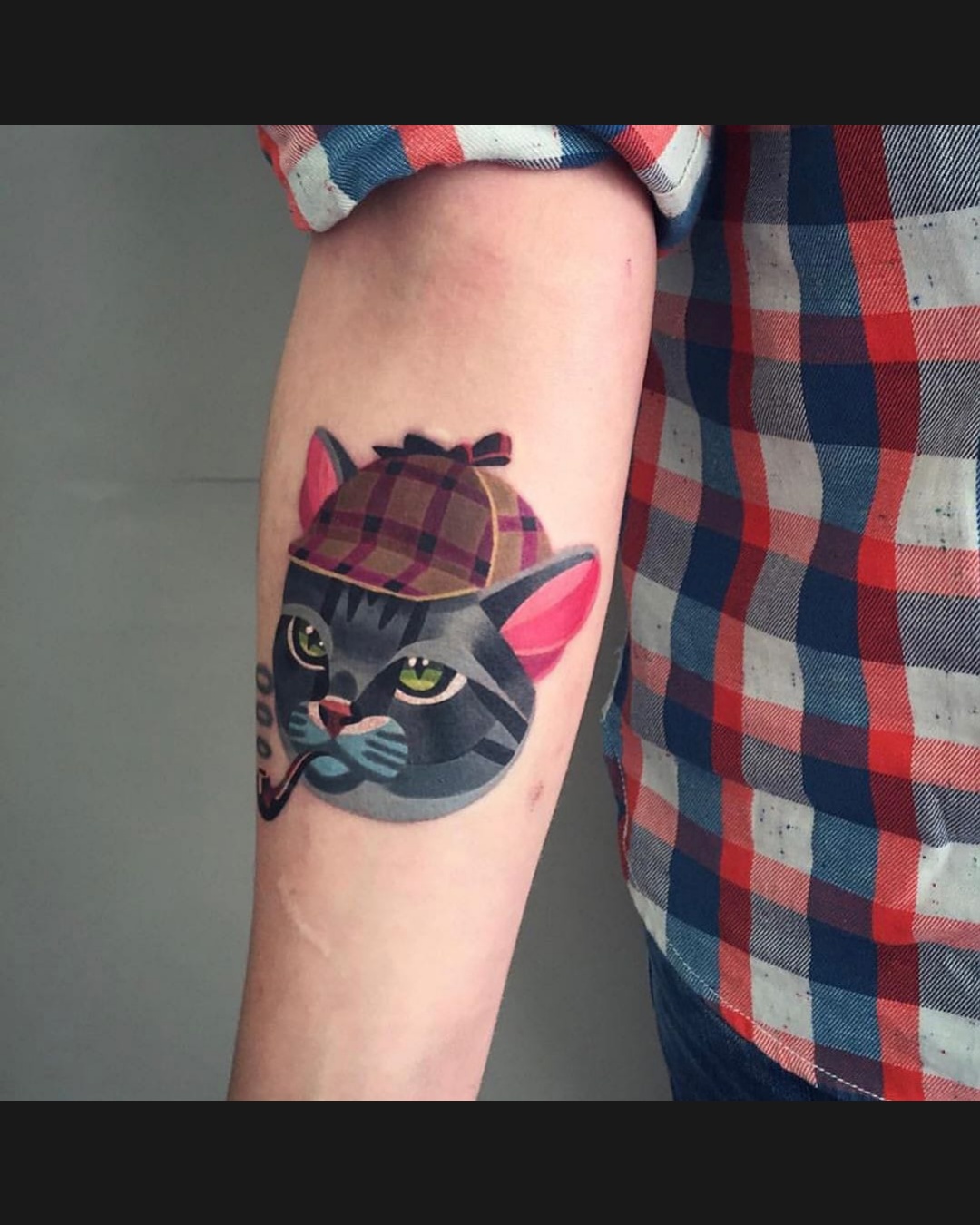
The cherry-blossom-patterned origami crane in Colossal’s selection makes that play between surface and subject particularly clear. Its folded form carries another image inside it. Elsewhere, a hat and pipe give an animal a human persona before color adds its own strangeness. The origami-like character of these designs adds another layer. Folded paper already turns a flat surface into a convincing object through a few decisive changes of direction. A tattoo brings that idea back onto a surface, then lets the body’s curves complicate it again. The result can feel precise and playful at once.
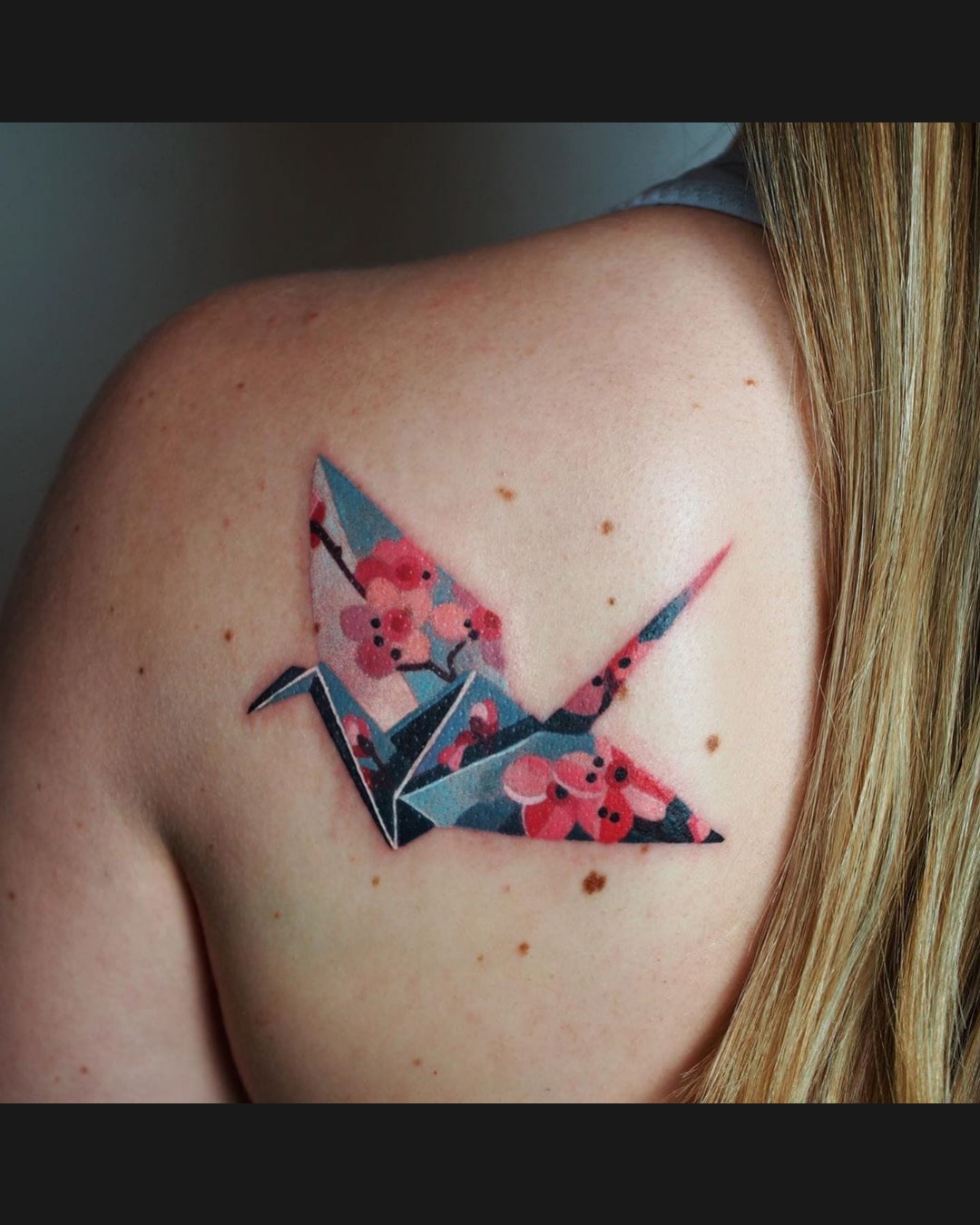
For anyone studying this work, color alone is only part of the lesson. Pay attention to where a shape ends, how much information a face needs, and which neighboring hues create the strongest shift. Those choices give the brightness structure. Without them, even a beautiful palette can become noise.
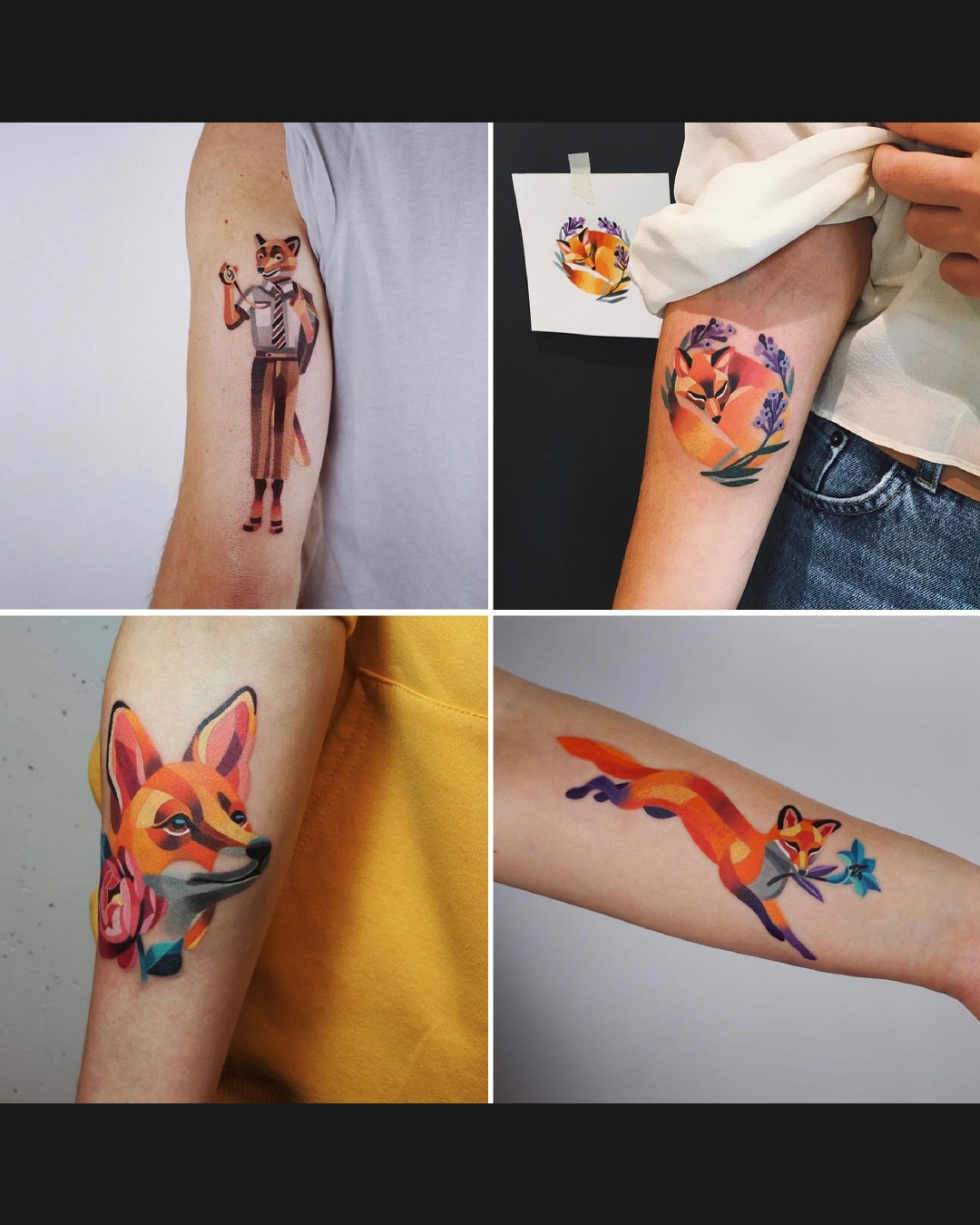
Unisex’s work rewards the first glance with immediate impact, then offers a reason to stay. The animals remain familiar enough to invite recognition, yet strange enough to escape being ordinary souvenirs of nature. A small creature becomes a study in how much a picture can change while still feeling unmistakably alive.
Explore more work from Sasha Unisex.