Paint-like gestures ask us to look at tattooing through movement, texture, and time.
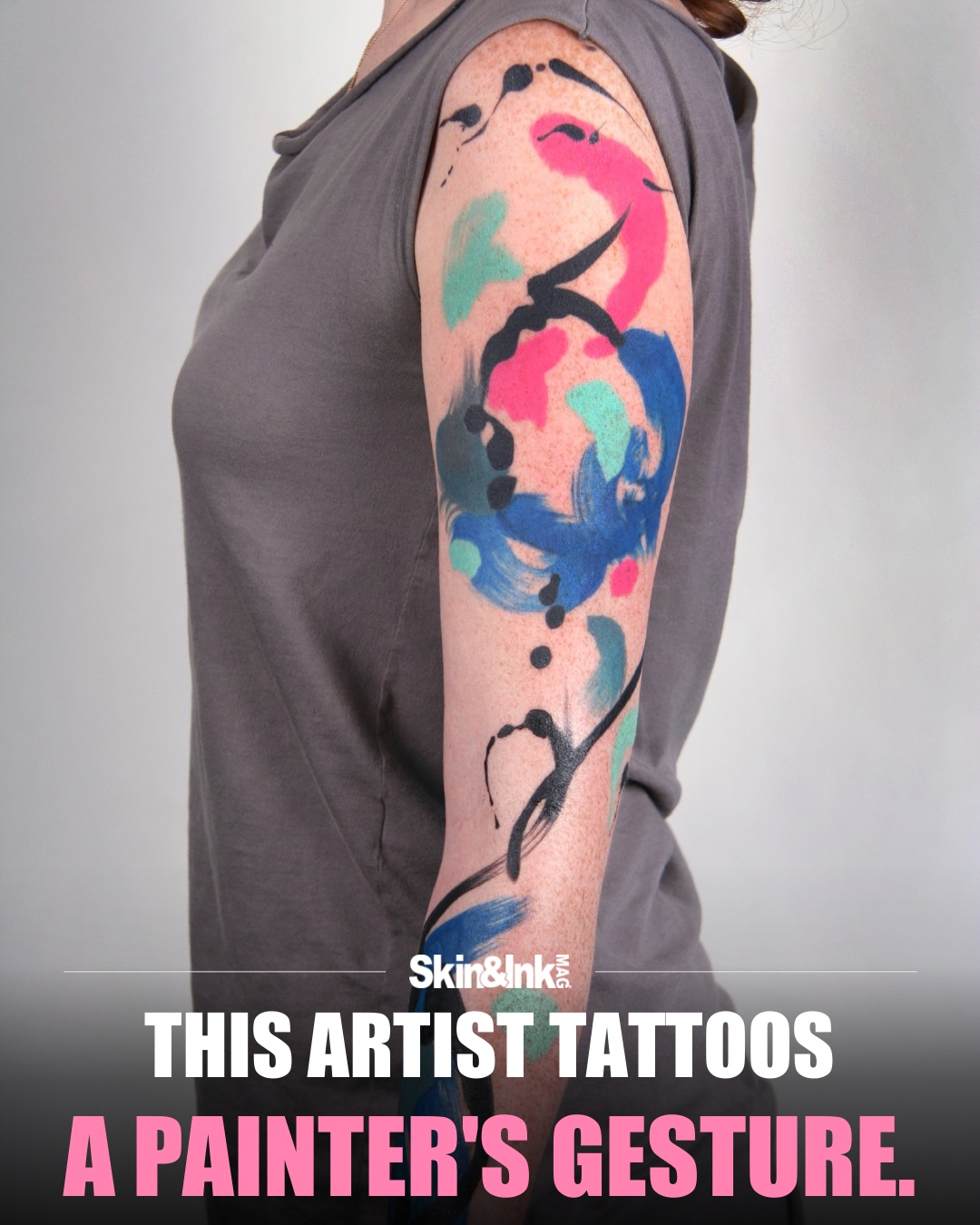
A brushstroke carries evidence of a movement. It can look quick, hesitant, heavy, or almost airborne. Amanda Wachob’s painterly tattoo work brings that vocabulary onto skin, where a mark that appears spontaneous becomes something a person can carry through ordinary life.
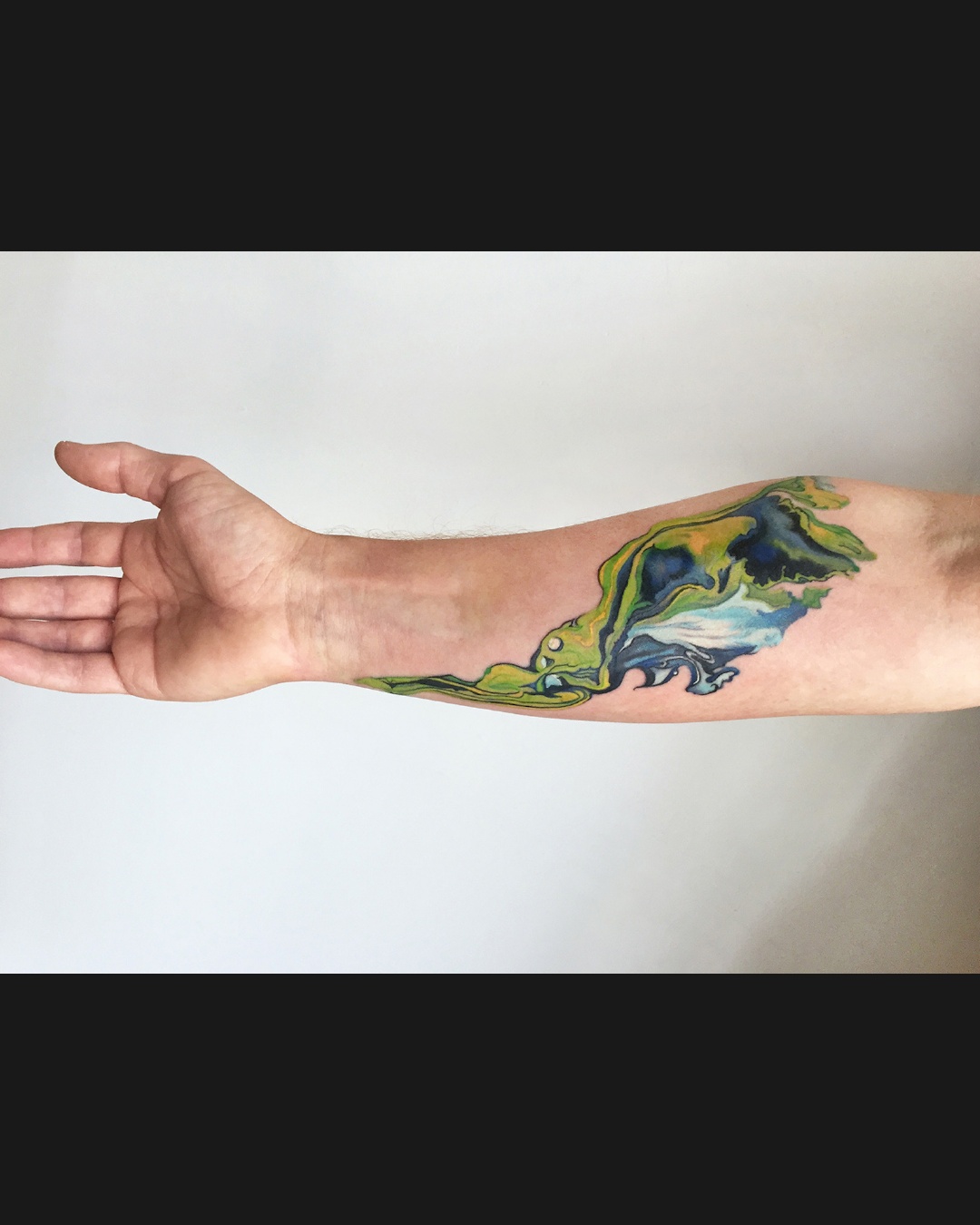
That meeting of gesture and permanence gives the work its charge. A wash of color suggests fluidity. A broken edge can suggest a brush running out of paint. A loose cluster of marks invites the eye to move without first demanding that it identify a conventional symbol. Looking becomes a response to rhythm, density, and placement.
The distinction between appearance and process matters. A tattoo that resembles a painted gesture still has to be made through tattooing. The apparent speed of the image tells us about its visual effect, not how quickly the artist completed the session. That gap between the finished mark and the care required to make it is part of the fascination.
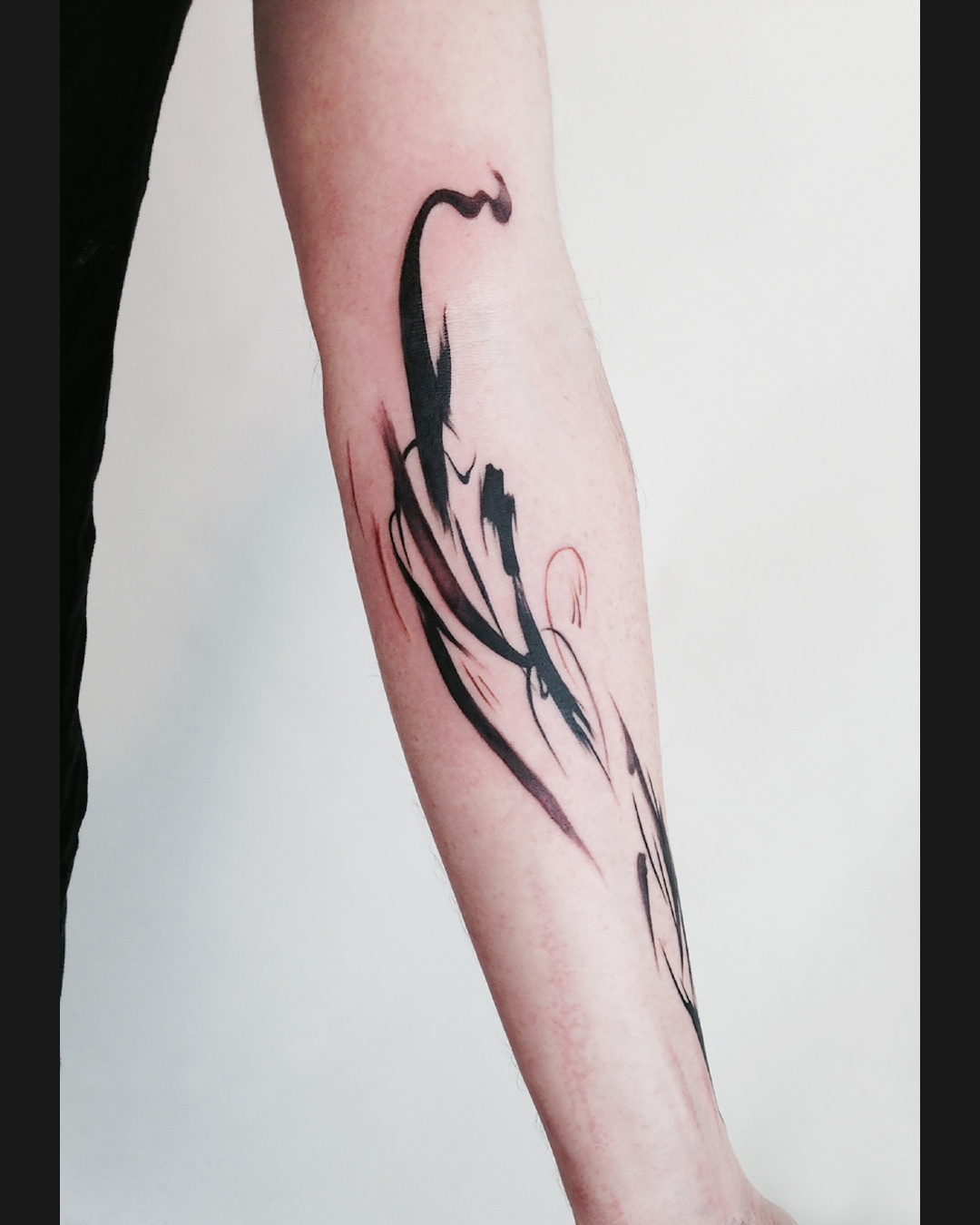
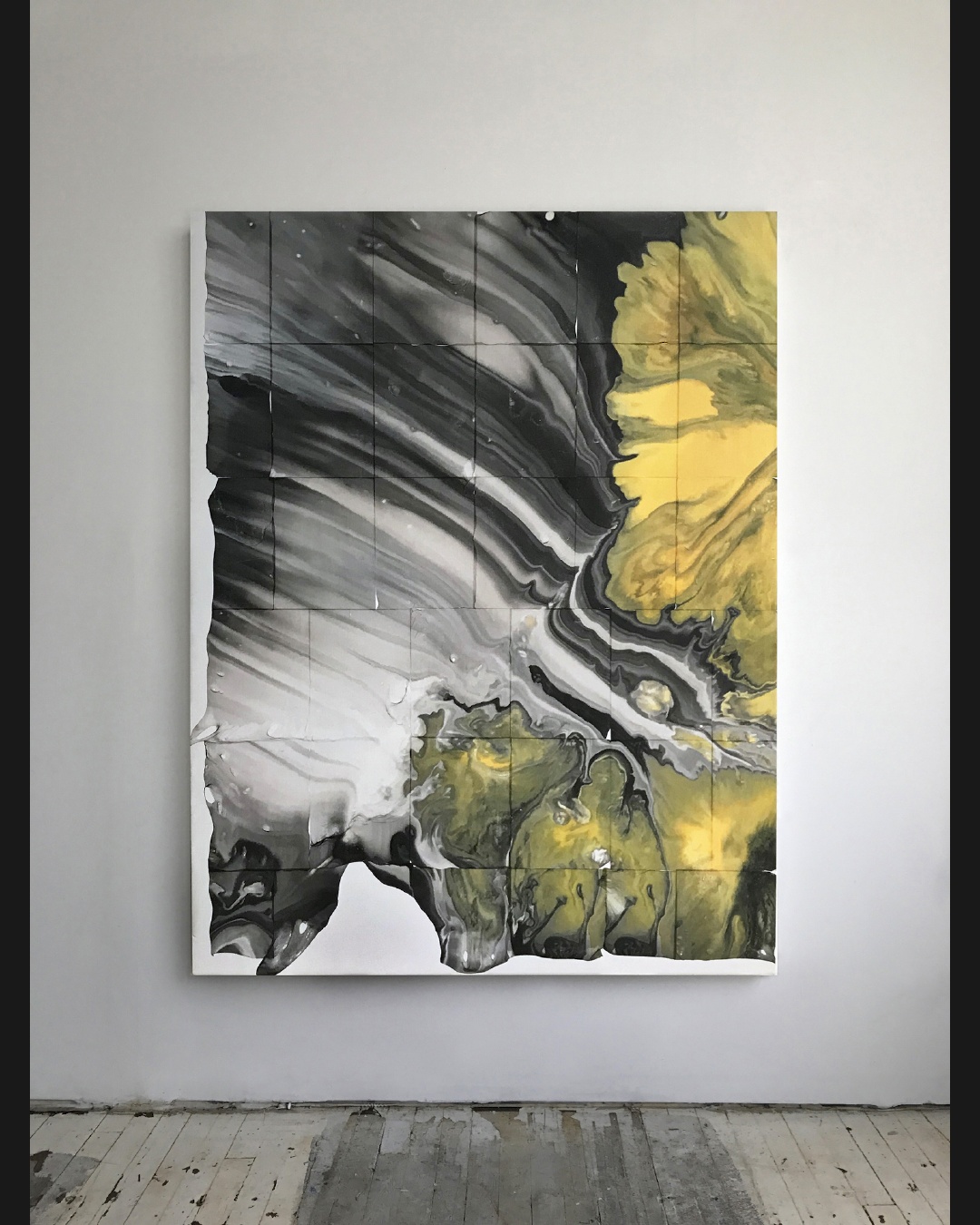
Wachob’s wider practice has taken these questions into exhibition spaces. MCA Denver presented Amanda Wachob: Tattoo This in 2019, and her official portfolio includes a project connected with that museum. Contemporary reporting on the exhibition describes work across tattooing and other surfaces, offering a broader setting for the marks associated with her name.
An exhibition changes the conditions of attention. We expect to consider a work’s materials and the decisions behind its making. A tattoo introduces a further complication: its surface belongs to someone, moves through the world, and cannot be separated neatly from the person wearing it. The artwork continues outside the room where it was first encountered.
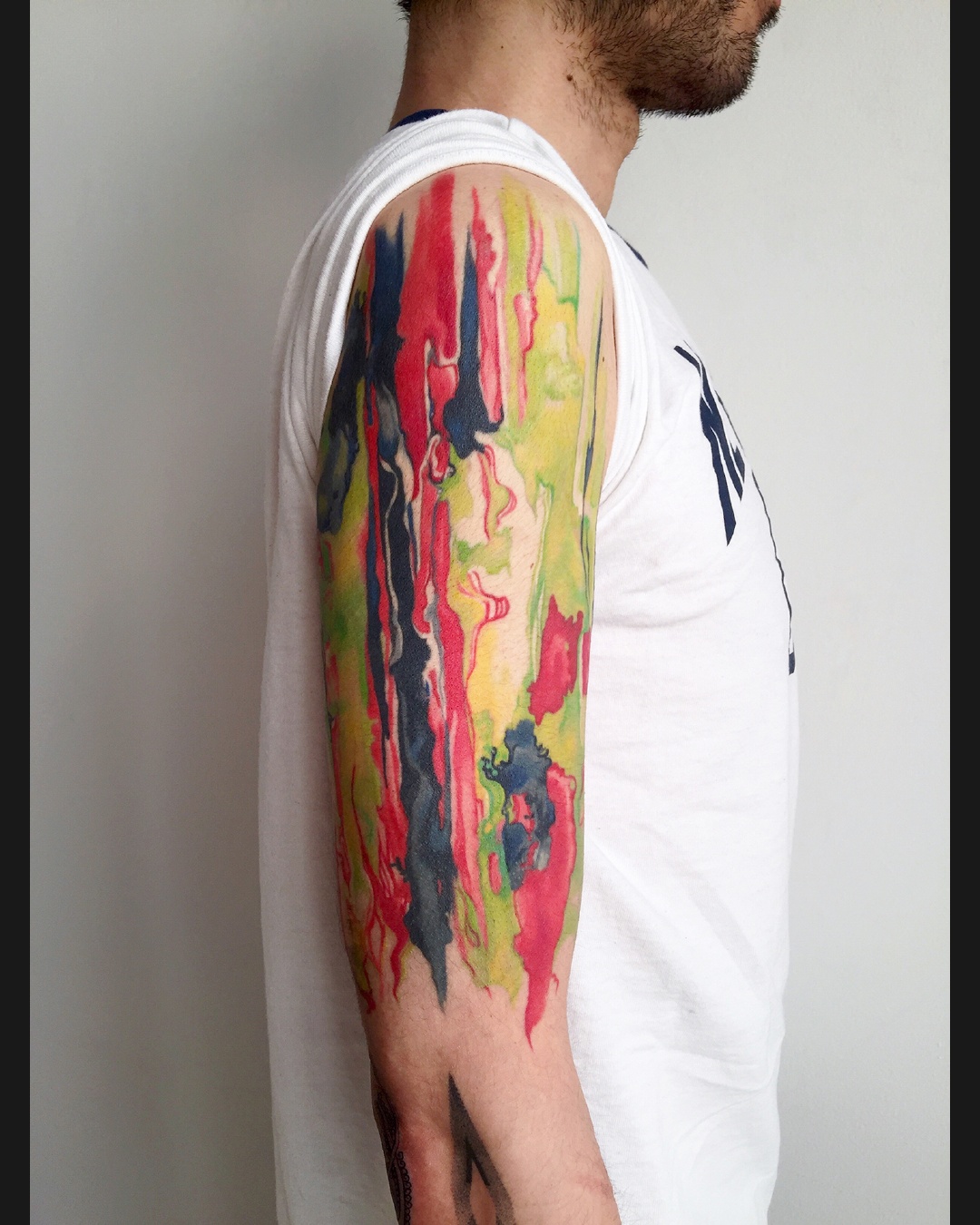
Her abstract vocabulary makes that relationship especially interesting. Without a familiar emblem to settle the meaning, a viewer may notice how a color area follows a curve or how a smaller mark balances a larger one. The body’s shape becomes part of reading the composition.
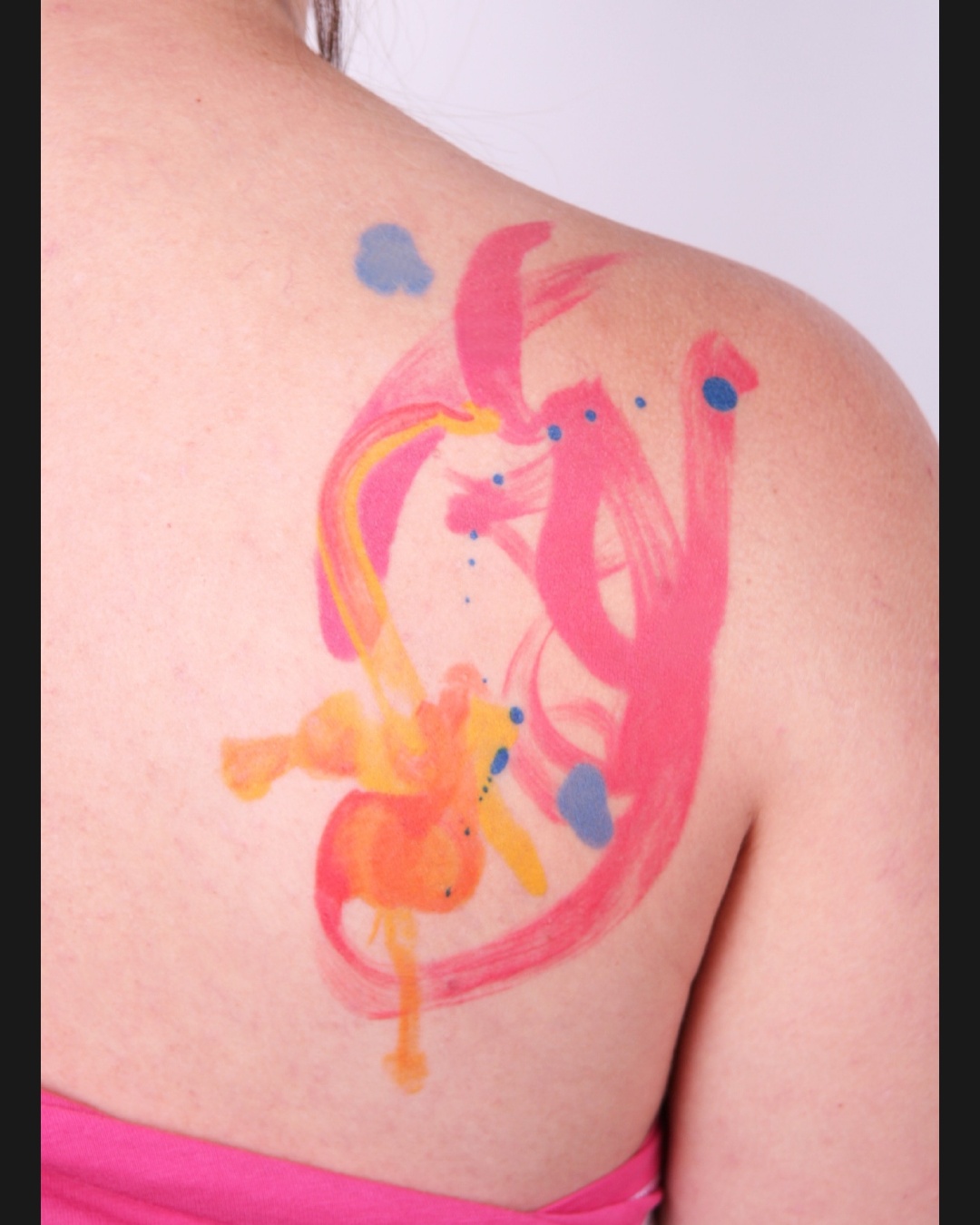
For people drawn to this work, the most useful starting point is close observation. Look for changes in texture. Notice whether a passage feels dense or airy, and where the design leaves room around itself. Resist reducing the entire effect to the label watercolor. That word can describe a resemblance while missing the particular decisions that make an image compelling.
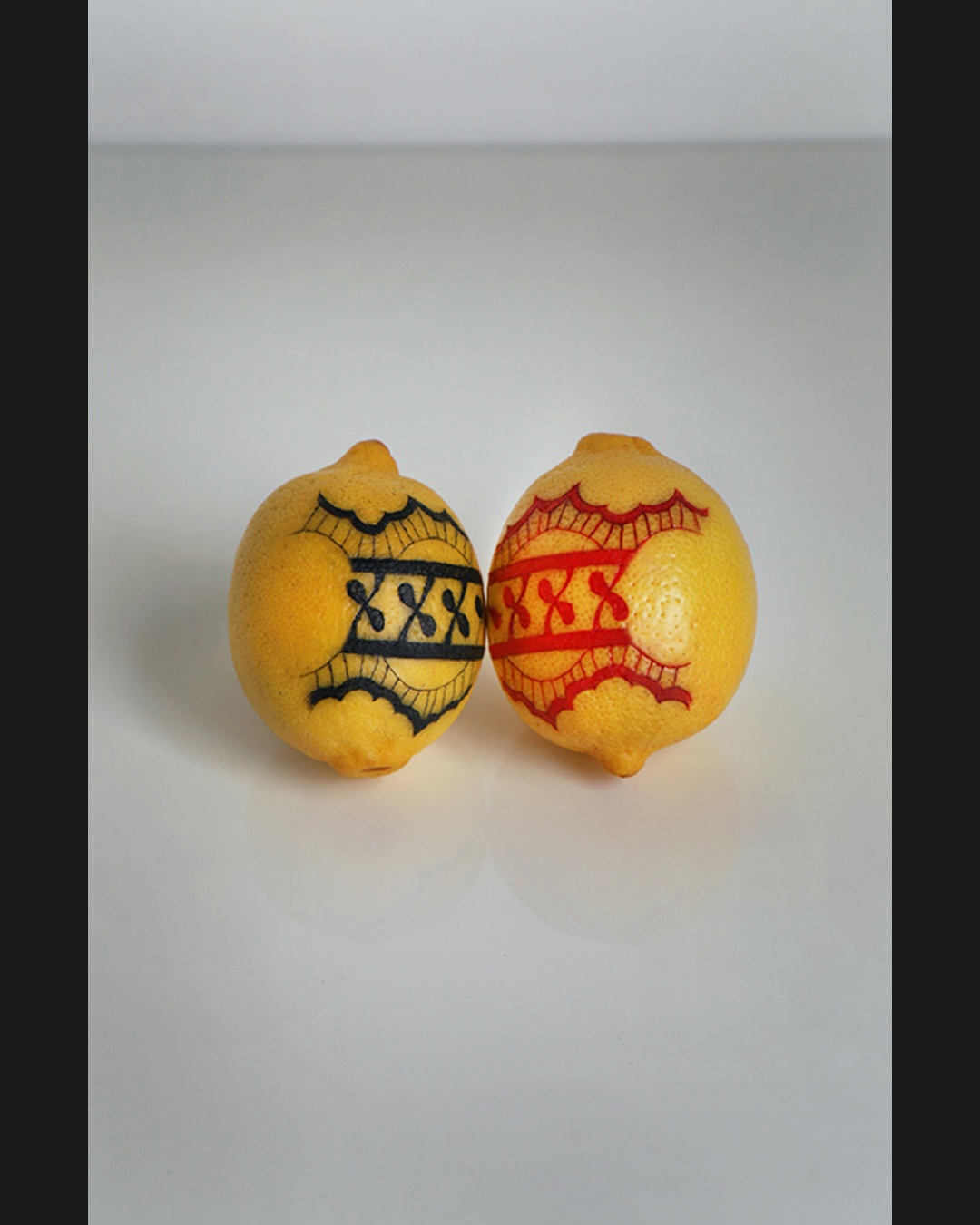
Wachob gives a mark enough space to become a subject. It can hold movement without depicting an object, invite feeling without dictating a story, and make skin a place to consider what a painted gesture might become.
Explore more work on Amanda Wachob’s official website.