Serpentine forms turn contrast and repetition into a tattoo that keeps the eye moving.
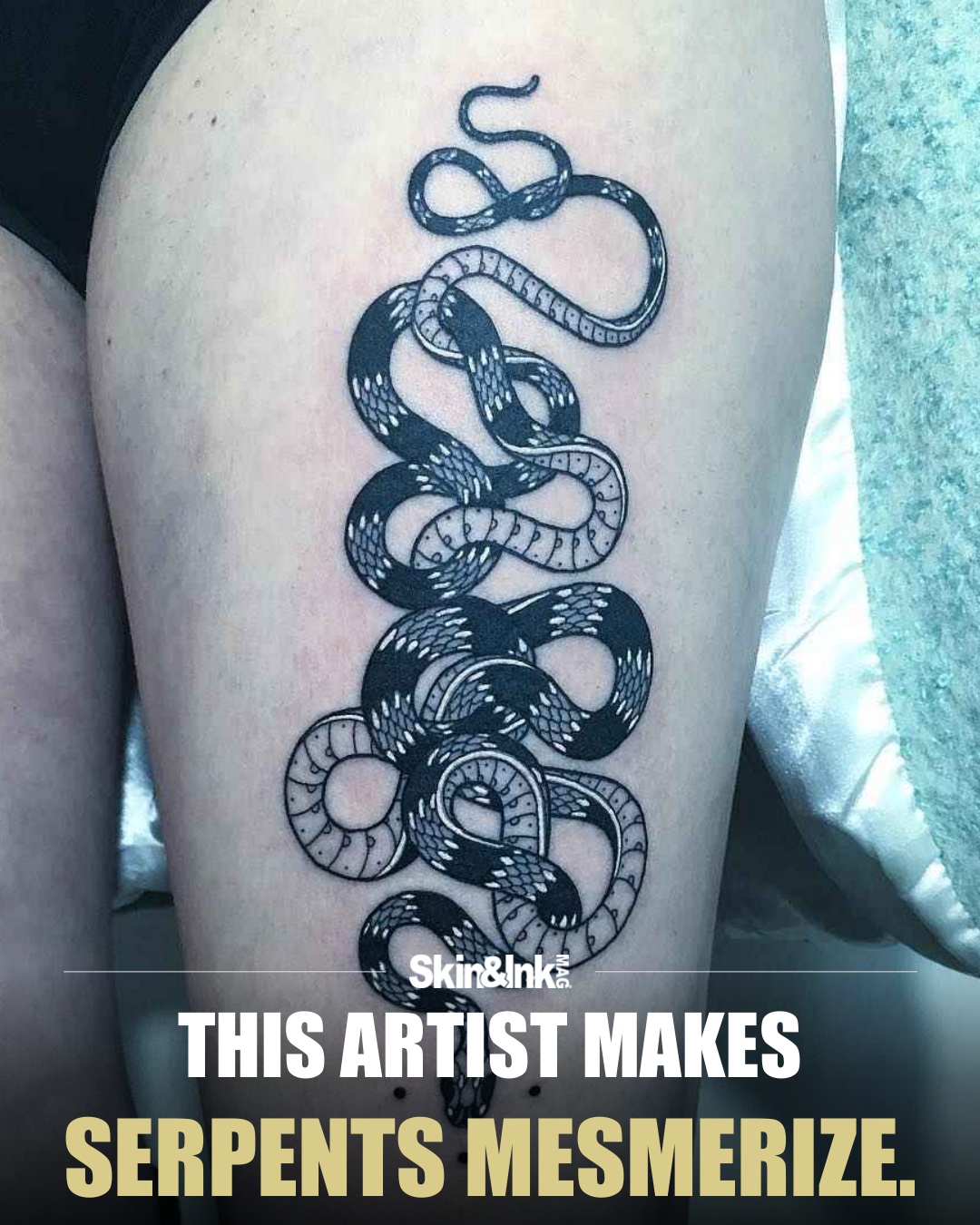
A snake gives a tattoo artist a line that can look back at you. It can coil, cross itself, disappear around an arm and return on the other side. Mirko Sata has built a recognisable body of work around those possibilities, making the serpent a vehicle for pattern, contrast and controlled confusion.
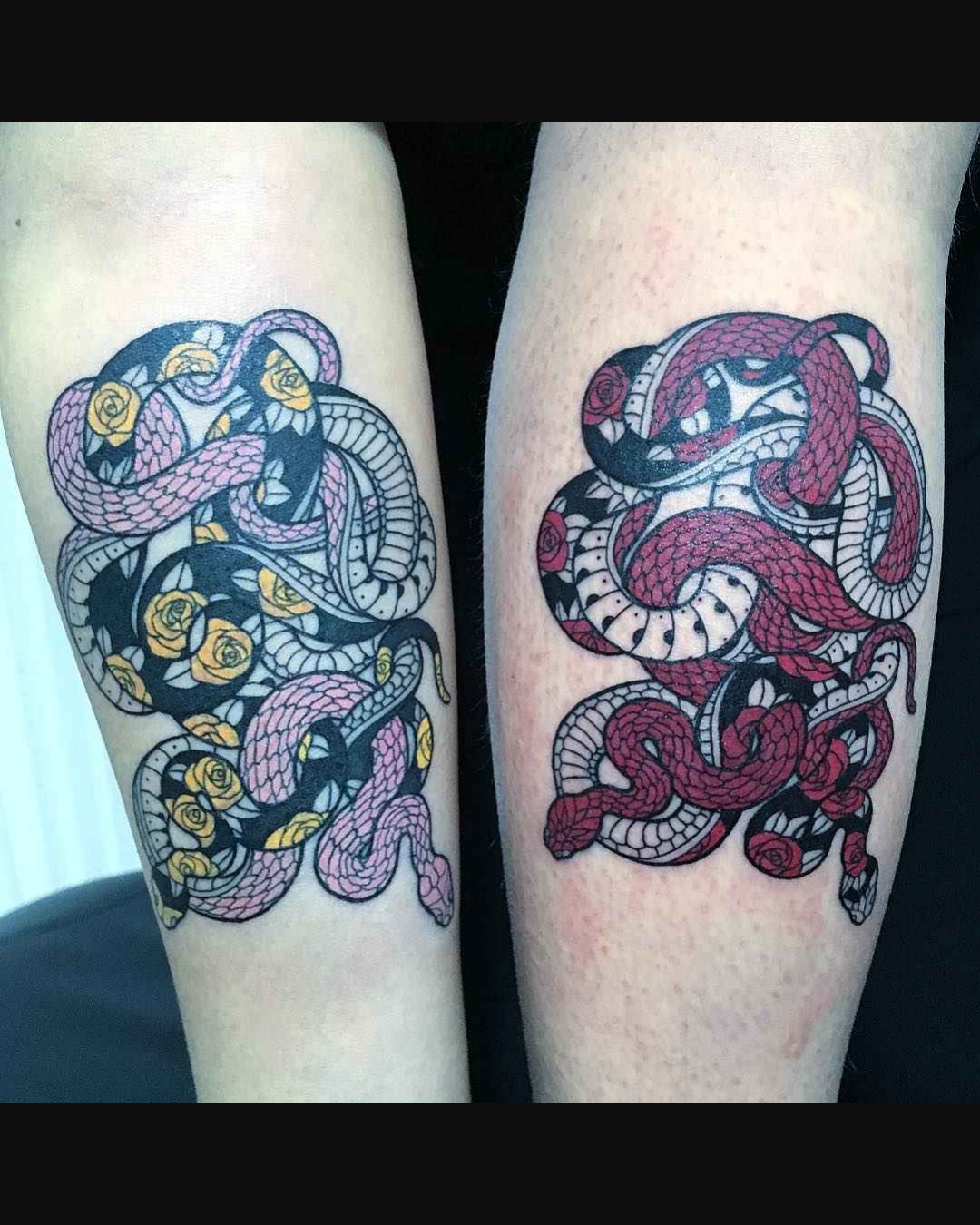
In the work documented by Colossal in 2016 and 2017, black and white snakes twist through one another, while other pieces introduce red and green or floral patterning. The animal stays readable even as its surface becomes an opportunity to experiment. You know what you are following. Keeping track of where it goes takes a little more effort.
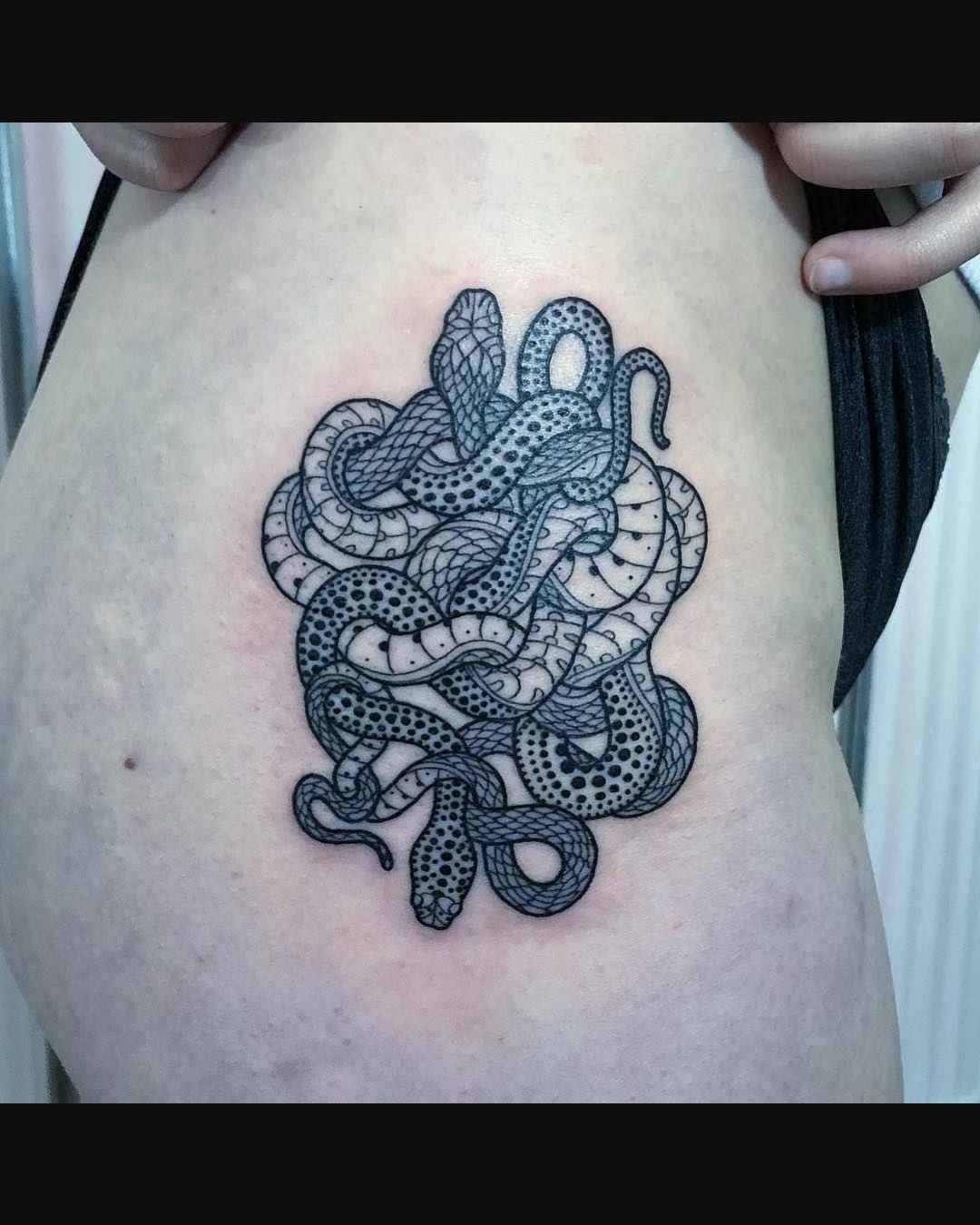
That effort is the pleasure. A crossing creates a small visual question: which body passes in front, which slips behind, and where does the next curve begin? Repeat those crossings and the design acquires rhythm. The eye keeps moving, pulled along by something that feels both decorative and potentially alive.
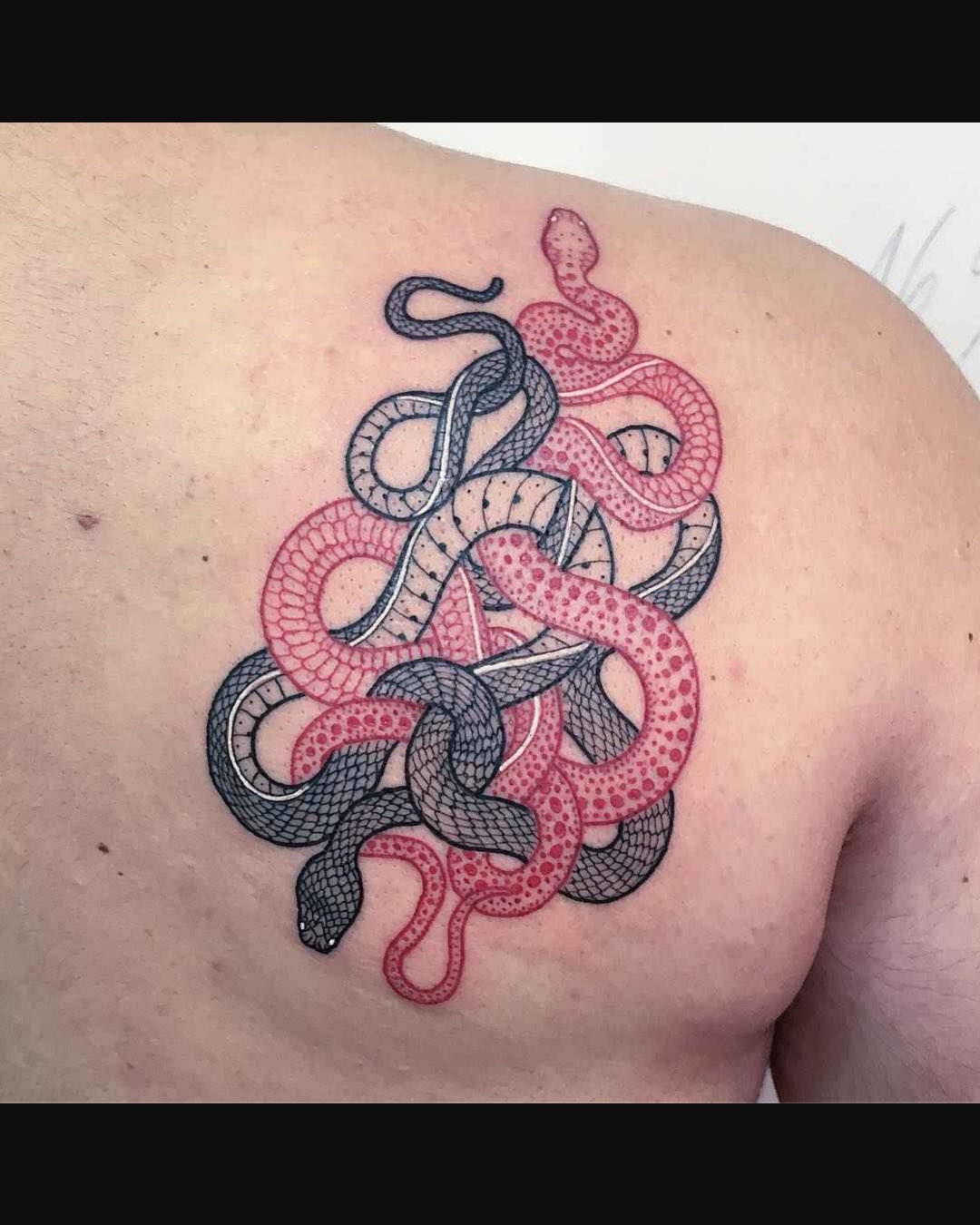
The snake is especially suited to tattooing because its shape can respond to anatomy without losing its identity. It can narrow into a wrist, travel along a limb or make a compact knot. Its proportions offer flexibility while the head provides a distinct point of attention. A successful composition uses both: the long movement of the body and the punctuation of the face.
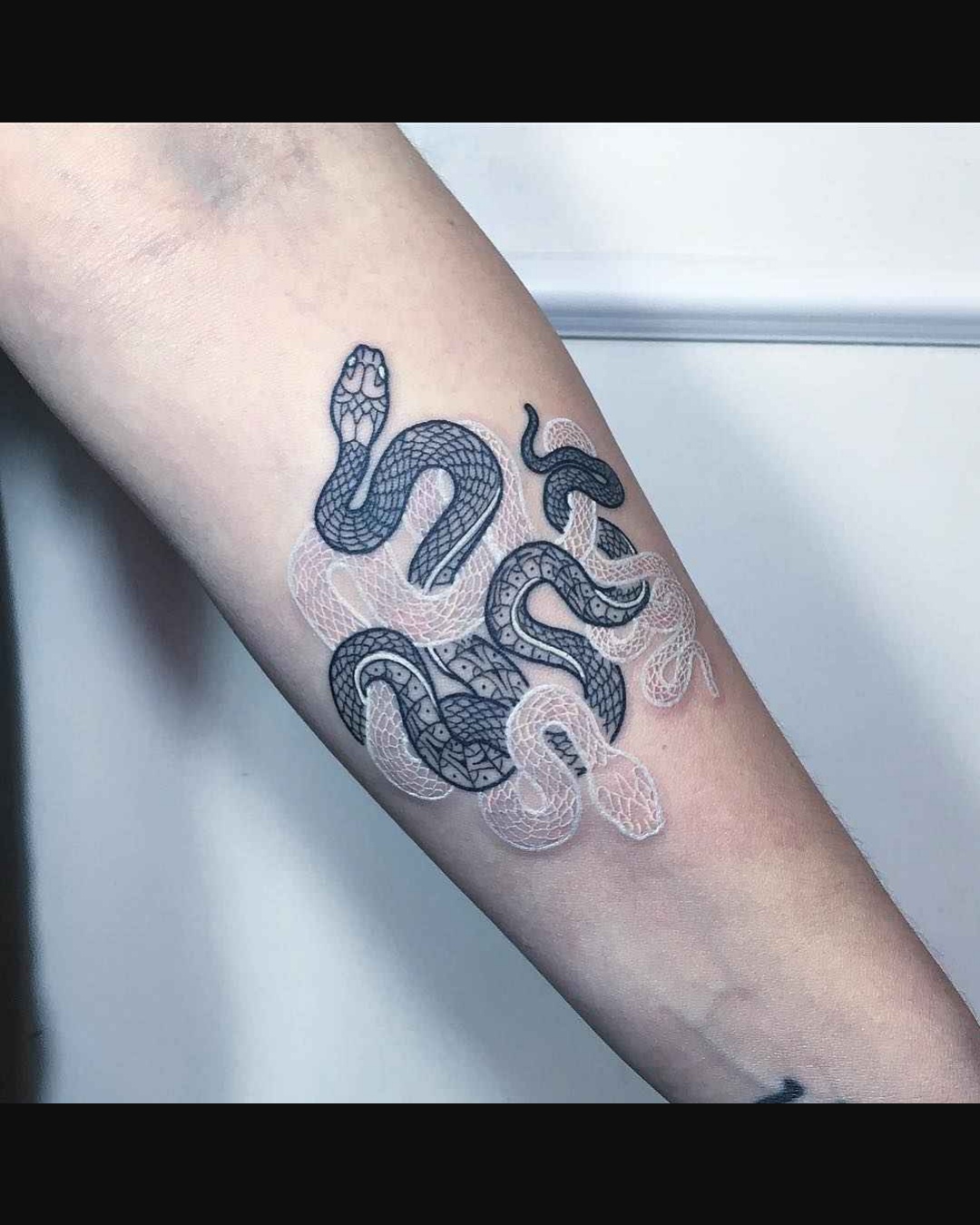
Sata's contrasting snakes make those mechanics easier to feel. Black establishes weight. Pale areas interrupt it. When colors separate intertwined forms, the palette also becomes a way of explaining the image. Pattern can complicate that explanation again, encouraging a second look at a surface you thought you had already understood.
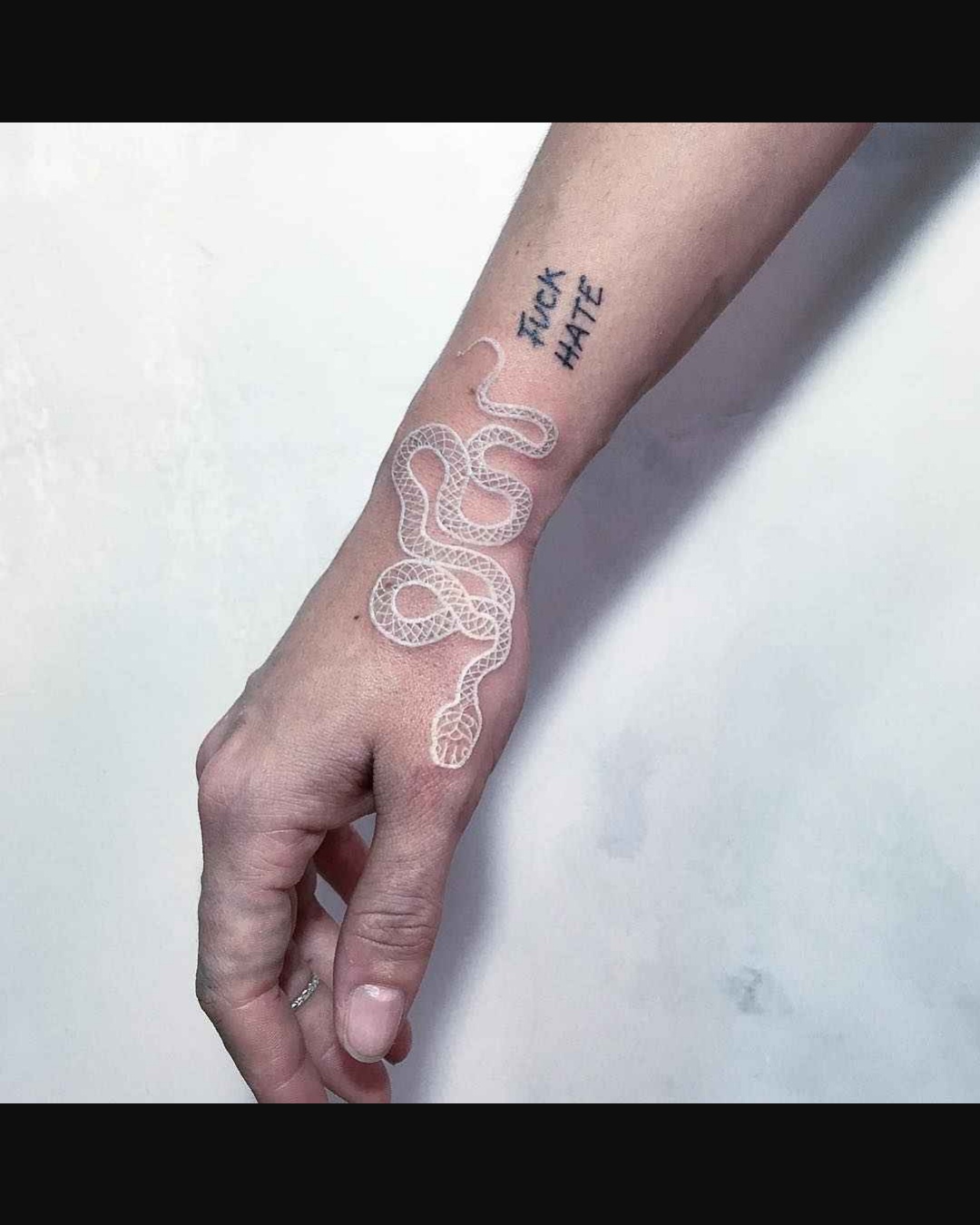
There is a reason a familiar subject can support so many different tattoos. Recognition gives the viewer a foothold. The artist can then change the pacing, density and arrangement around it. With a serpent, the most expressive decision may be the shape of a turn or the gap inside a coil.
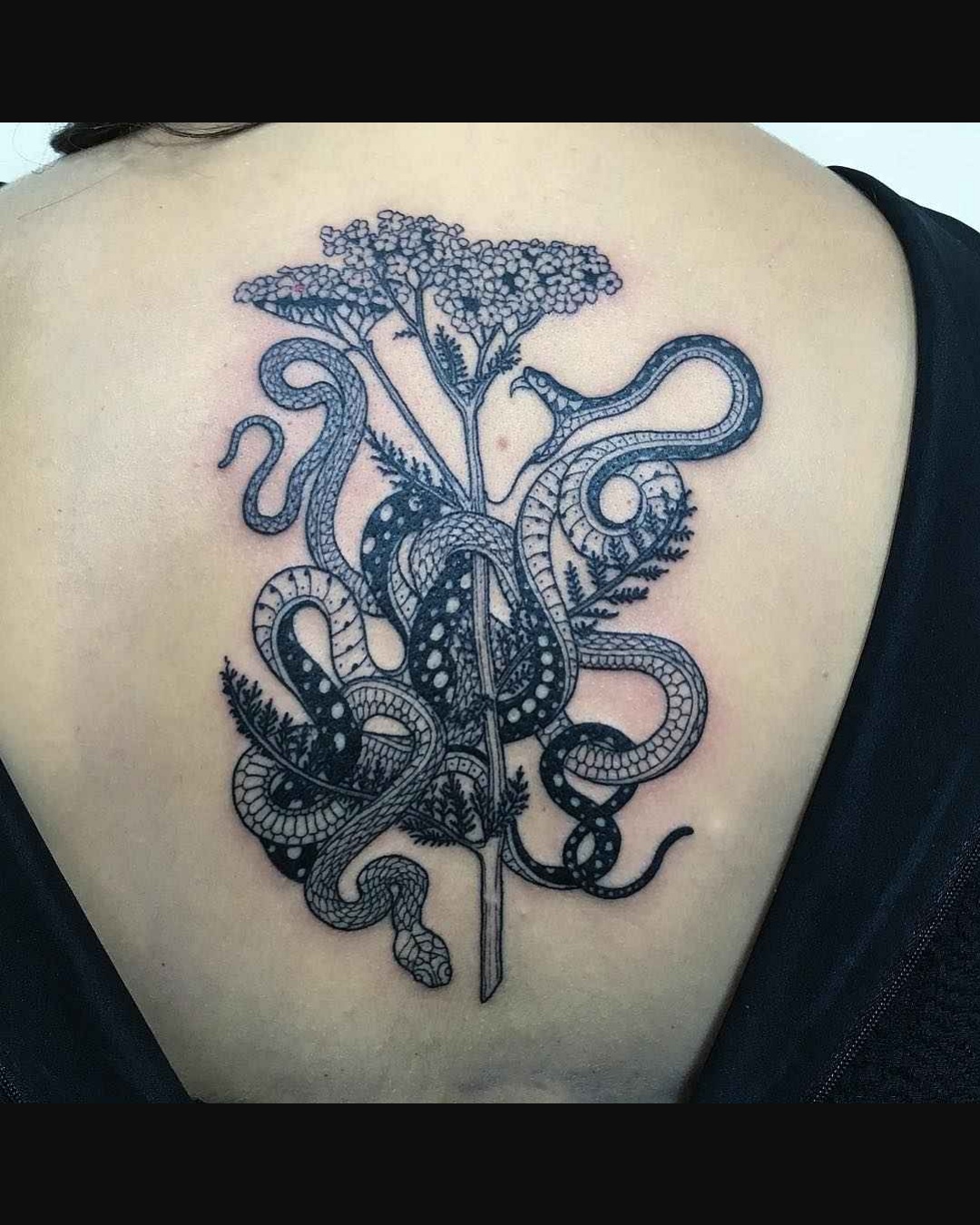
This feature looks at Sata's documented serpentine work rather than claiming to survey every direction of his current practice. Within that body of work, the attraction is clear: a compact visual language with enough elasticity to keep moving. Follow one curve to its end and another is already waiting to pull you back.
Explore more work from Mirko Sata.