A recognizable face is only the beginning. In Ralf Nonnweiler's portrait work, the lines around an eye, the weight of a brow and the shadow under a cheek do the real storytelling. Black and grey gives him a limited palette, but the range of expression inside it is anything but limited.
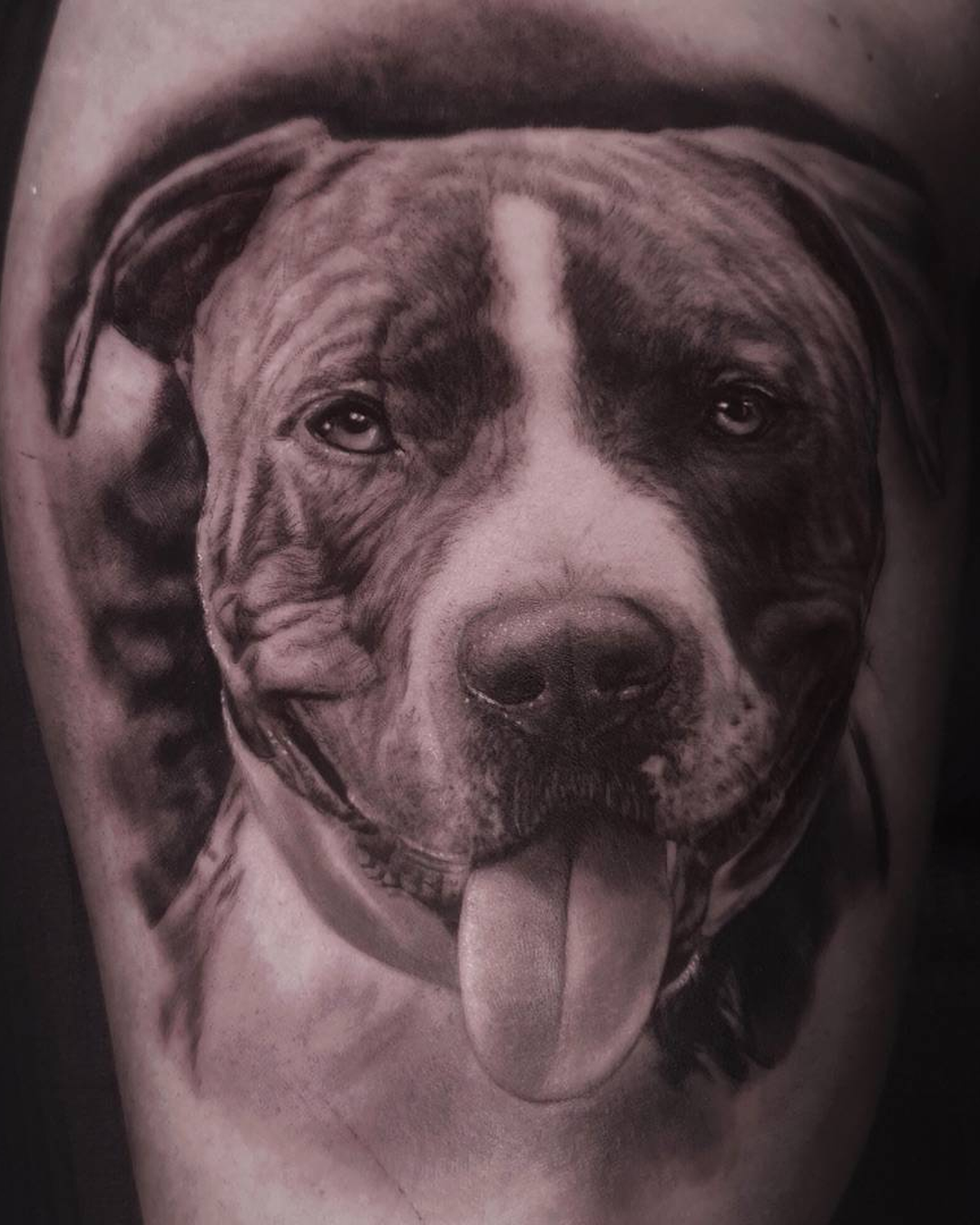
The selected gallery moves through human faces, screen characters and an animal portrait without losing that focus. Each image has a clear center of attention. You meet the eyes, register the expression and then start noticing the surfaces: wrinkled skin, hair, fabric and the transitions that make a flat photograph of a tattoo feel dimensional.
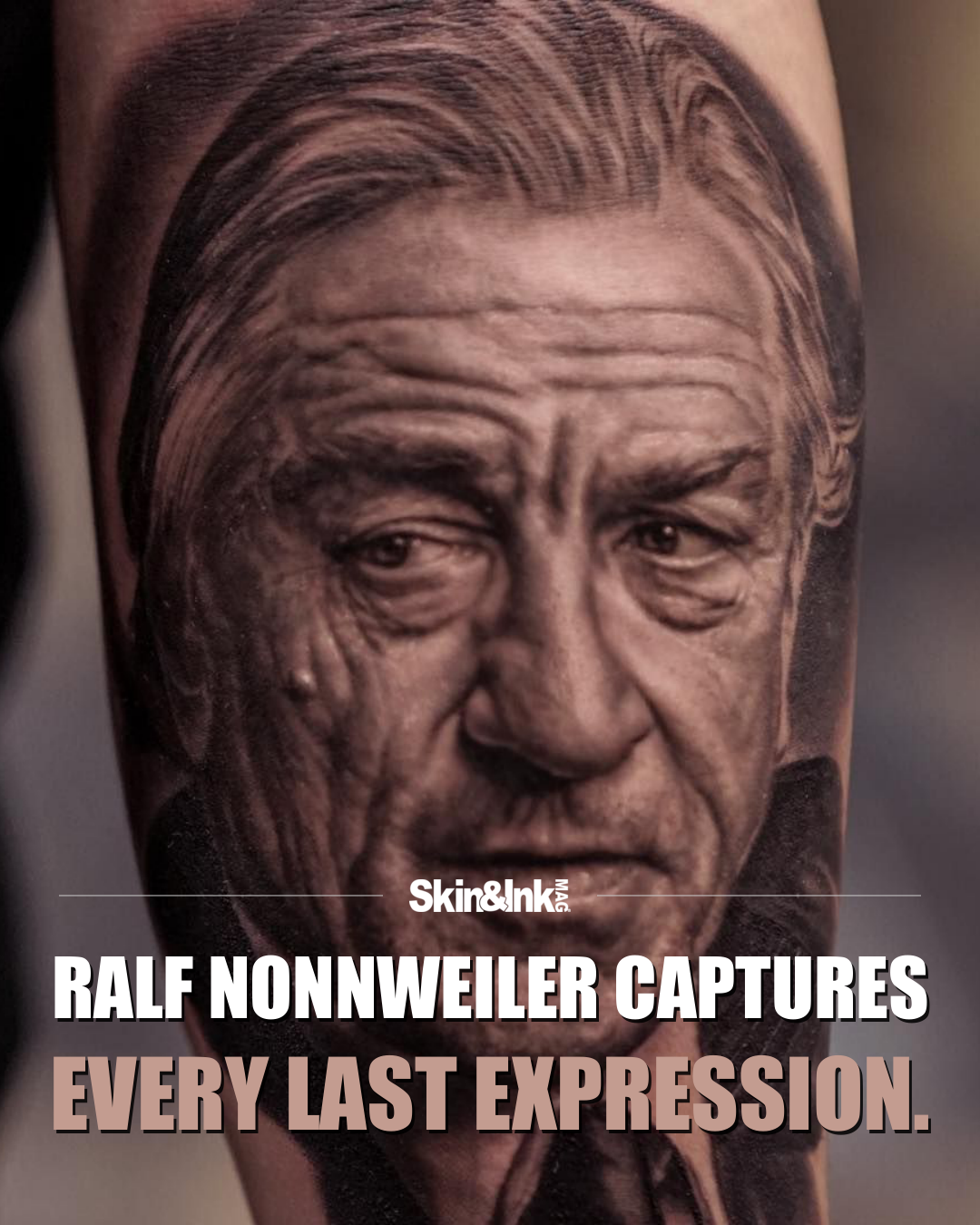
Look at the portrait of Robert De Niro. The forehead and eyes have plenty of information, but the face is not reduced to a collection of wrinkles. Light connects the features. Darker passages hold the structure together. The likeness emerges from those relationships, not from drawing every visible line with equal force.
The same principle works when the subject becomes more theatrical. A monster's face or an exaggerated screen expression can invite an overload of texture. Nonnweiler's strongest passages keep the hierarchy clear. The major shadows establish volume before the smaller marks begin their work. You can read the head from a distance and still find detail when you move closer.
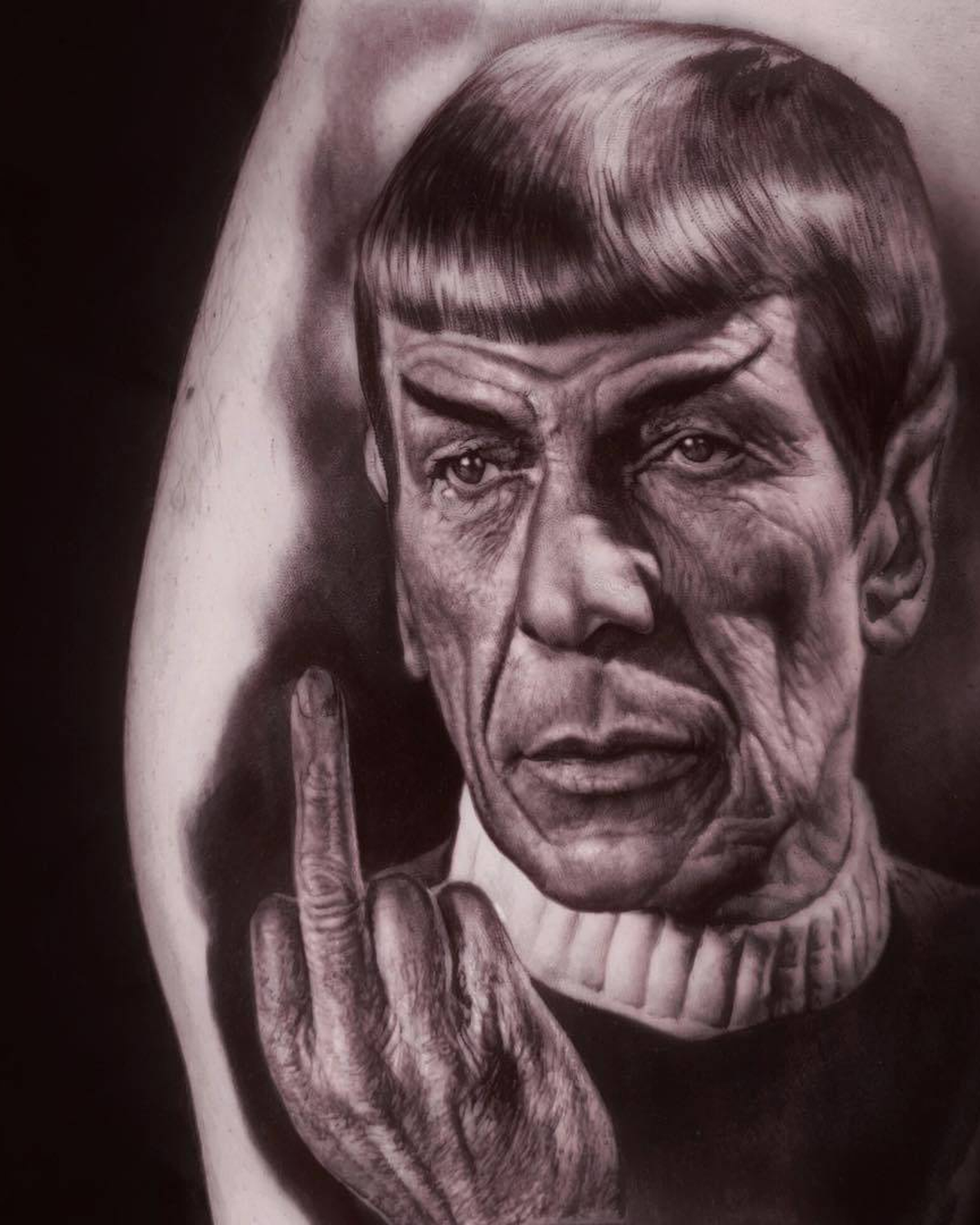
That distance test matters in tattooing. A portrait has to live on a curved surface, not just perform as a square image on a screen. In these photographs, the faces are composed to hold their presence on arms and legs. The body is not invisible, but neither does it break the subject into unrelated fragments.
The black-and-grey treatment also puts pressure on the edges. A hard boundary can sharpen a feature; a softer one lets it roll into shadow. The difference keeps the portraits from looking like cutouts. There are places where the image announces itself and places where it allows the skin to do some of the work.
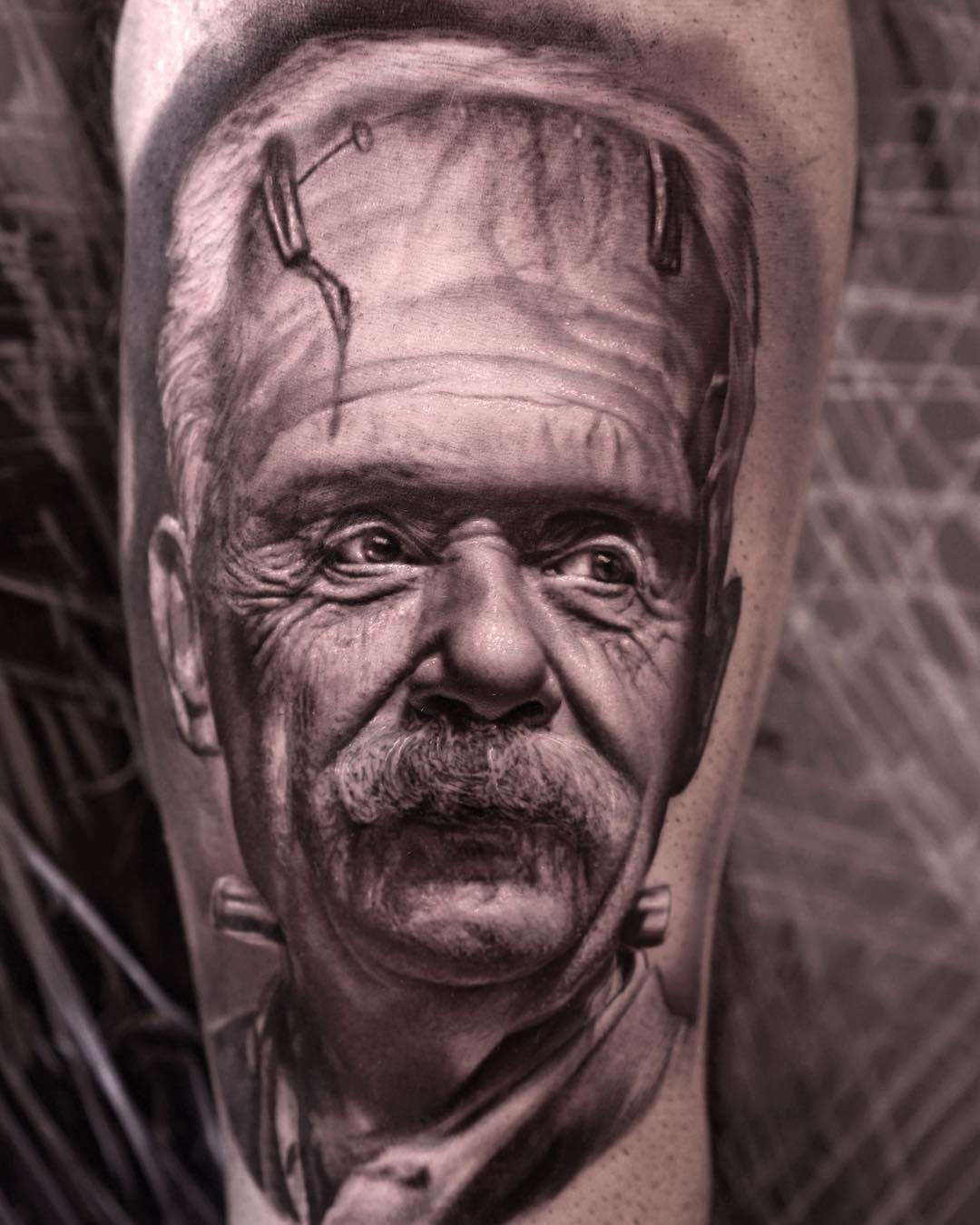
The feature here is not a competition over who can copy a photograph most closely. It is about how a tattoo makes a face feel present. Recognition gets your attention. Expression keeps it. That is why a sideways glance or a tired set of eyes can carry as much force as a dramatic character.
These pieces reward a slow swipe. Take in the expression first, then return to the value changes that built it. Nonnweiler's portraits make a strong case for restraint in the right places: let the face have the spotlight, and make every shadow earn its place.
See more: @ralfnonnweilerta2
Explore more from Ralf Nonnweiler on Instagram.