Deep black grounds give botanical tattoos a rich, luminous stage.
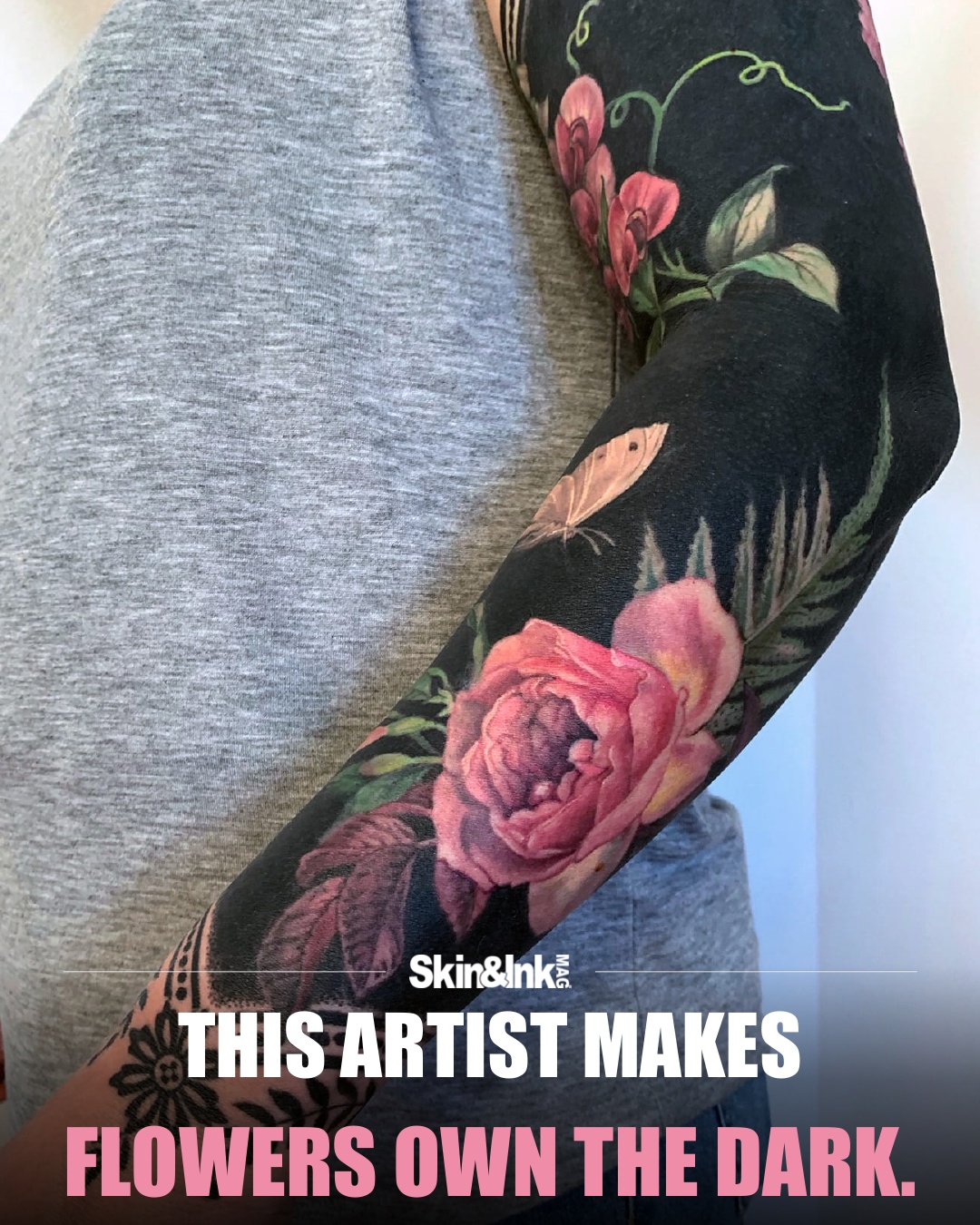
Flowers change character against darkness. A petal seems brighter, a stem becomes more deliberate, and the space around a bloom gains weight of its own. Esther Garcia uses that relationship to give botanical tattooing a particular richness. The background participates in the image as actively as the flower.
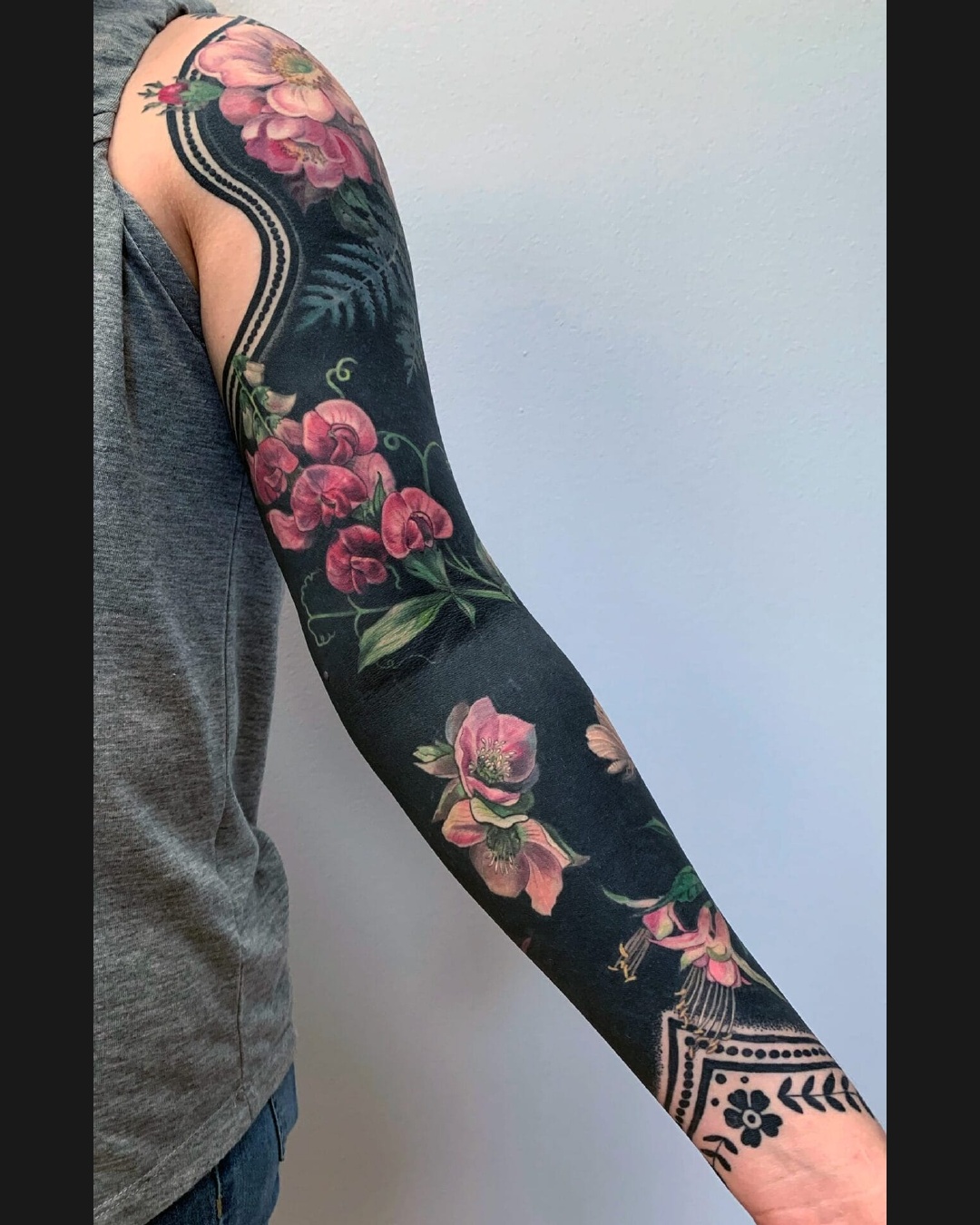
Her black-ground work has a practical history. In a 2019 conversation reported by Colossal, Garcia explained that the series began through cover-ups before developing into a broader ornamental approach. She also identified Dutch floral painting as an influence. Those details offer a useful way into the work: a solution to an existing tattoo became a visual language with possibilities of its own.
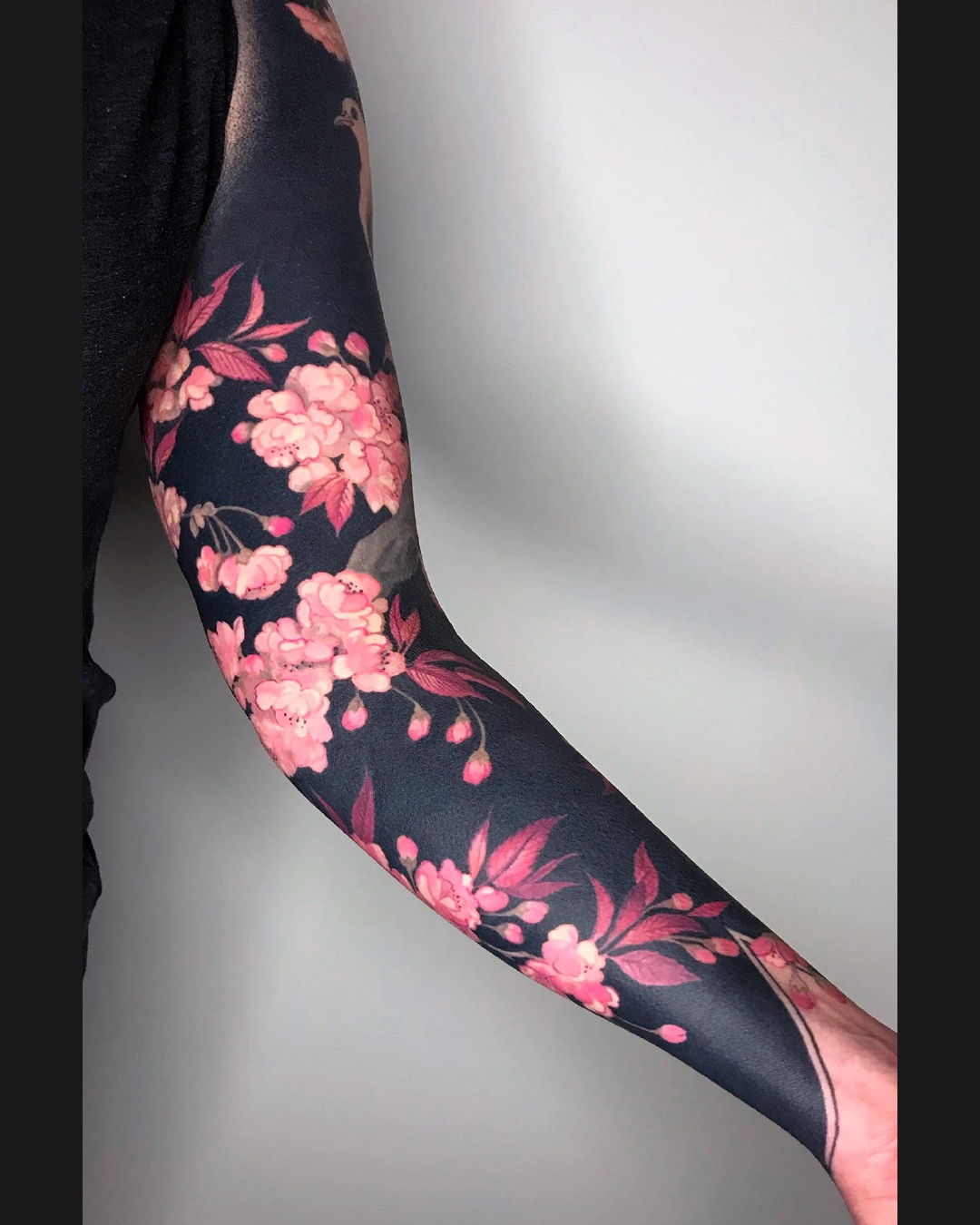
The attraction is easy to understand. A dark field can make a relatively delicate edge feel decisive. It can isolate a flower while bringing different elements into one composition. Roses, sweet peas, birds, and butterflies appear in the published examples, each given room to emerge from the surrounding black.
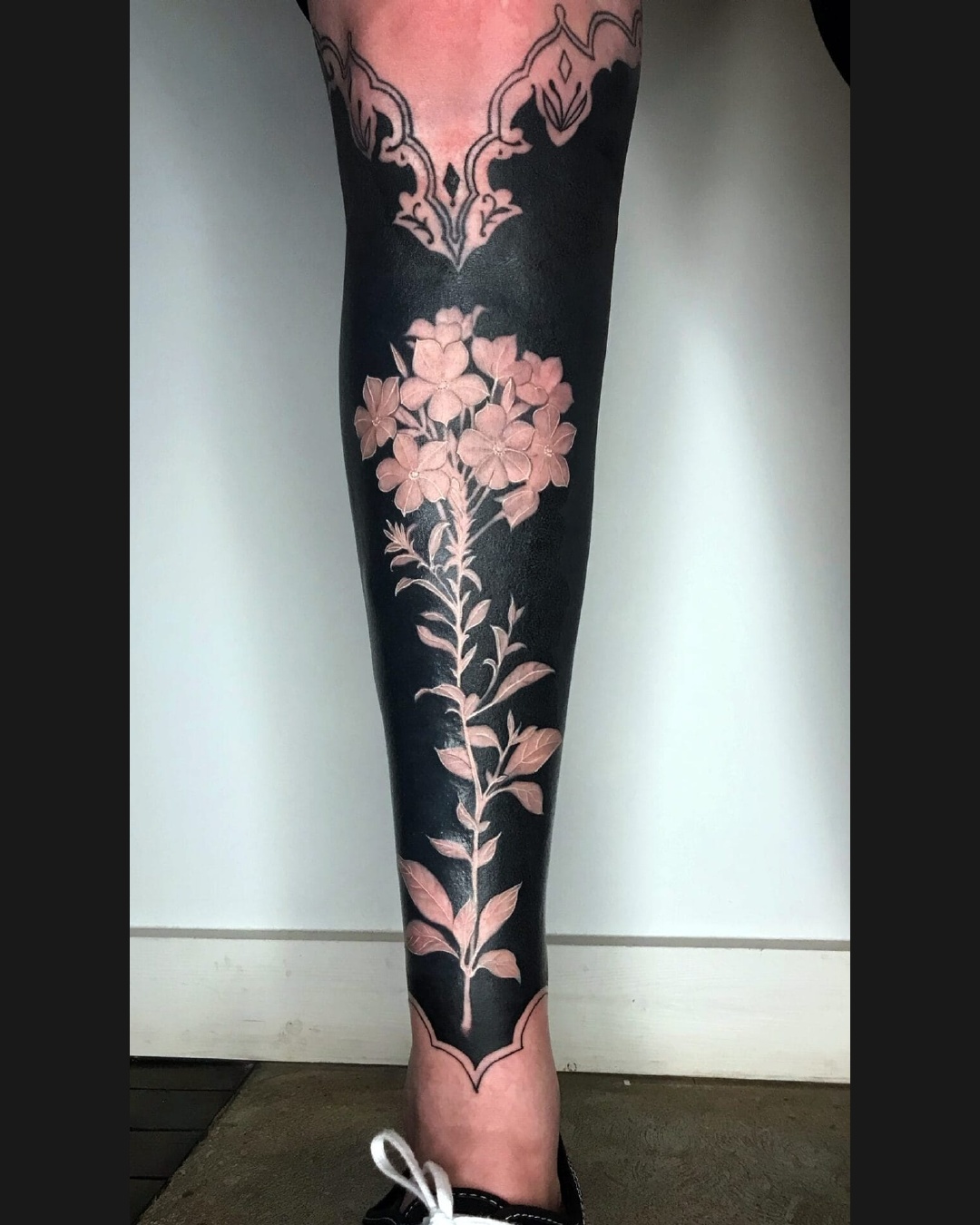
The sweet peas and garden roses documented in Colossal’s selection have different silhouettes, while birds and butterflies add another scale of detail. Their shared dark setting lets those differences coexist without requiring every element to repeat the same shape. What matters is the balance between abundance and control. Botanical imagery supplies curves, overlapping forms, and irregular rhythms. A saturated ground holds those movements together. The eye can wander through the detail without losing the larger shape of the tattoo.
There is a relationship to clothing in the way such work can occupy a limb. An ornamental edge or an extended field of black changes how we read the body's outline. At the same time, the organic imagery keeps the surface from feeling mechanically uniform. The result asks us to look at the whole placement, then move closer to the individual bloom.
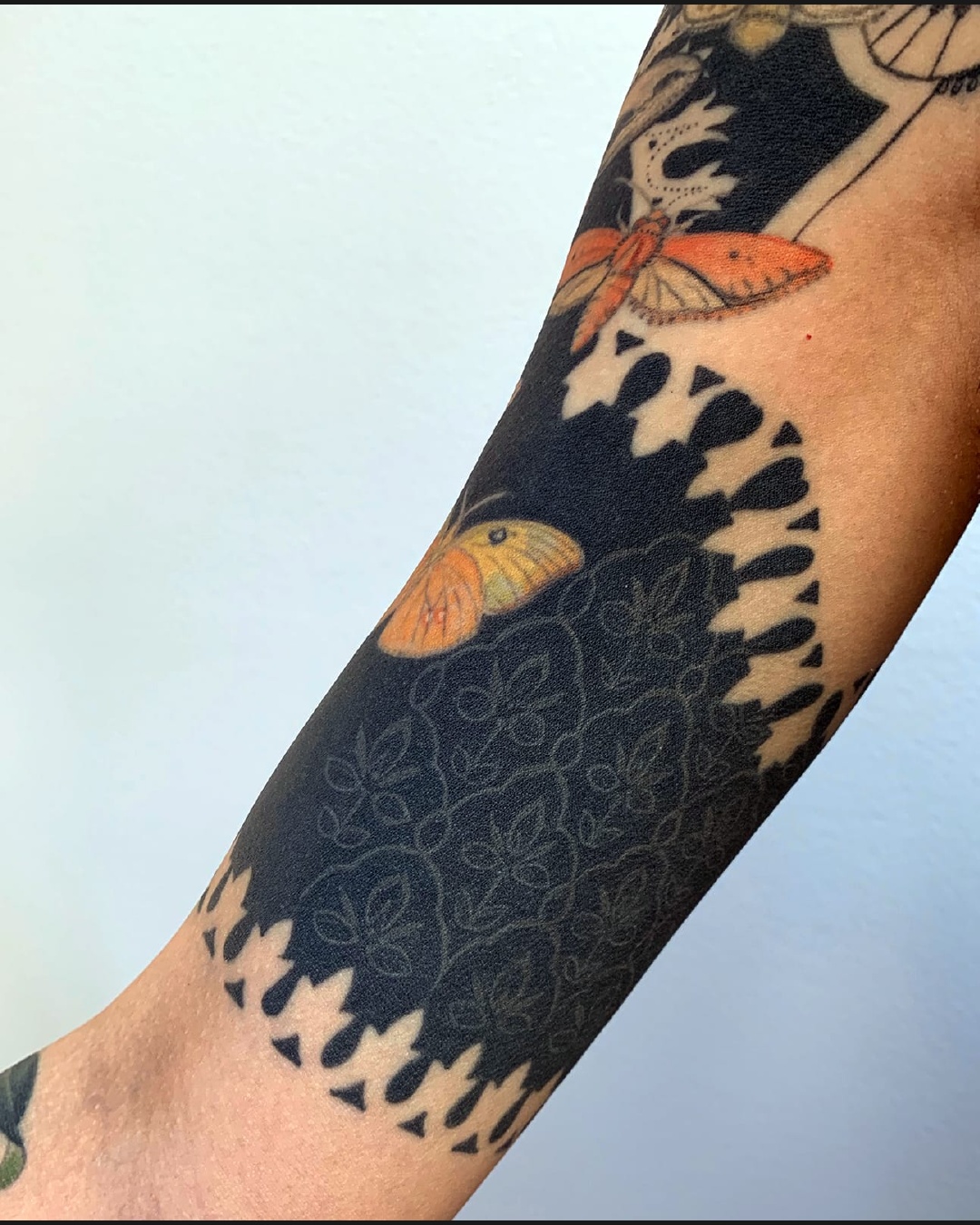
Garcia’s current Butterfat Studios biography places her practice in Chicago and emphasizes botanical imagery, organic placement, and an investigative approach. Those priorities are visible in the questions her work raises. How much darkness makes a flower appear more fragile? Where should a dense area stop? How can a design respond to a body rather than simply fill an available rectangle?
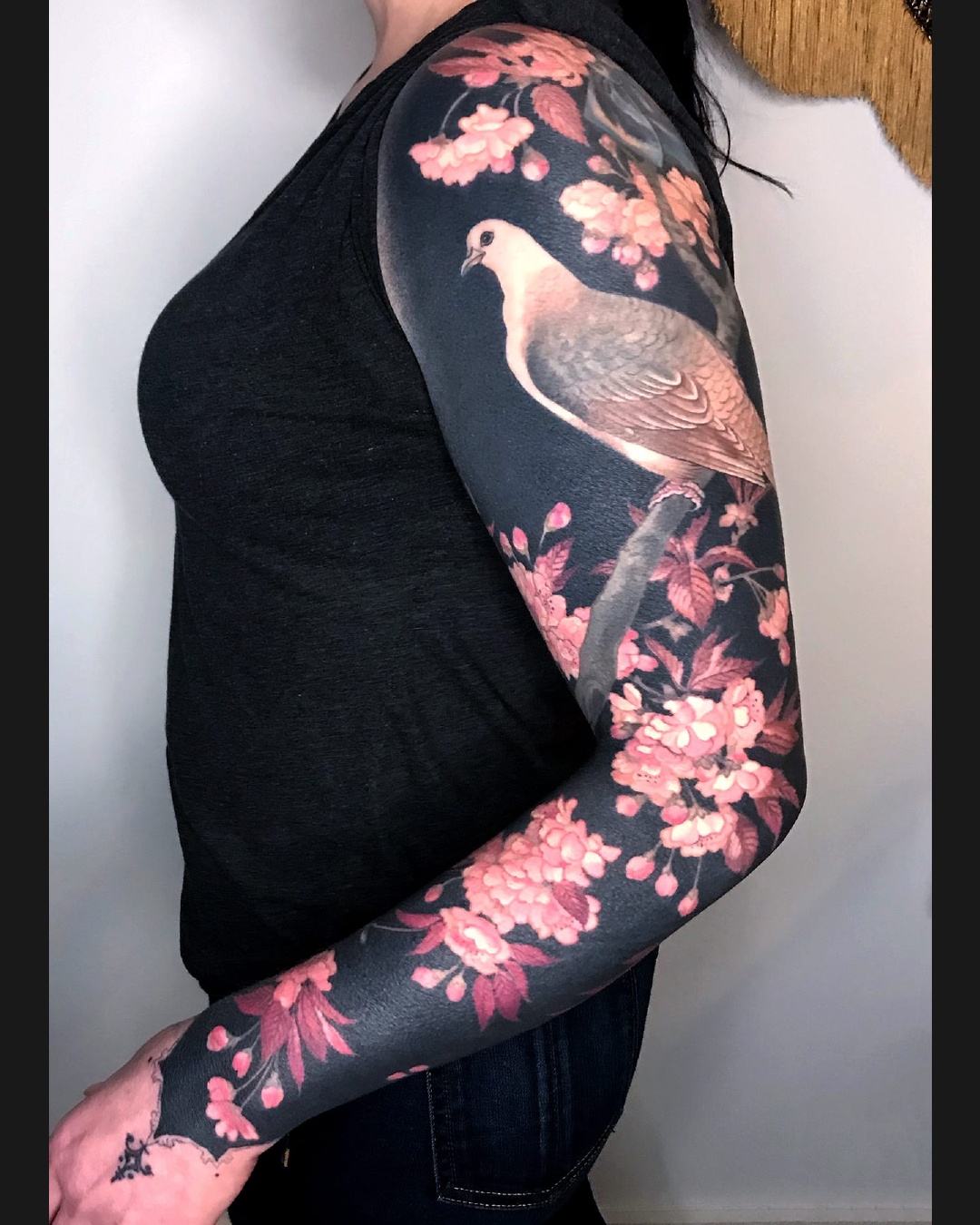
For anyone considering related work, the photograph is a starting point for a consultation, not a technical promise. A cover-up depends on the existing tattoo and the artist’s assessment. A finished image cannot tell you the sequence of every session or prove that every bright detail was placed over black ink.
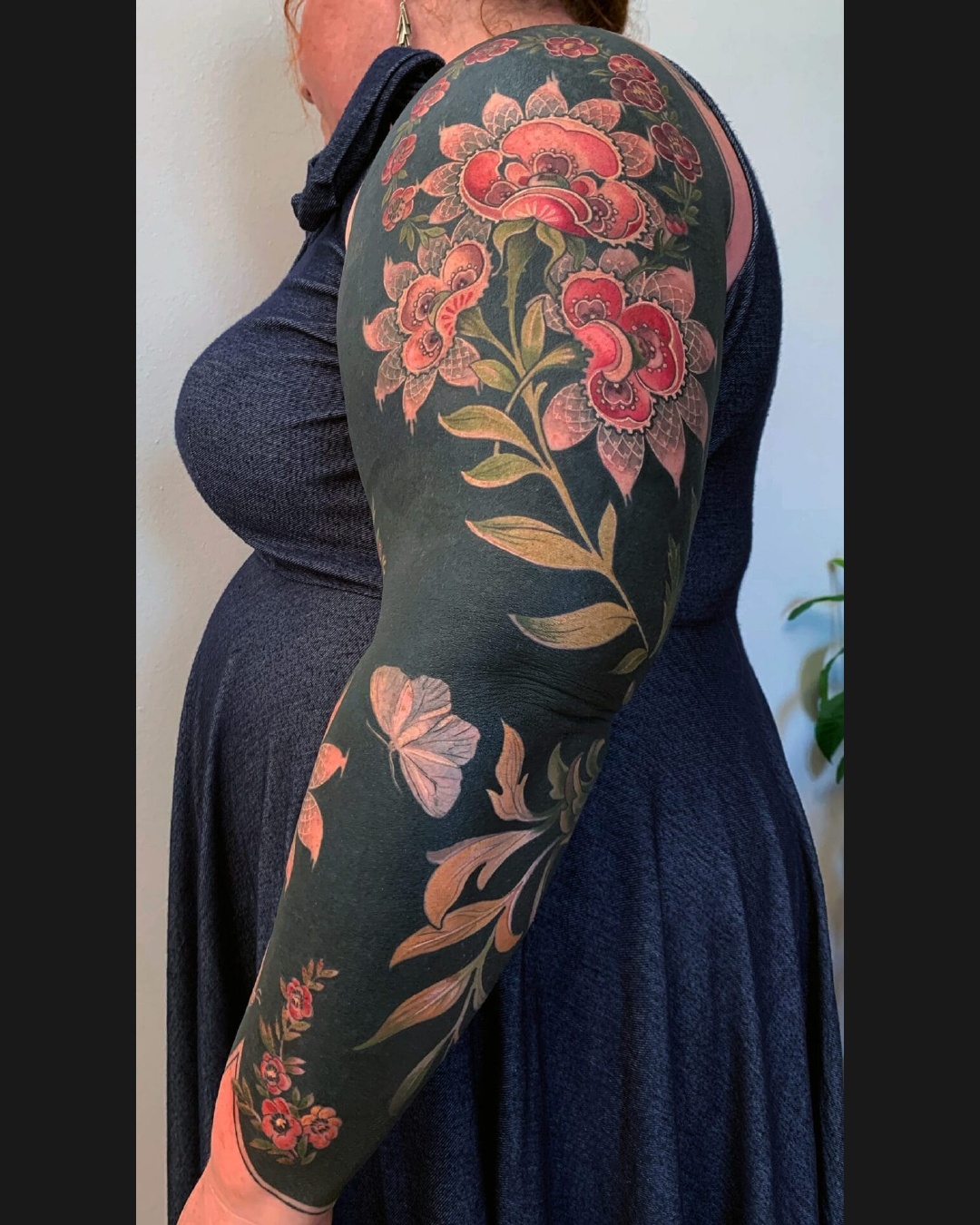
Garcia’s garden holds attention because it gives darkness a clear job. It gathers the composition, sharpens the encounter with color, and lets delicacy carry real visual force. The flowers feel vivid because the space around them has been considered just as carefully.
Explore more work on Esther Garcia’s official website.