Words: Skin & Ink Editorial Staff
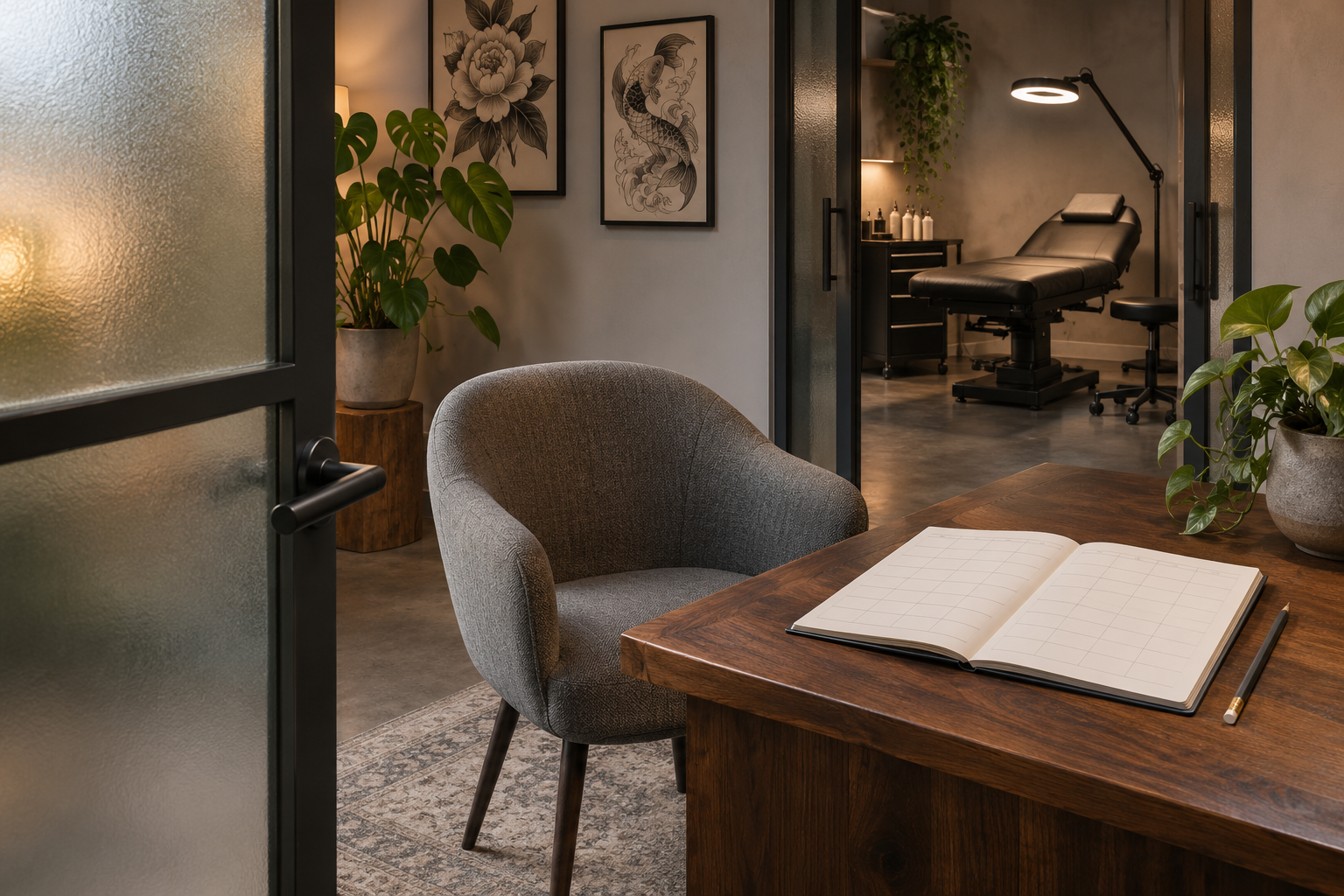
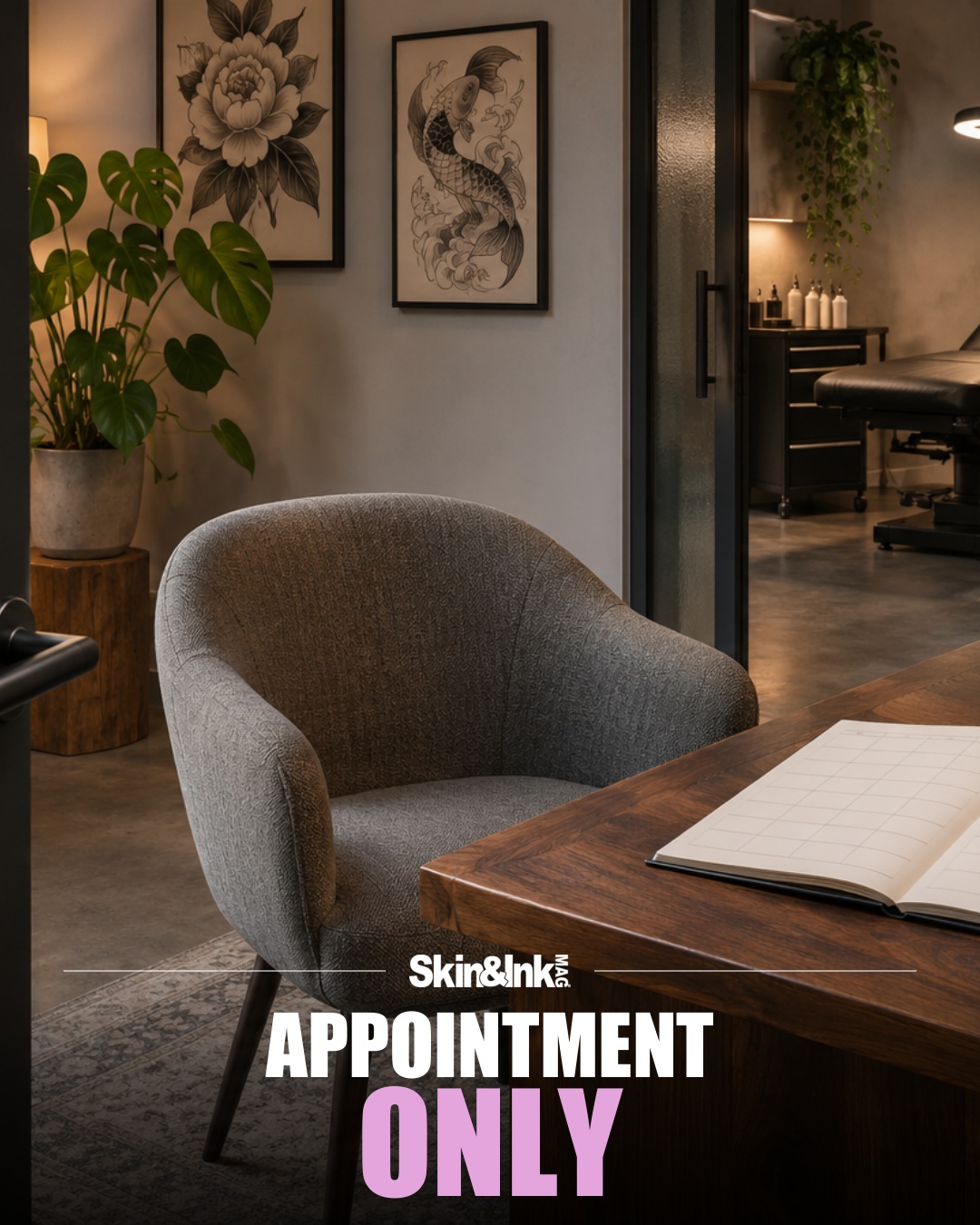
A locked studio door can mean concentration, privacy, or a full calendar. It can also leave a first-time client wondering whether tattooing has become a club they don't know how to join. Before celebrating appointment-only work or mourning the walk-in shop, it helps to separate a business format from a judgment about the people using it.
A closed door alone does not establish that walk-in tattooing is disappearing. What we can examine is the choice a studio makes when it reserves every working hour in advance, and what that choice asks of its customers.
What the appointment protects
A scheduled session gives an artist room to prepare a large composition, gather references, and plan around a client's availability. It can make privacy easier to arrange. For the customer who needs to discuss a scar or simply prefers a quiet room, knowing who will be present matters. Those are practical advantages worth explaining without presenting an open-door shop as inherently chaotic.

Planning also has limits. A booking system can move uncertainty into email: unanswered inquiries, unexplained deposits, and calendar openings announced through a single social platform. The studio may feel orderly from inside while the customer experiences a maze. Clear instructions should answer who the artist works with, what information a request needs, when replies can be expected, and what happens if the proposed work is unsuitable.
What the walk-in offers
Walking through a door lets a person encounter tattooing before making a large commitment. They can look at flash, meet an artist, ask an awkward question, or discover that their idea needs more thought. A spontaneous visit doesn't require a spontaneous tattoo. A responsible walk-in shop can welcome curiosity while postponing work that needs planning.
Small flash pieces also deserve serious craft. Their scale does not make them disposable, and the ability to produce them well under changing conditions is a skill. Treating walk-in work as beneath a custom artist confuses a scheduling preference with artistic worth. Equally, accepting walk-ins should never mean pressuring every visitor into buying something that afternoon.
Design the doorway
A studio need not choose one format forever. It could reserve a regular flash day, offer brief consultations, or share clear referral information when an appointment book is full. A private artist can publish the access details a newcomer needs without sacrificing a controlled working environment. A busy street shop can protect custom-project time without apologizing for it.
The useful test is what happens to someone who doesn't already understand the rules. Can they find out whether the studio is right for them? Can they ask about cost without embarrassment? Can they decline without being treated as a wasted lead? Those experiences shape a shop's reputation as much as its booking model.
The future of the walk-in cannot be settled by a closed door on one block. The more immediate challenge is keeping tattooing approachable while respecting the attention good work requires. Whatever is written on the window, the person outside should know how to begin.