Words: Skin & Ink Editorial Staff
A tattoo photograph answers a limited question: what did this piece look like to this camera, under these conditions, at this moment? It may be a beautiful answer. It still cannot show every angle, every stage of healing, or the experience of the person wearing it.
That limitation does not make tattoo photography dishonest. Photographs are essential to choosing artists and documenting their work. The trouble begins when presentation makes a promise the image cannot support, or when editing alters the very qualities a client is trying to evaluate.
Lighting is part of the evidence
Directional light can reveal texture or hide it. Exposure affects how dark a black area appears. White balance changes the apparent color of both skin and ink. A dramatic background can pull attention toward the tattoo, while a tight crop can conceal how it fits the surrounding anatomy. These are reasons to look carefully rather than reasons to assume misconduct.
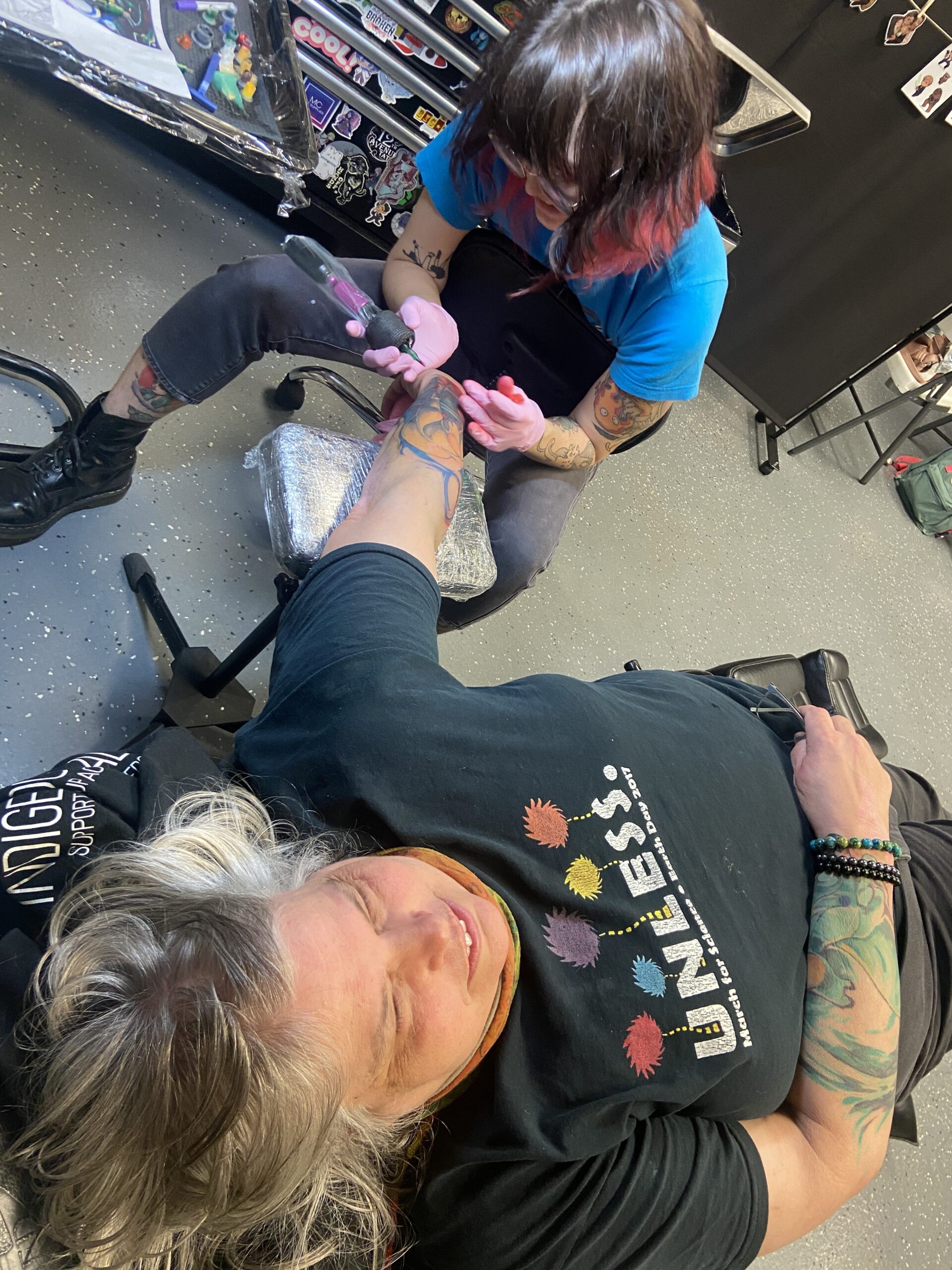
Ask for a wider view when placement matters. Compare several pieces instead of relying on one striking image. Look for photographs on a range of skin tones and body areas relevant to the work you want. A portfolio built from one tightly controlled setup may be visually consistent but offer less information about other conditions.
Editing that removes background distractions differs from editing that redraws a tattoo’s edge. The first can clarify an image; the second changes evidence of the actual work. A useful studio policy would keep original files and avoid retouching linework, saturation, or skin texture in ways that create a false result.
Give time a place in the portfolio
Fresh and healed images serve different purposes. Labeling them helps readers make a fair comparison. Dates, the time elapsed since the appointment, and whether a touch-up occurred can provide useful context without demanding an elaborate technical report beneath every photograph.
Healed photographs are not automatically neutral, either. They can be lit and edited dramatically, and one person’s result cannot predict everyone’s. A matched pair is most informative when framing and lighting are reasonably comparable. Otherwise, a change in photography may be mistaken for a change in the tattoo.
Collectors can help by returning a clear healed image when they are comfortable doing so. The artist should request permission before publishing it, even when the client supplied it privately. If the wearer prefers not to appear online, that decision should not become a condition of receiving normal professional care.
Judge the work, not the performance
A video can show how a design travels around a limb, but motion, compression, and cuts can also hide detail. No single format guarantees honesty. The strongest portfolio combines useful views with straightforward answers about process and limitations.
Before booking, ask what the artist considers representative of their healed work. Their response can tell you as much as their lighting setup. Someone who explains their choices calmly is offering a more useful basis for trust than a feed that asks to be accepted without questions. Good photography should make tattooing easier to understand, not make ordinary skin look like a defect.