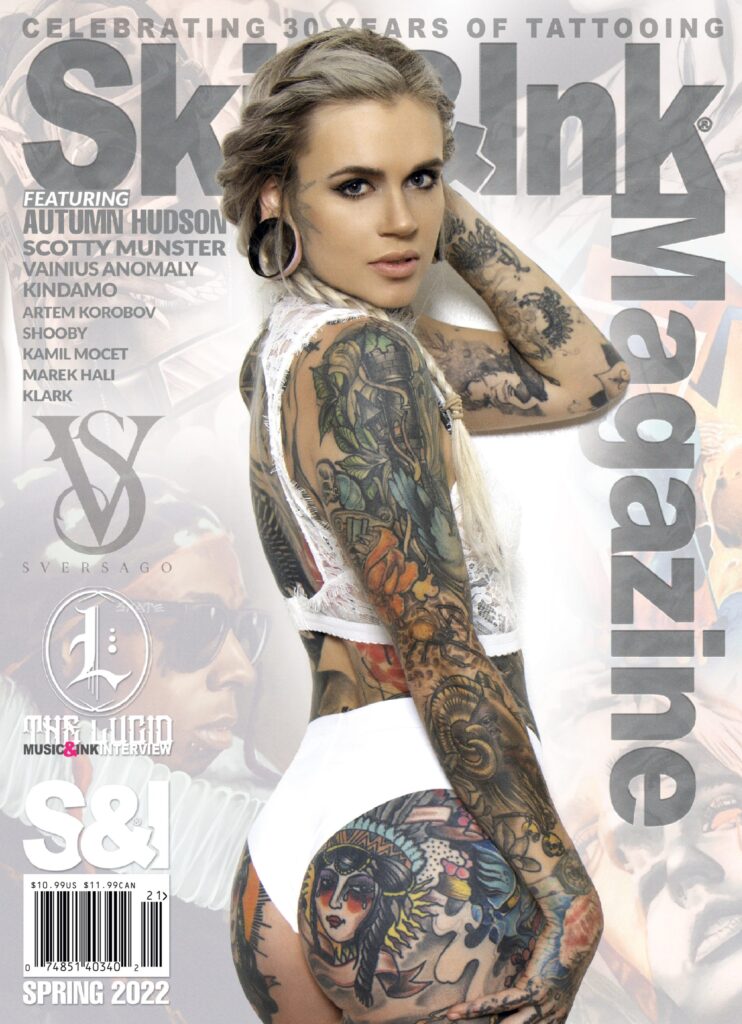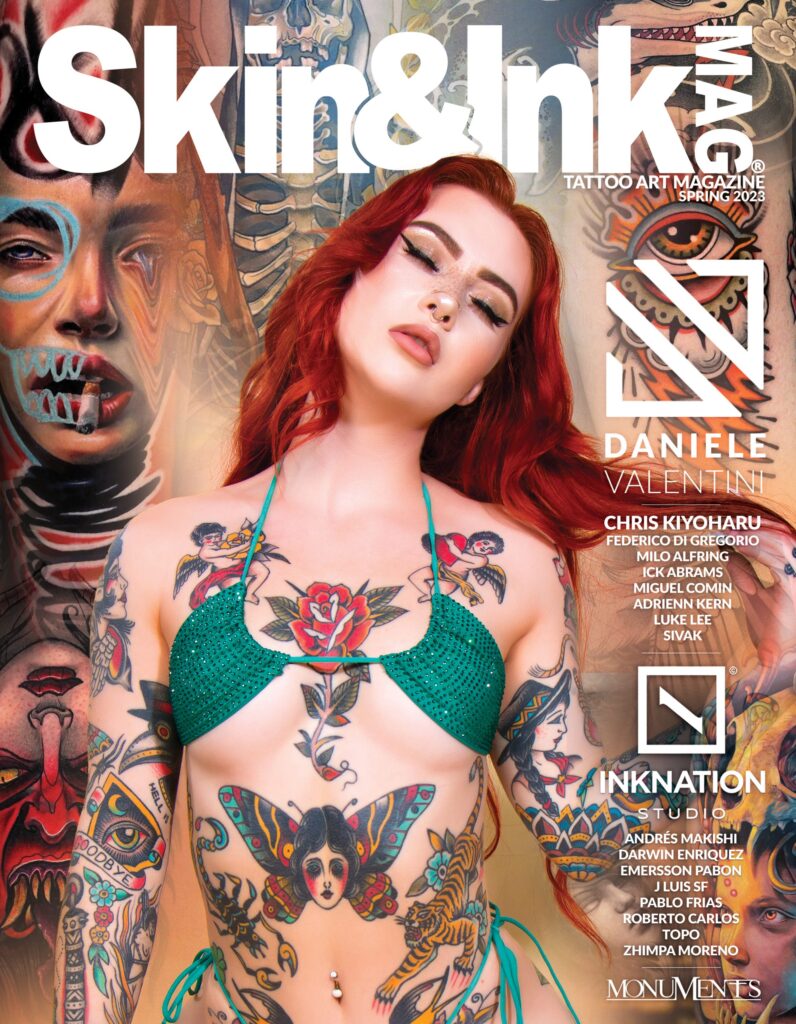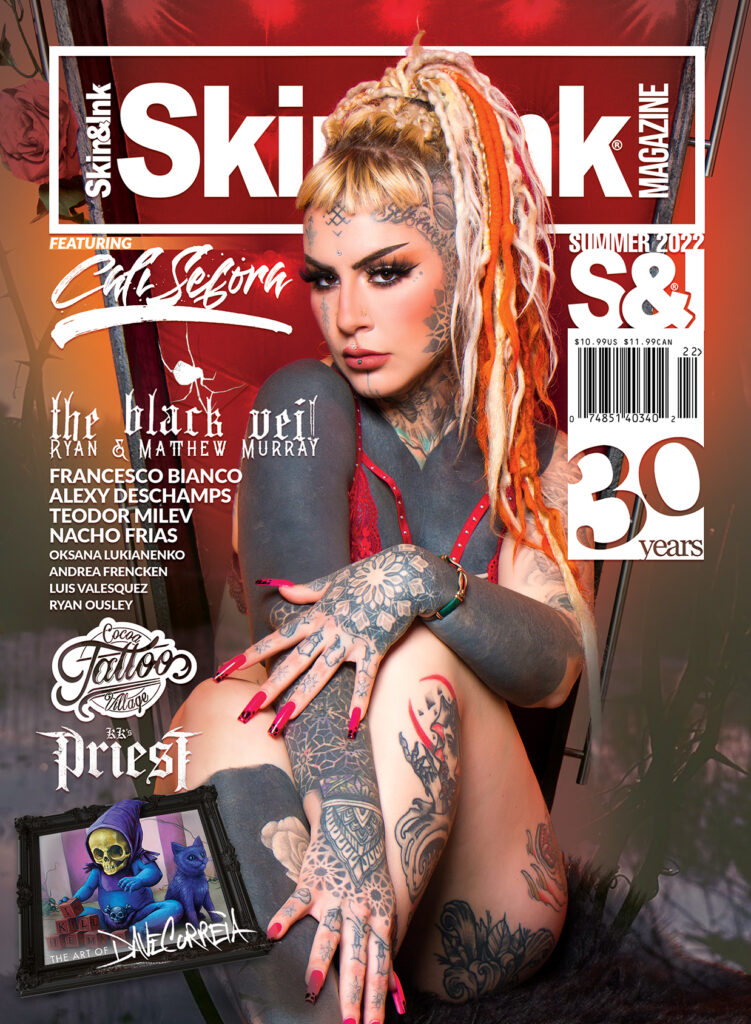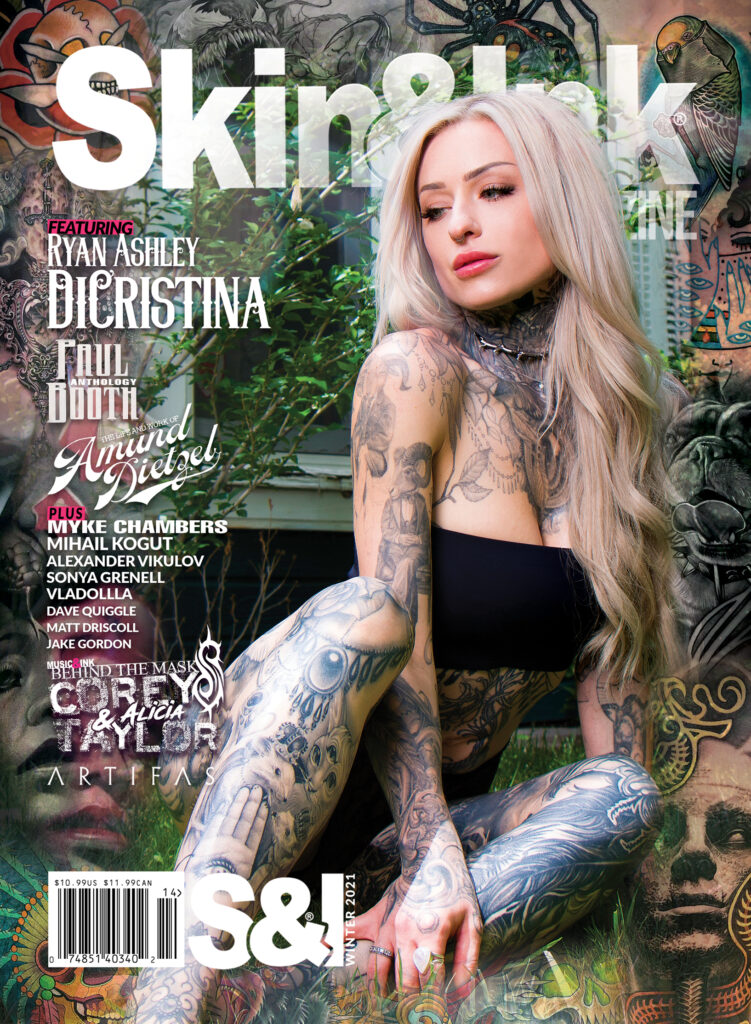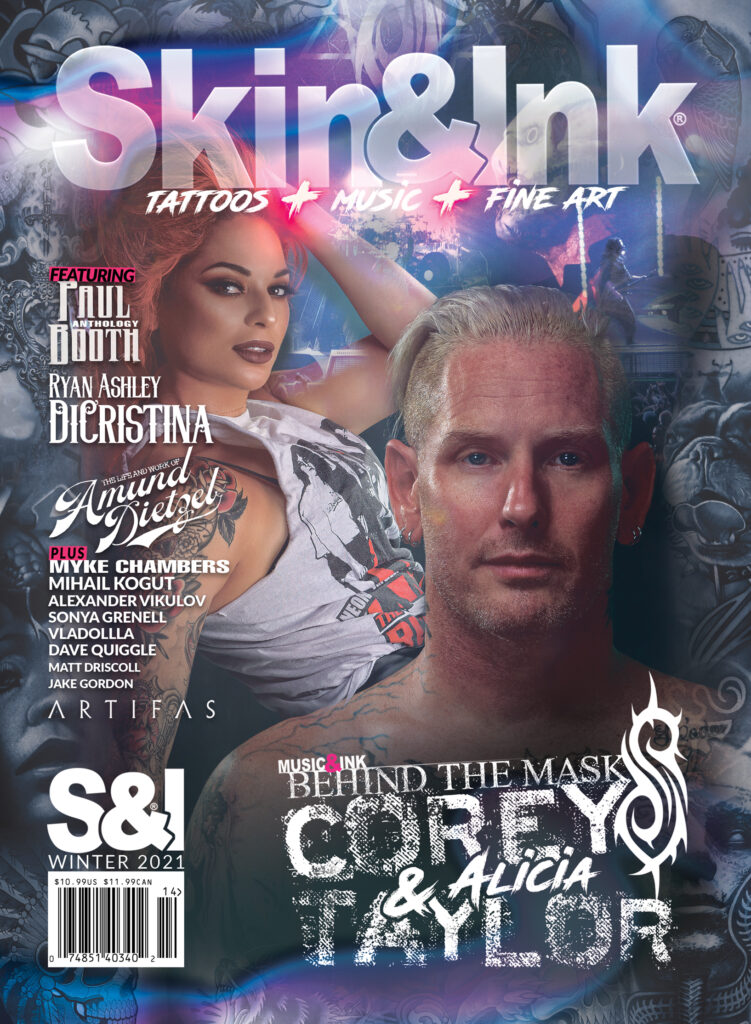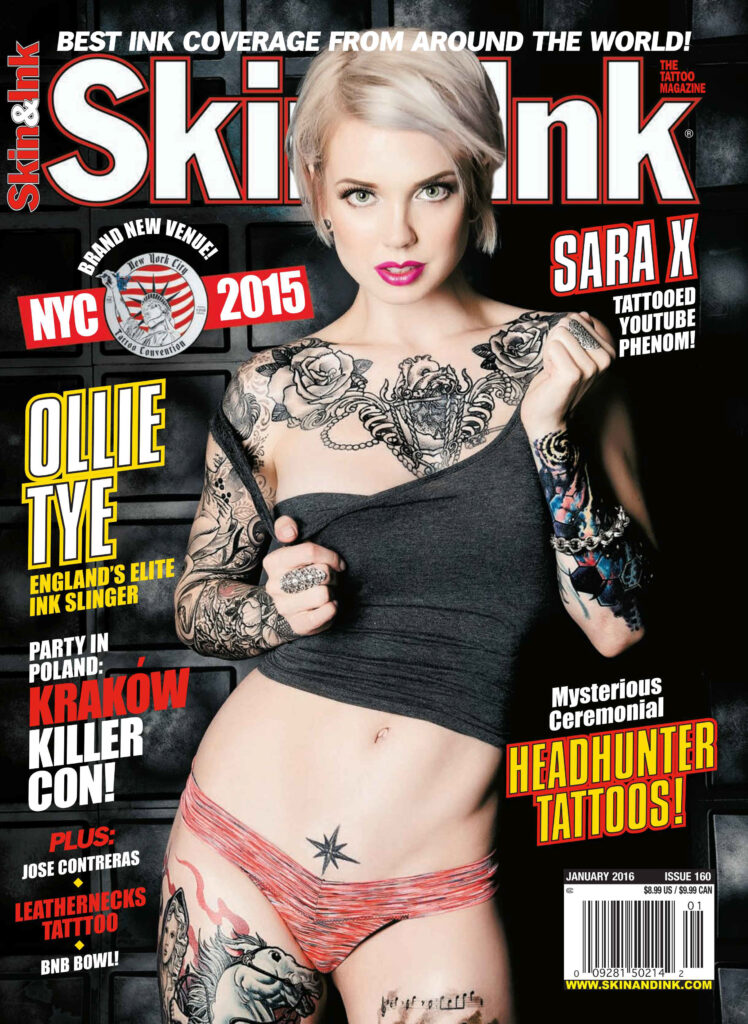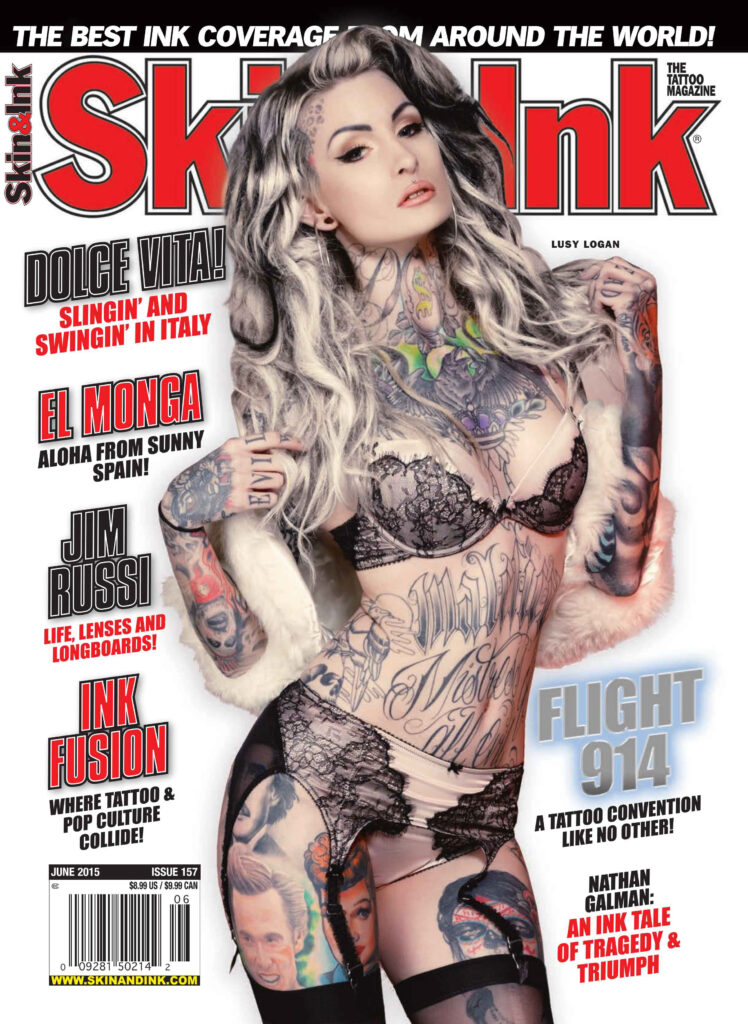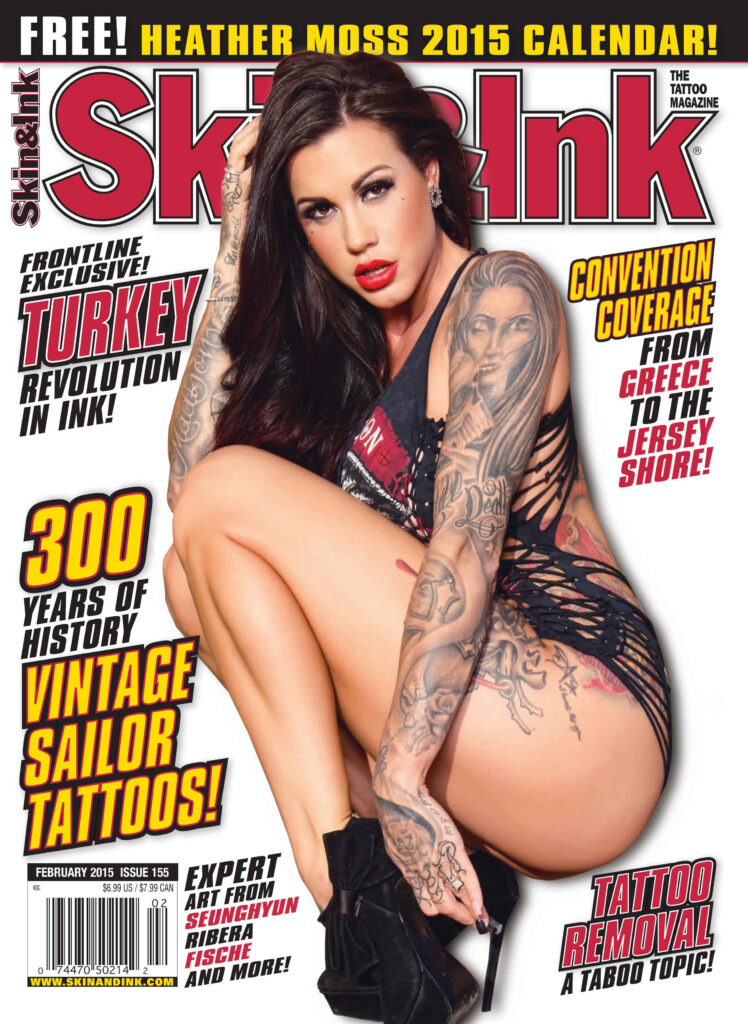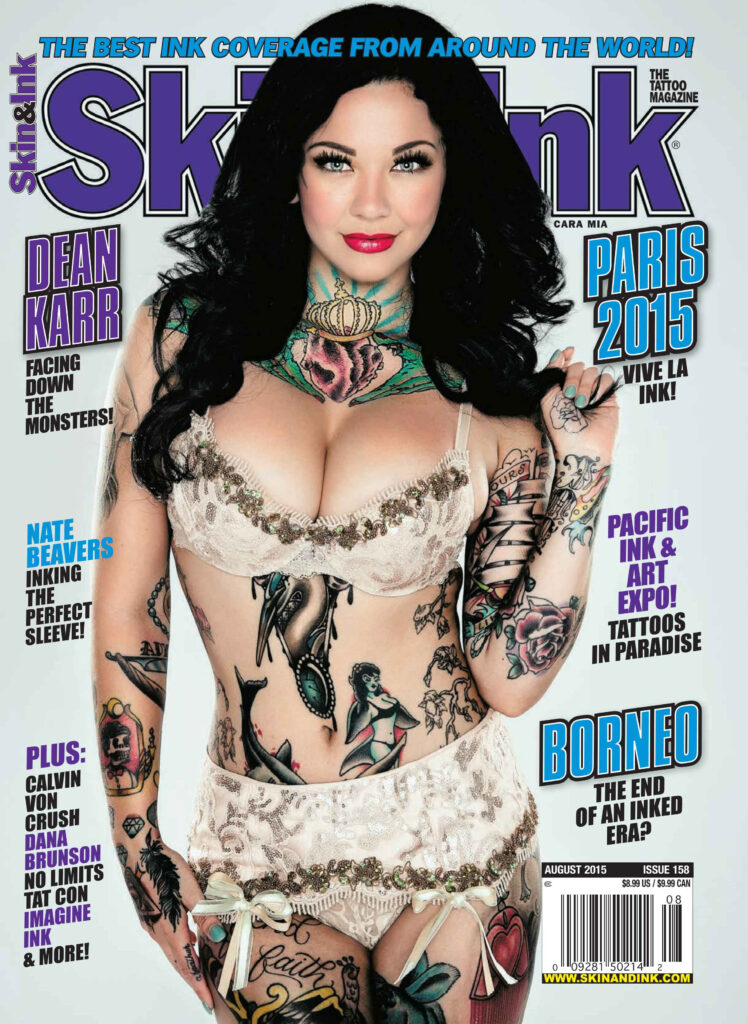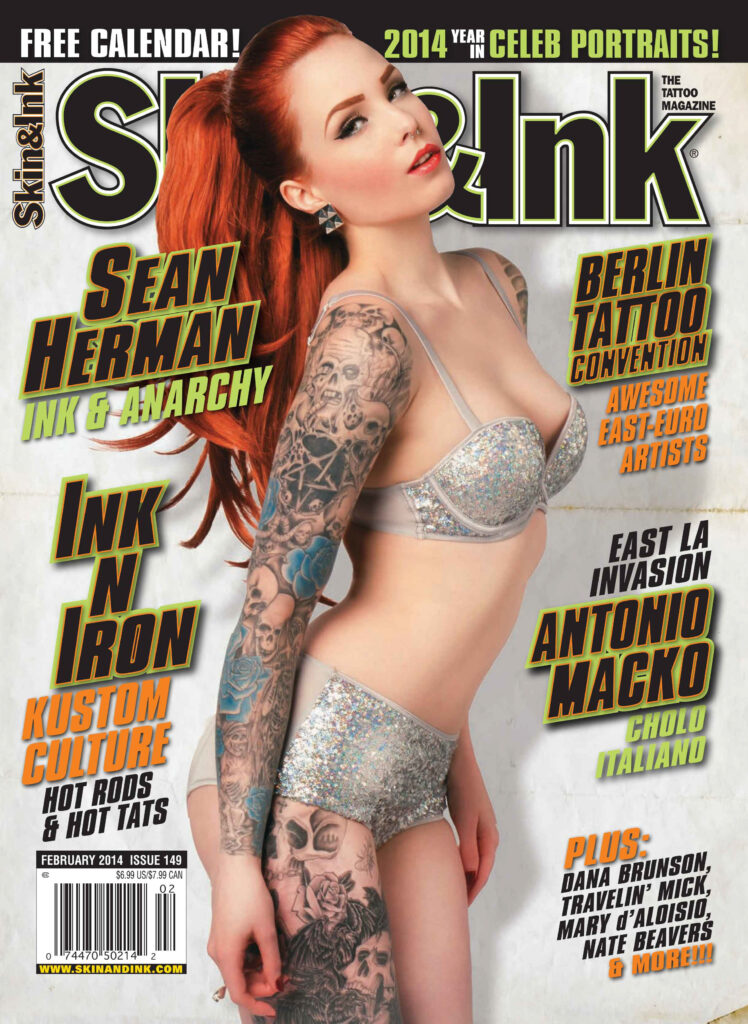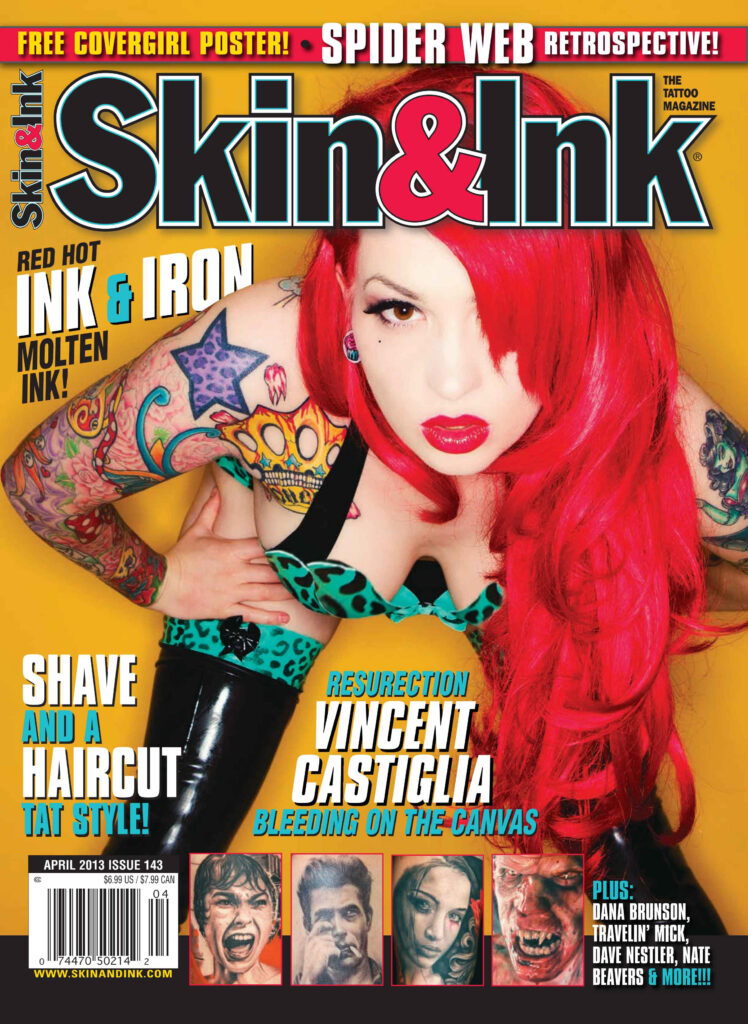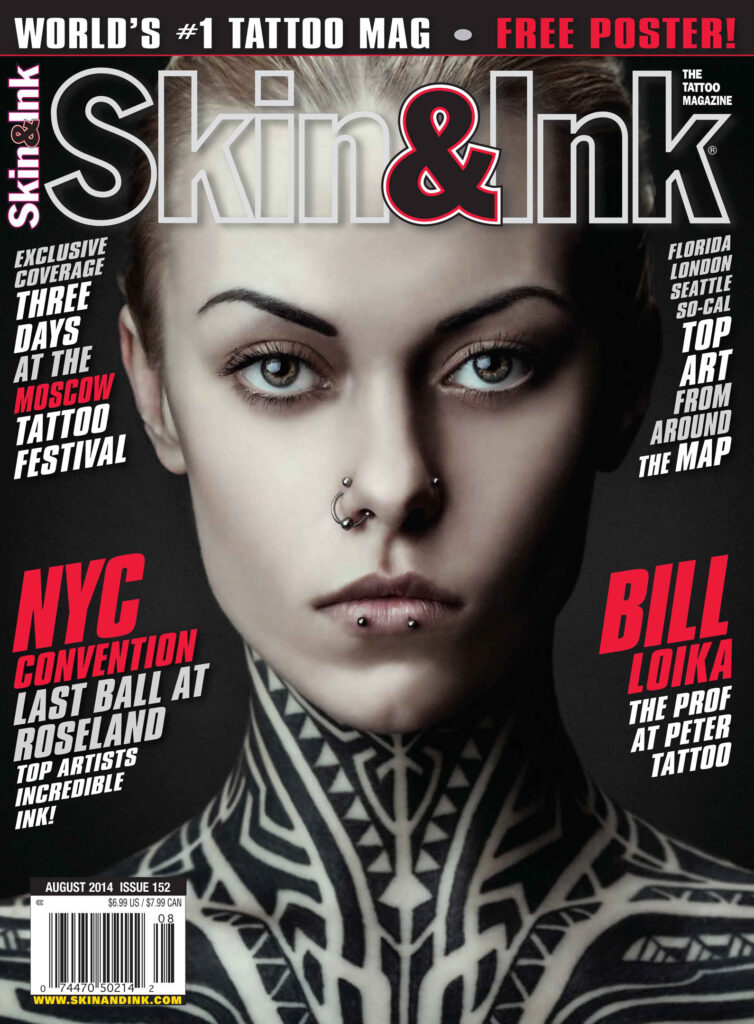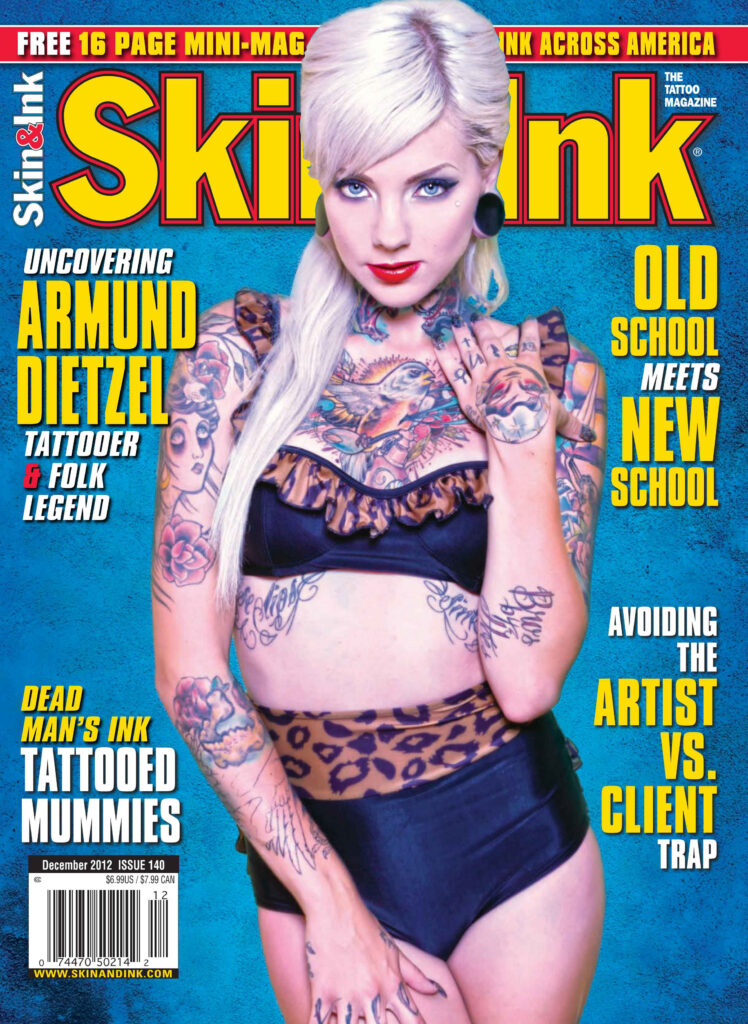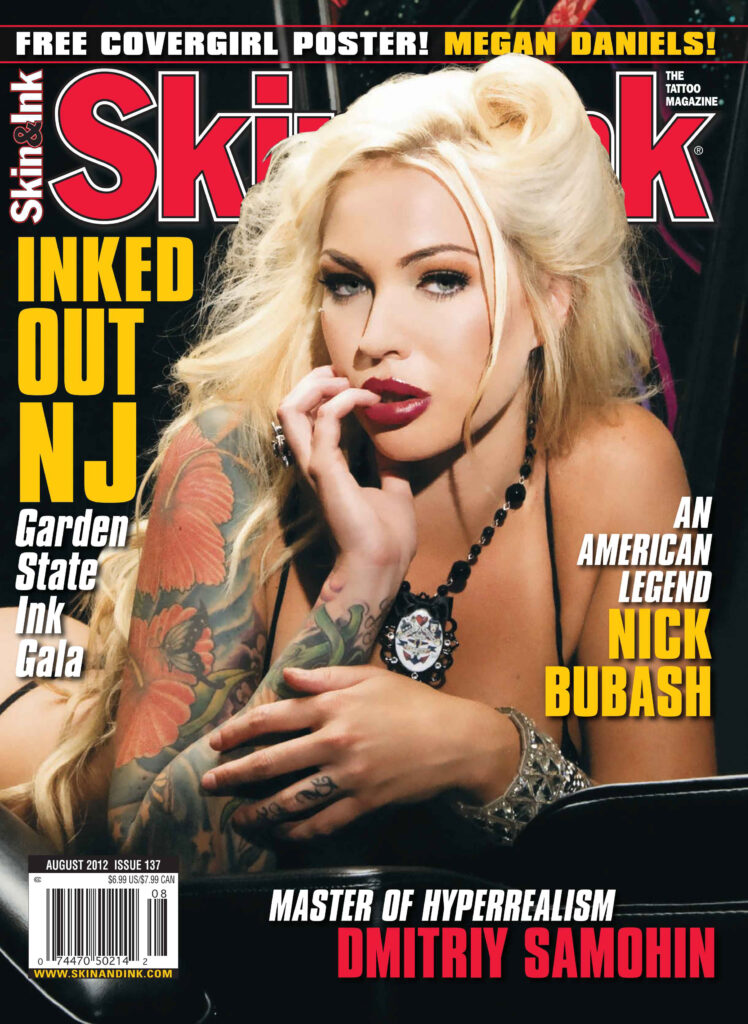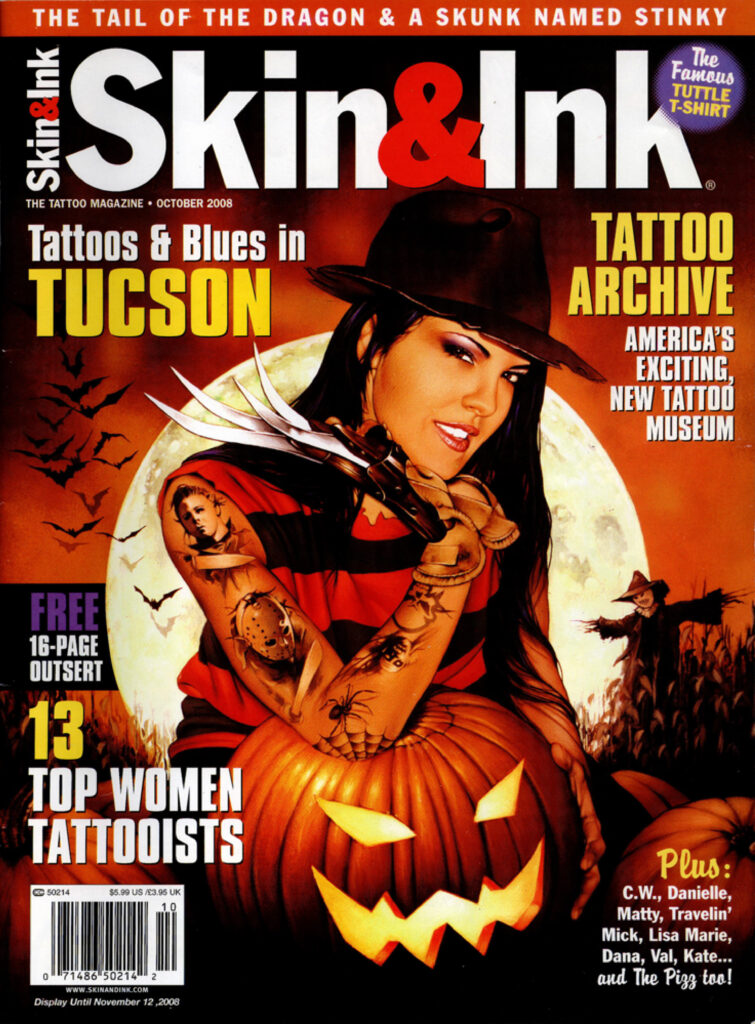

In one portrait, red light catches the outside of Laurence Bédard’s tattooed arm and blue light drops away into a dark dress. In another, daylight and a white sleeveless top make the outlines easier to pick out. It’s the same wearer, but the pictures ask you to read the work differently. One is about silhouette and movement. The other brings individual marks to the front.
A sleeve is a turn, not a flat picture
The side pose gives us the part a straight-on photo misses. From the shoulder, the design wraps down the upper arm, passes around the elbow, and continues toward the hand. Some marks disappear as the arm turns away. Others pull the eye around it. That’s what makes sleeve work different from selecting a drawing off a sheet: it has to make sense on a body that moves.

What the light changes
Red and blue studio light can flatten some pigments and deepen others. A bright wall and white fabric do almost the opposite. The supporting portrait is useful for a second look, but neither photograph is a reliable color chart for the ink. Together they give a better sense of scale, coverage and how dark or light passages sit next to each other.
Bédard is the wearer and model in these photographs, not their tattooer. The photographer and studio tags on the cover post are photo credits, not needlework credits. The selected sources don’t reliably identify the artists behind individual motifs, so we’re looking at what can be seen rather than turning a guess into a name.
Cover: @_parallel_portrait and @arluxxstudio, credited on Laurence Bédard’s source post. Source.