Why Intention Separates Decoration From Legacy
Anyone can get tattooed…
Not everyone is building something.
From the outside, tattoos can look the same. Ink on skin. Color or black and grey. Big or small. But inside tattoo culture, there’s a distinction that experienced artists recognize instantly. It’s not about how many tattoos someone has. It’s about why they’re there.
There’s a difference between being tattooed and being collected.
That difference shapes the work, the relationship, and the outcome in ways that last far beyond a single session.
“Getting tattooed is an event. Being collected is a commitment.”

The One-Off Tattoo
Being tattooed is often about a moment.
A trip.
A breakup.
A celebration.
A spontaneous decision that feels right at the time.
There’s nothing wrong with this. One-off tattoos have always been part of tattoo culture. They’re personal, immediate, and often emotionally charged. The client arrives with a clear idea, the artist executes it well, and the story ends when the session does.
The tattoo stands on its own.
When the Body Becomes a Canvas
Being collected is different.
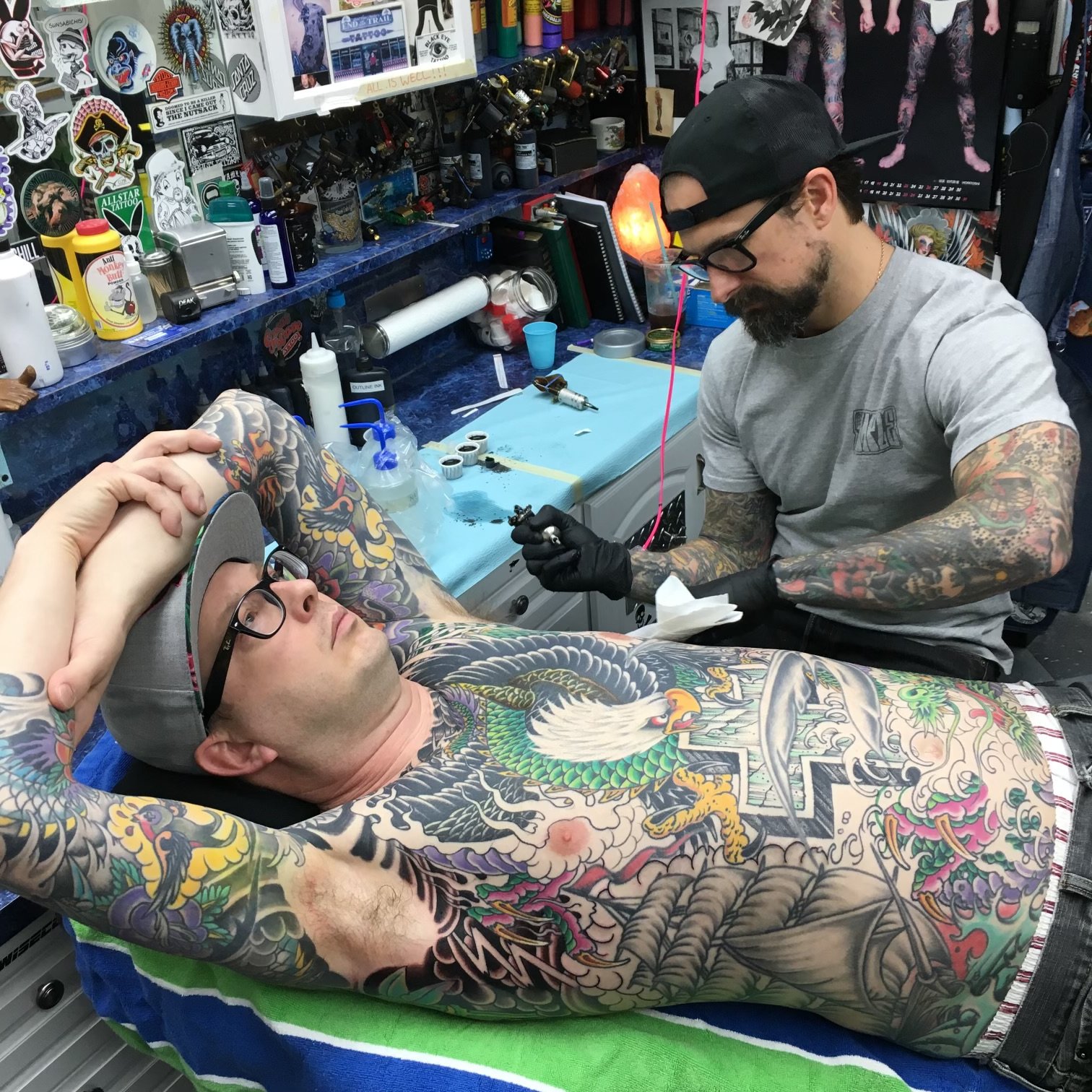
Collectors don’t think in single images. They think in arcs. They understand their body as a living surface that evolves over years, sometimes decades. Each piece isn’t isolated…it’s part of a larger conversation.
Collectors ask different questions.
How will this age next to the others?
How does this flow when I move?
What happens next?
This shift changes everything about the process.
“Collectors don’t chase tattoos. They build relationships.”
Trust Changes the Work
When someone commits to being collected, trust deepens.
The artist stops solving isolated problems and starts designing systems. Flow, balance, and negative space matter more. Decisions stretch forward instead of stopping at the edge of a stencil.
Collectors give artists room to think long-term. Artists respond by pushing quality, consistency, and cohesion. The work becomes quieter, stronger, and more intentional.
This is where tattooing begins to resemble legacy instead of decoration.
Why Collectors Move Differently
Collectors aren’t in a hurry.
They wait for the right artist.
They respect process.
They understand that spacing sessions matters.
They don’t ask for shortcuts. They don’t chase trends. They’re willing to sit with unfinished work because they understand that coherence takes time.
That patience shows in the final result.
“You can spot a collector by how comfortable they are with waiting.”
The Artist’s Perspective
Ask any seasoned tattooer and they’ll tell you…the work changes when someone commits to being collected.
There’s more responsibility.
More planning.
More restraint.
Artists consider longevity instead of impact. They think about how pieces will read in ten years, not just how they’ll photograph today. The relationship becomes collaborative rather than transactional.
Collectors don’t just wear the work. They carry it forward.
When Tattoos Become Archives
Over time, collected work starts to function like an archive.
Different chapters of life sit beside each other. Styles evolve. Techniques shift. The body becomes a timeline of decisions made thoughtfully rather than impulsively.
This doesn’t mean every tattoo needs deep symbolism. It means the collection itself carries intention. Even playful pieces have context when they’re part of something larger.
Why This Distinction Matters
Understanding the difference between being tattooed and being collected elevates the entire experience.
It changes how clients choose artists.
It changes how artists approach design.
It changes how tattoos age, both visually and culturally.
Neither path is superior…but they are not the same.
Getting tattooed marks a moment.
Being collected builds a body of work.
And in a culture built on permanence, intention is what separates ink that fills space from ink that tells a long story… one piece at a time.