How a Tattoo Becomes a Lifelong Mark
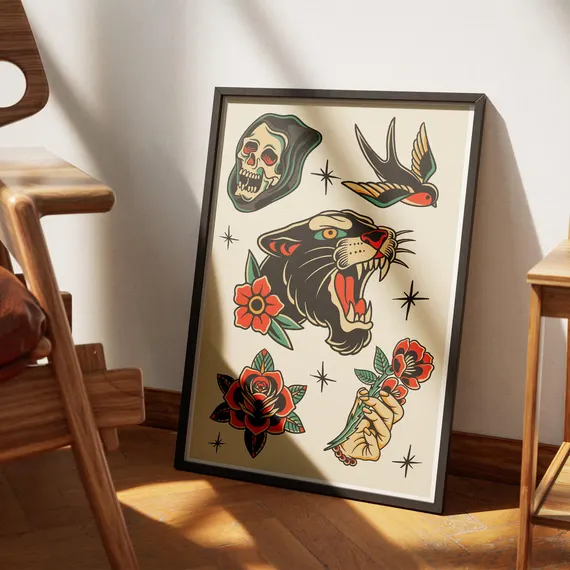
Tattoo flash has always been part of tattoo culture. It’s where many stories begin… on a wall, in a book, or pinned behind a counter. What often gets overlooked is what happens after the choice is made. That’s where the real work starts.
A tattoo doesn’t become meaningful because it was spontaneous or sentimental. It becomes meaningful because it survives. This is the journey from flash to forever… and the quiet decisions that turn a simple image into something that lives on skin for decades.
Why Tattoo Flash Still Matters
Flash isn’t a shortcut. It’s a distillation.
The best flash designs represent years of refinement. Lines reduced to what matters. Shapes tested on real bodies. Compositions proven to heal clean and hold their structure over time.
In a world obsessed with customization, flash reminds us that originality isn’t always about invention. Sometimes it’s about selection. Choosing something solid. Something intentional. Something built to last.
The Moment a Design Becomes a Tattoo
The instant a design leaves the wall and enters a conversation, everything changes.
Paper doesn’t move. Bodies do.
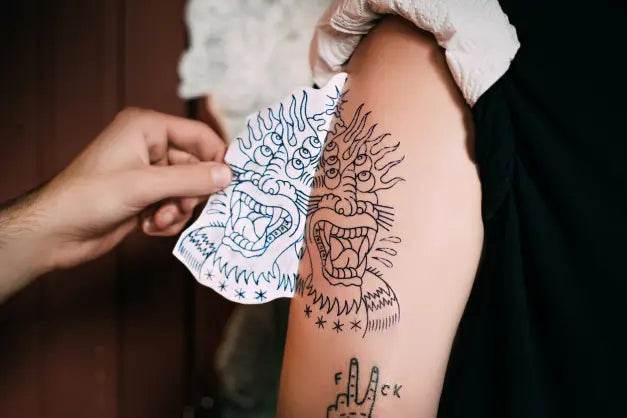
Placement becomes the first critical decision. Muscles flex. Skin stretches. Bone structure alters perception. A design that works flat may fail if it ignores anatomy.
Experienced artists don’t simply apply flash. They translate it. Scale is adjusted. Flow is refined. Orientation is reconsidered. These choices often go unnoticed, yet they determine whether a tattoo feels natural or forced.
The Decisions No One Sees
Some of the most important choices in tattooing never show up in a photo.
Line weight is adjusted for aging skin.
Details are simplified to avoid blur over time.
Negative space is preserved so the tattoo can breathe.
These decisions aren’t dramatic, but they are decisive. Flash survives generations because it respects these fundamentals. It was never designed to impress a camera. It was designed to live on skin.
Skin Changes Everything
Skin is not a neutral surface.
It reacts.
It varies.
It heals imperfectly.
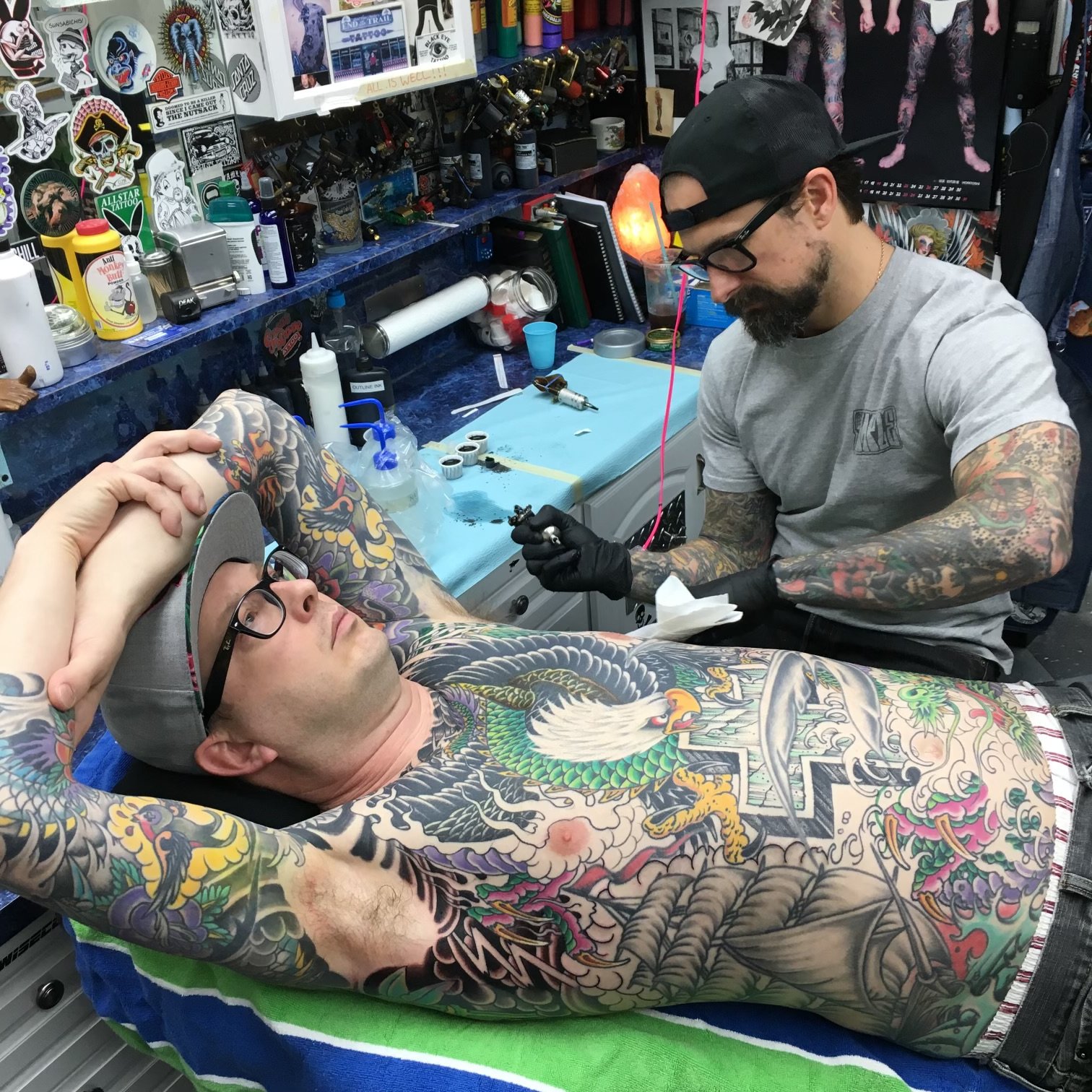
Artists who understand longevity work with skin instead of fighting it. Pressure, speed, needle choice, and depth are adjusted constantly. Tattooing becomes a conversation between artist and body, not a rigid execution of a drawing.
This is where experience outweighs ambition. A tattoo that respects skin will always outlast one that tries to overpower it.
Forever Is a Responsibility
Tattooing is permanent by nature. That permanence carries weight.
What feels exciting in the moment must still make sense years later. Artists who understand this don’t chase novelty blindly. They lean on structure, clarity, and restraint.
Flash endures because it was built with permanence in mind. It’s honest about what tattooing is… not temporary art, but lifelong commitment.
When Flash Becomes Legacy
Some flash designs outlive the studios they were created in.
They’re passed down. Reinterpreted. Reworked across generations. They become cultural artifacts rather than trends.
That’s the quiet power of flash done right. It doesn’t age out. It evolves.
A tattoo doesn’t become meaningful because it’s complicated or unique. It becomes meaningful because it holds up. From flash to forever, the tattoos that last are shaped by experience, discipline, and respect for the skin they live on.