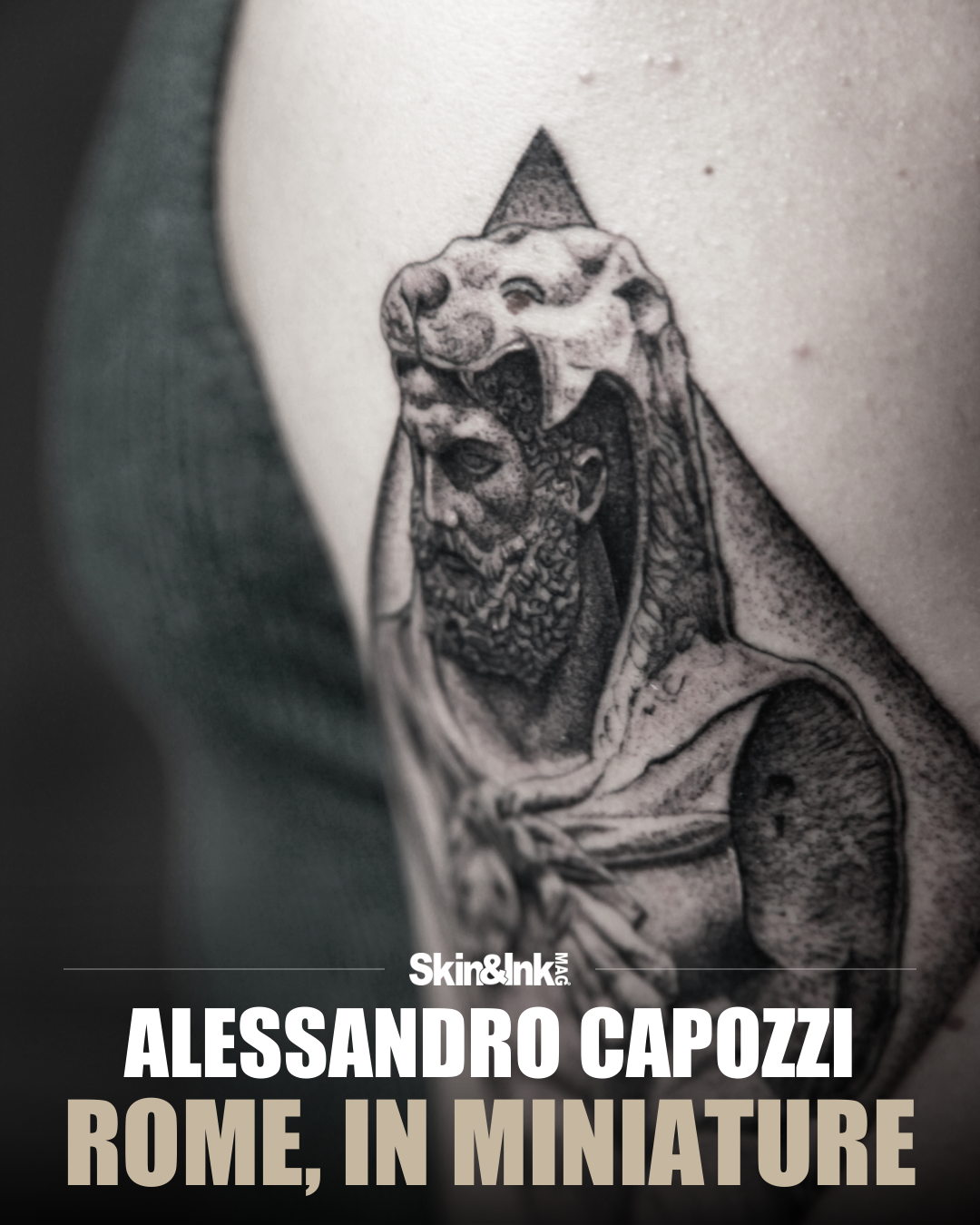
A lion's head rests over the man's own. The face beneath it is heavy with shadow, and the folds around the shoulders give the figure the presence of something carved rather than drawn.
Alessandro Capozzi's Hercules tattoo takes a classical subject and compresses it into an image on the arm. It doesn't need a temple, a column or a whole mythology lesson around it. The bust, the lion skin and the dark shape behind the figure establish the idea. The rest happens through texture and contrast.
The beard is especially important. Its clustered marks give the face a roughness that separates it from the smoother passages nearby. Shadow under the brow deepens the expression. The lion skin forms a second face above the first, making the top of the composition feel dense and weighty. It's a compact image, but not a lightweight one.
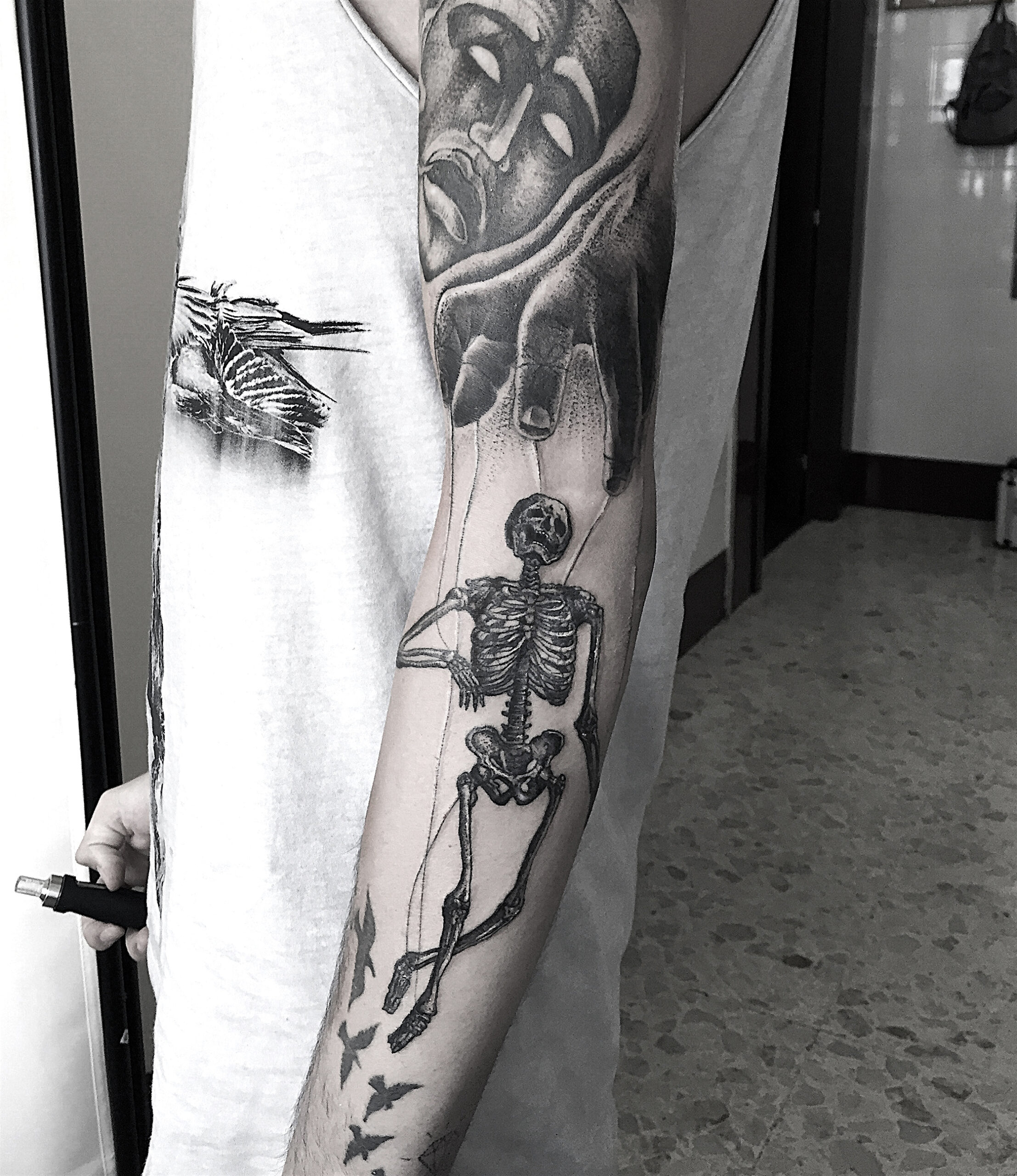
In his Inked interview, Capozzi described ancient and baroque Rome as sources of inspiration. He also discussed building dimension in black-and-gray through tonal variation. Those comments offer context for the work without requiring us to treat every classical tattoo as a direct copy of a particular sculpture. The published gallery identifies this piece as Hercules; the exact sculptural reference isn't established here.
What interests me is the change of setting. A figure associated with stone and public display is placed on something soft, living and personal. The tattoo retains the suggestion of a sculpted object, but the arm changes how we encounter it. The scale asks for a closer look instead of demanding attention from across a room.
That makes the negative space useful. The image doesn't fill the entire visible area with ornamental explanation. The edge of the figure remains readable against the skin and darker background shapes. You can take in the portrait before getting lost in the smaller textures.
Classical imagery can become an easy shortcut to seriousness. Put a marble face in a design and it immediately borrows some cultural weight. This piece is more convincing when you look past that association and pay attention to the actual picture: the paired faces, the distribution of shadow, the way the shoulders support the head.
The subject gives it history. The arrangement makes it a tattoo.
Capozzi's miniature Rome works because it doesn't try to contain the whole city. One figure is enough to bring some of its visual weight into the present.
Explore more work from Alessandro Capozzi.
Tattoo artwork by Alessandro Capozzi.
Sources: www.alessandrocapozzi.it, inkedmag.com.