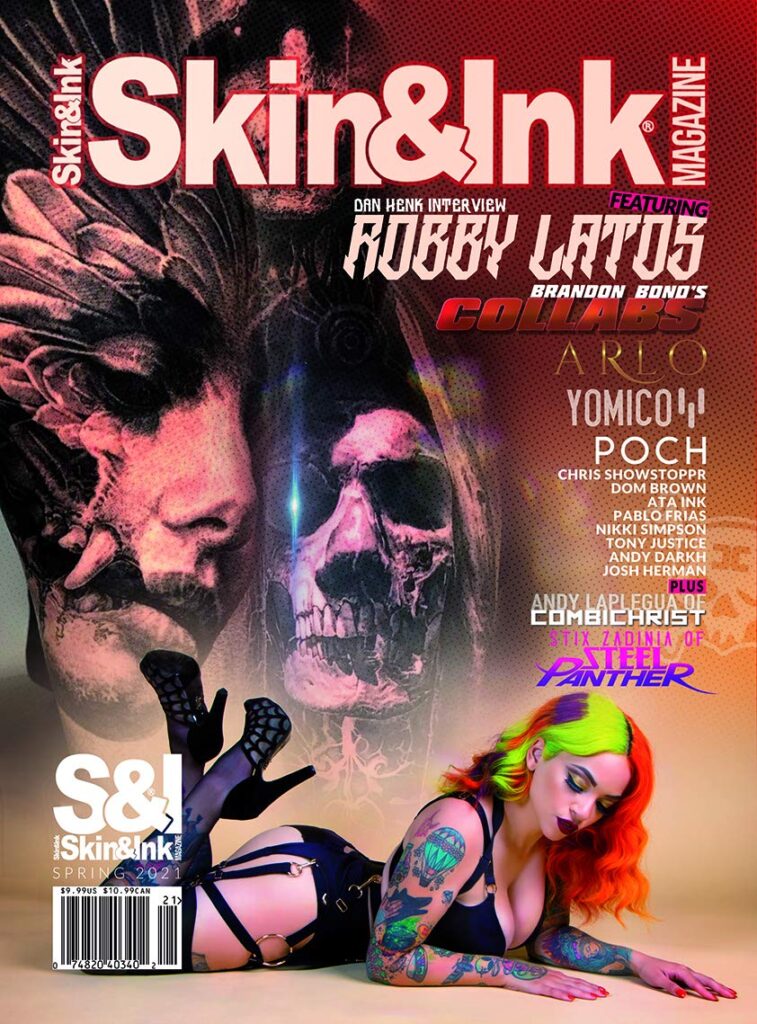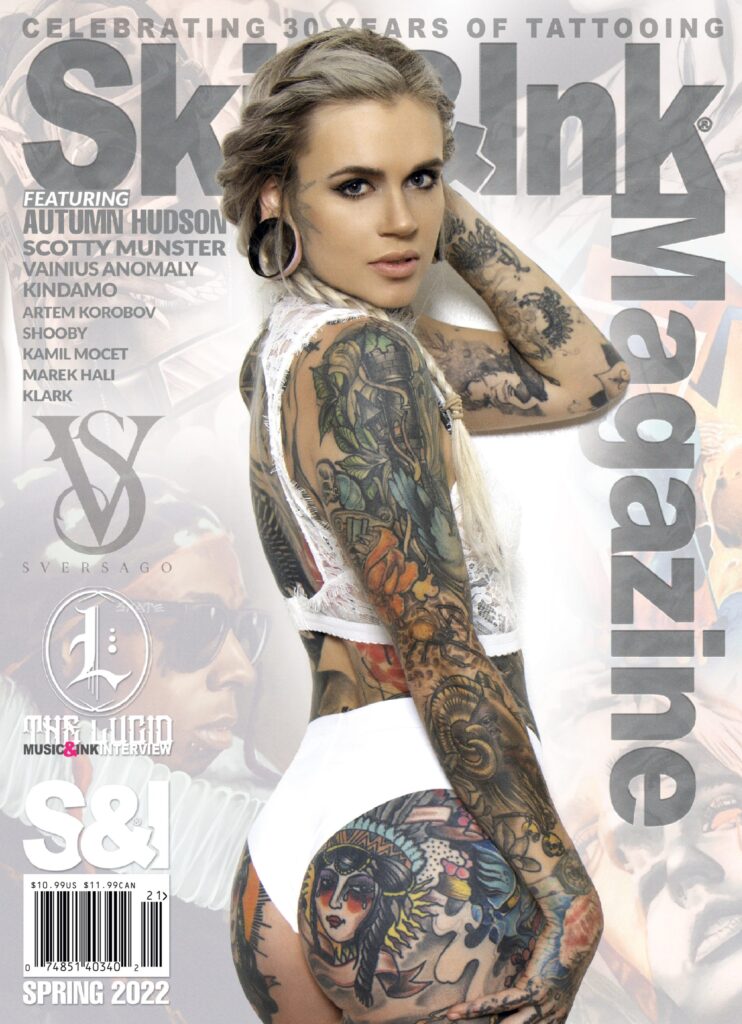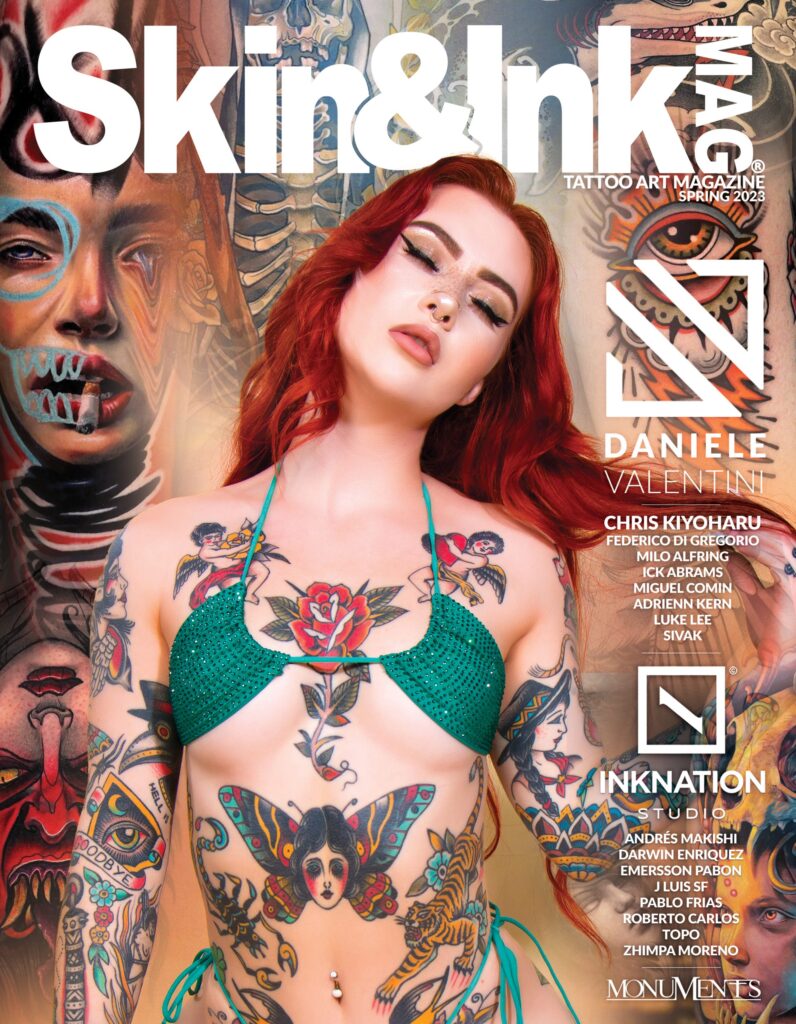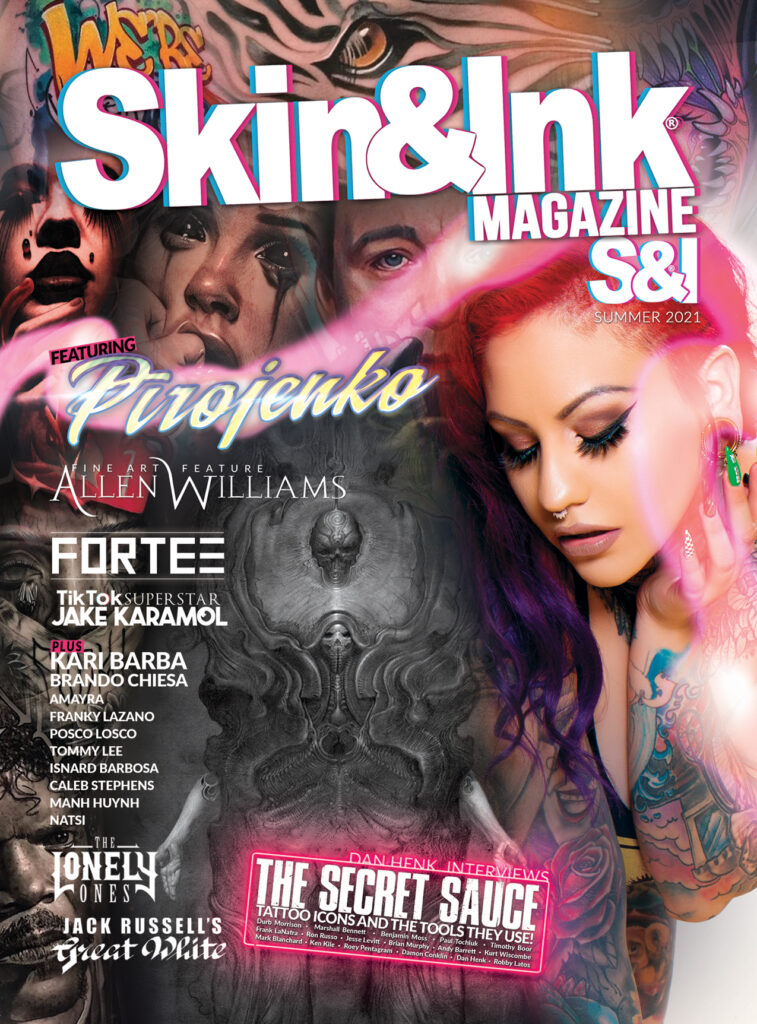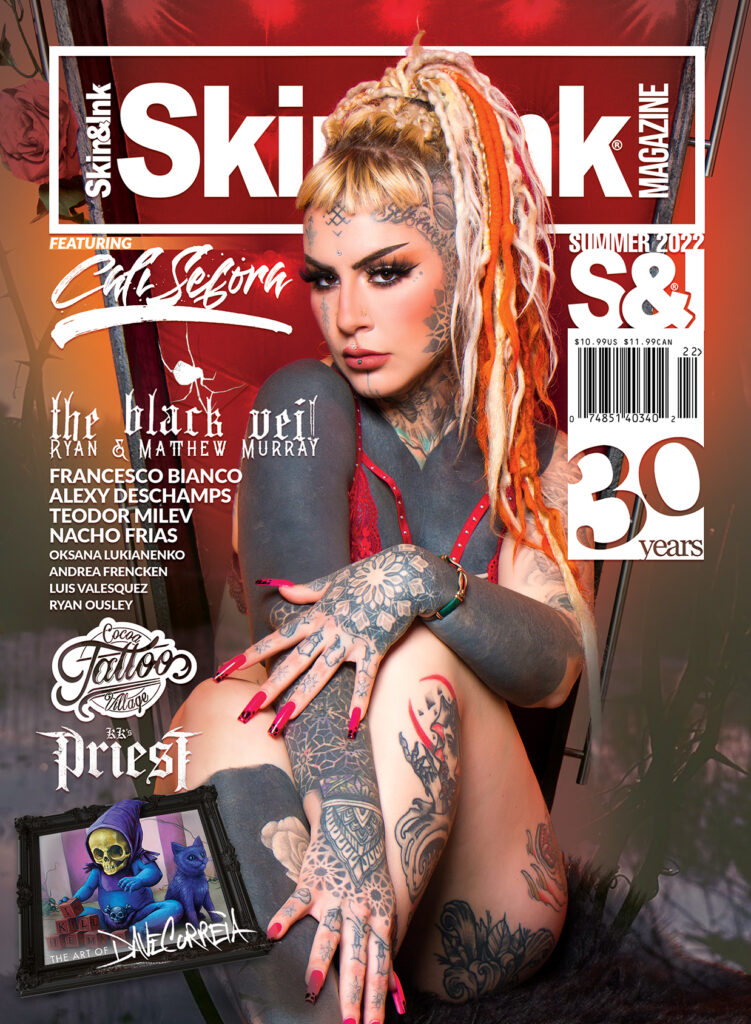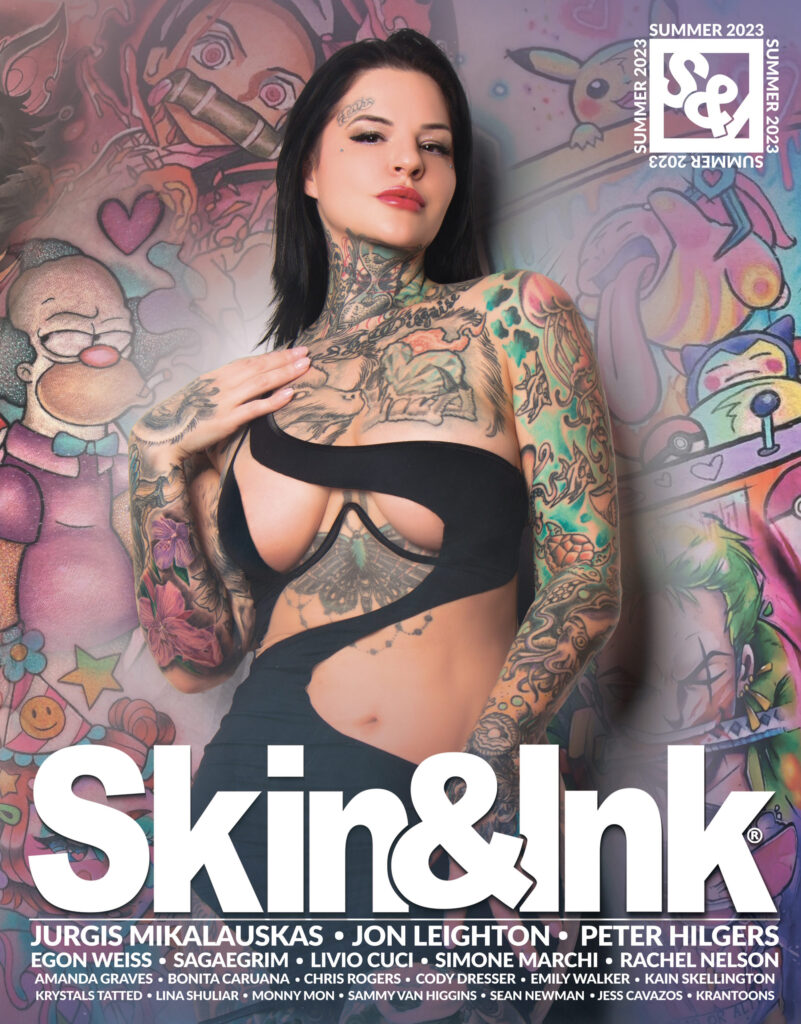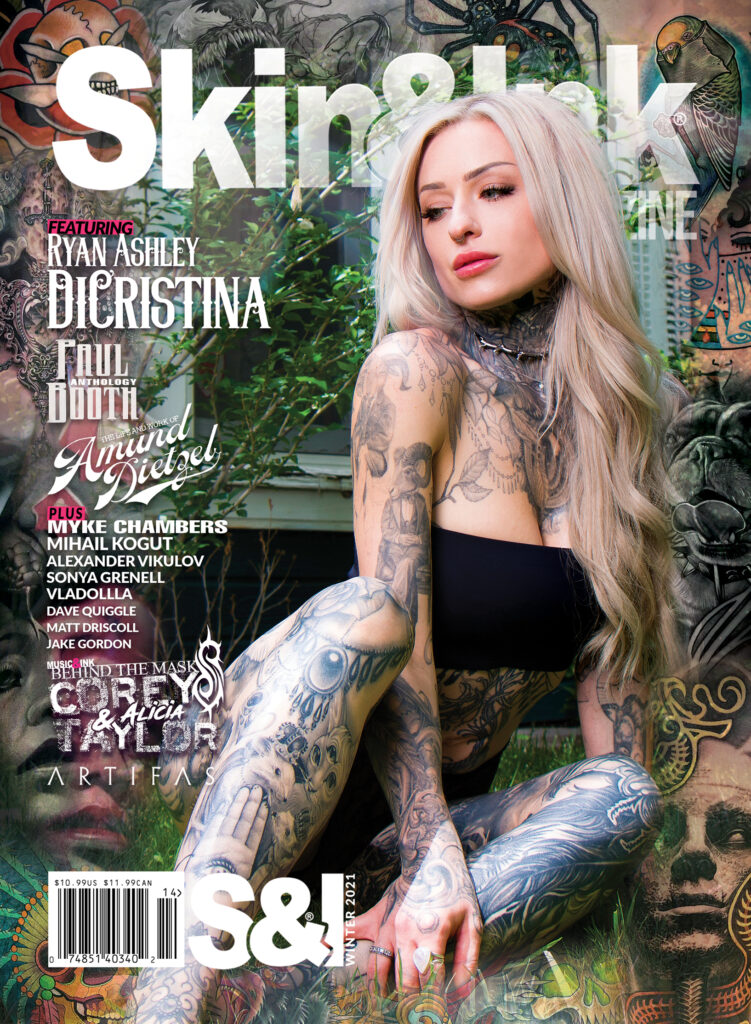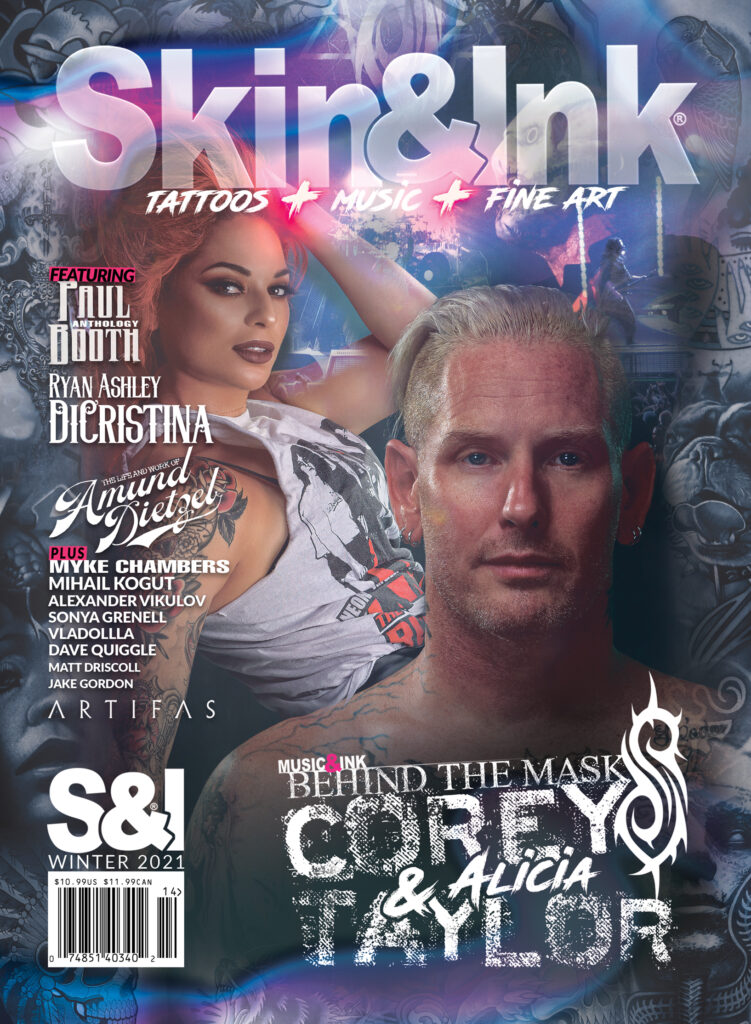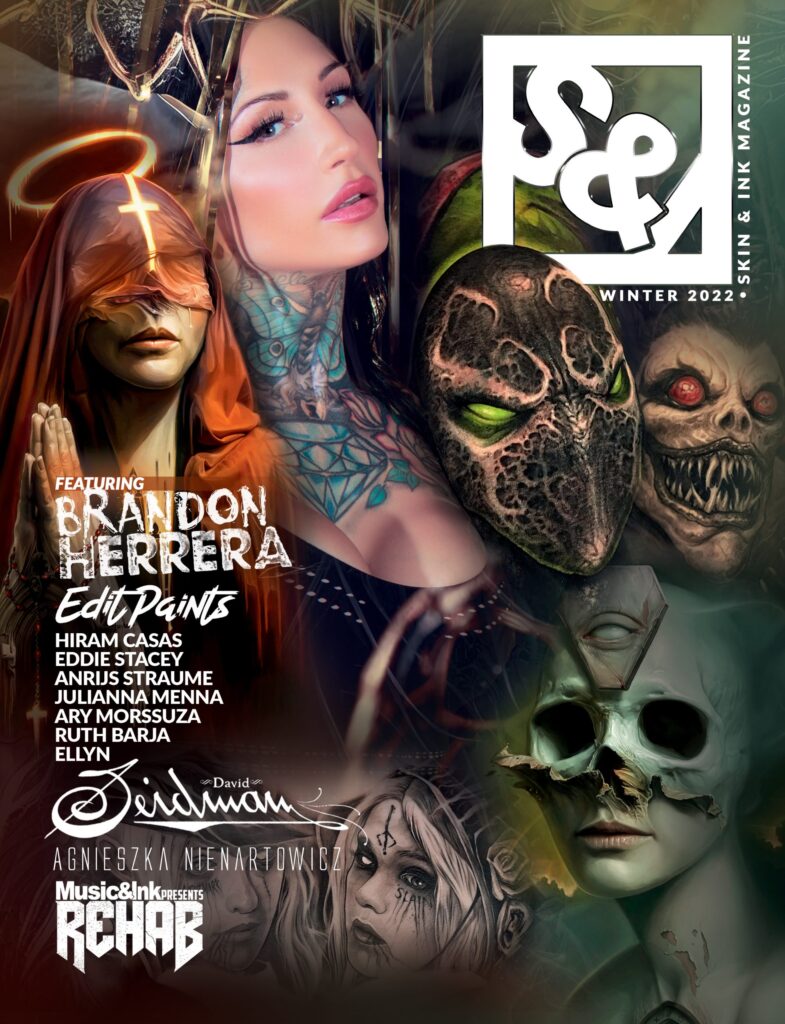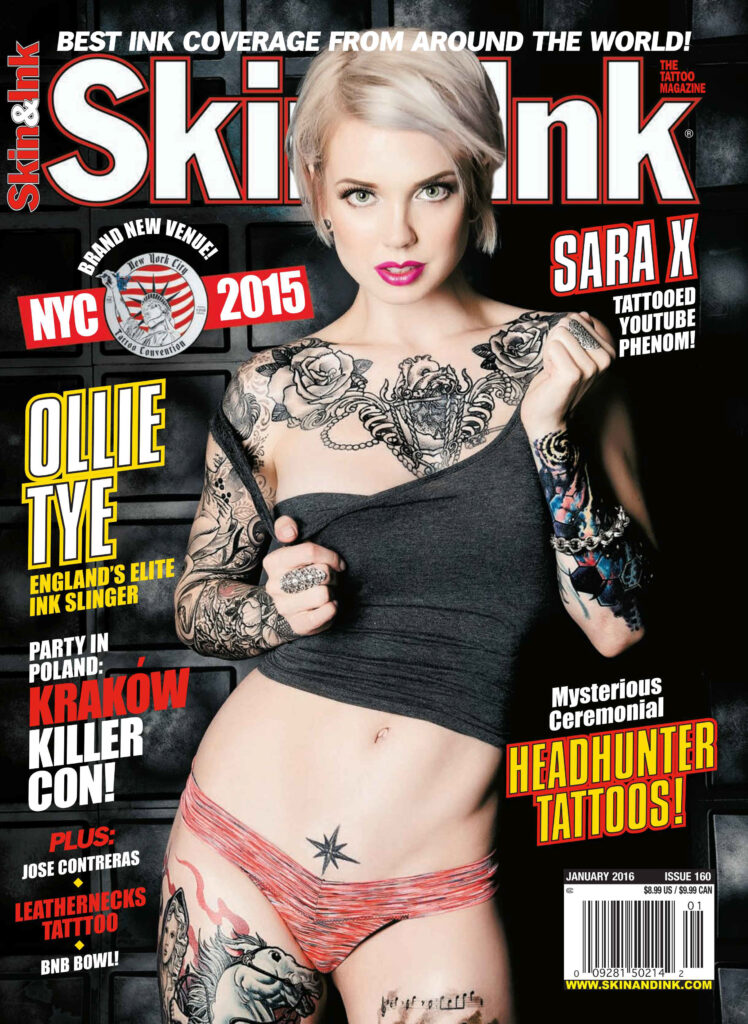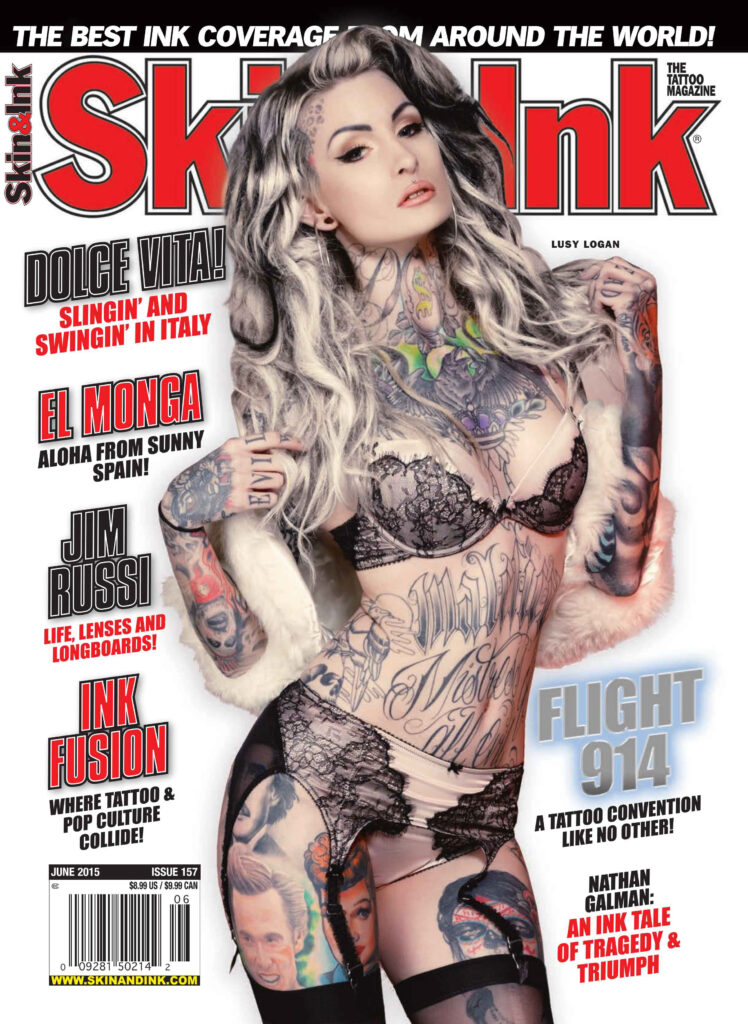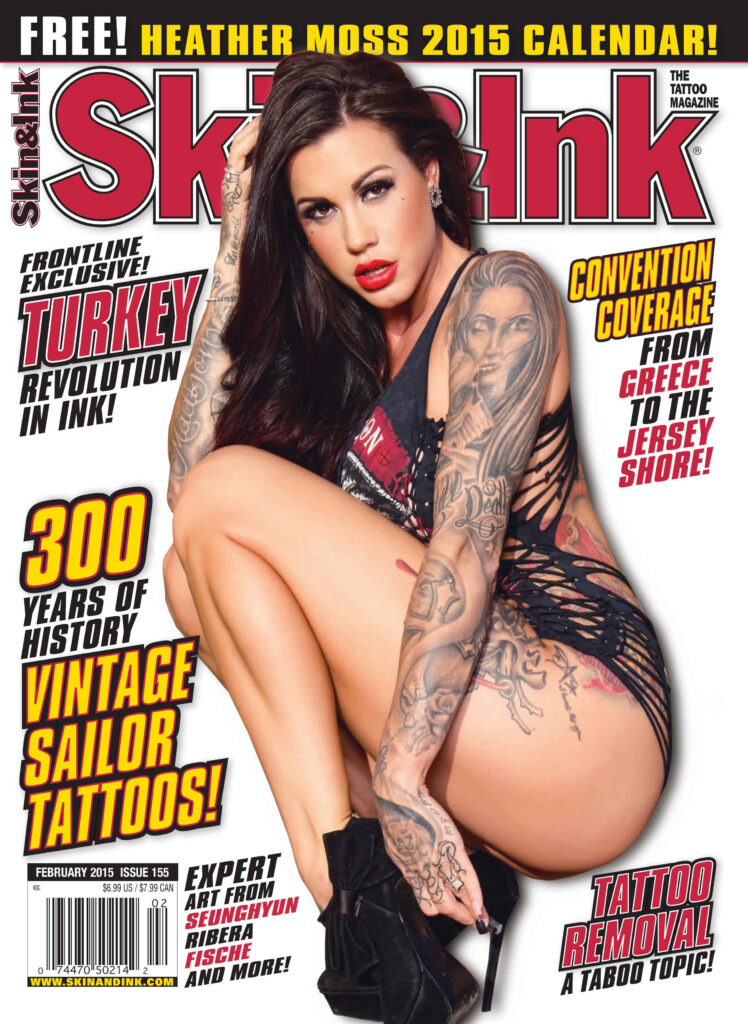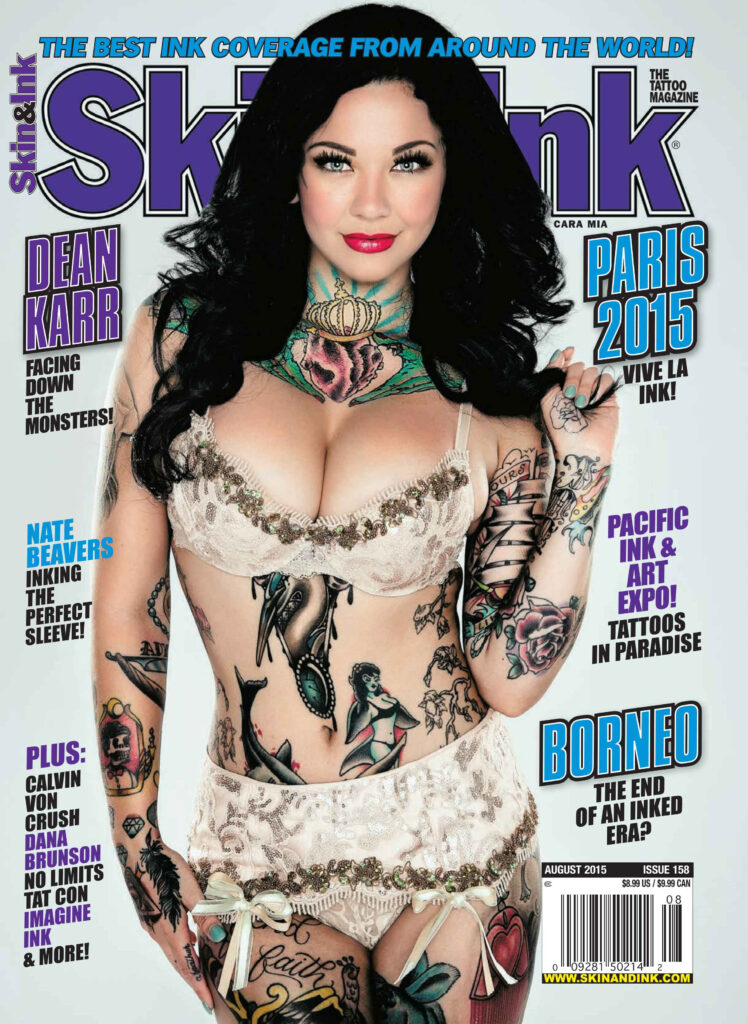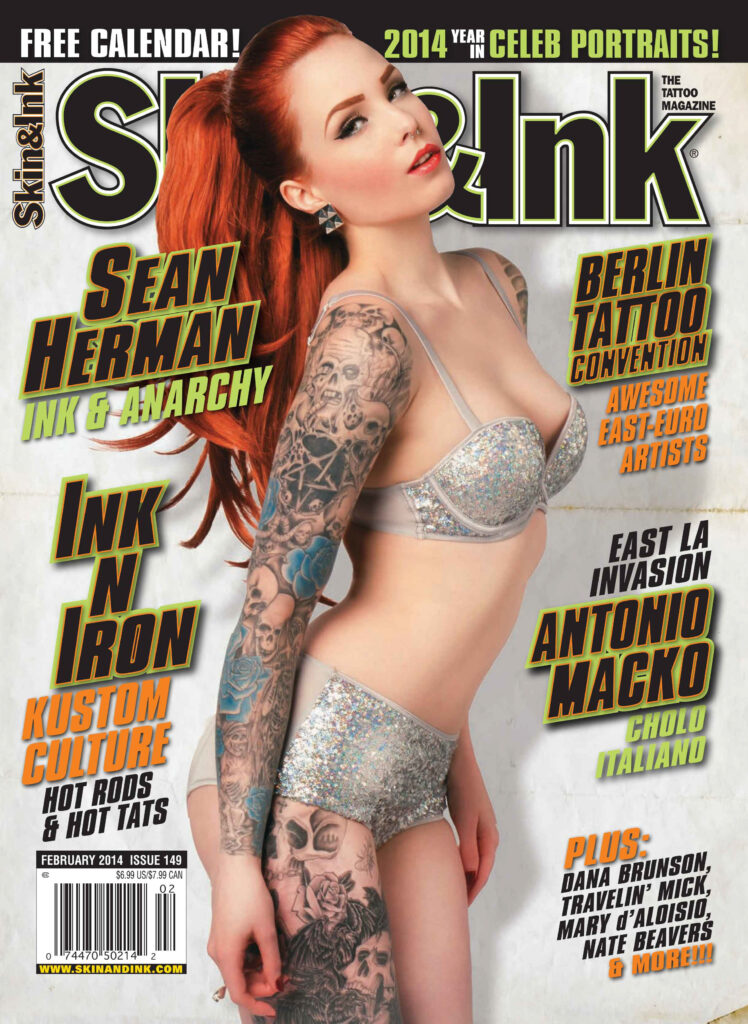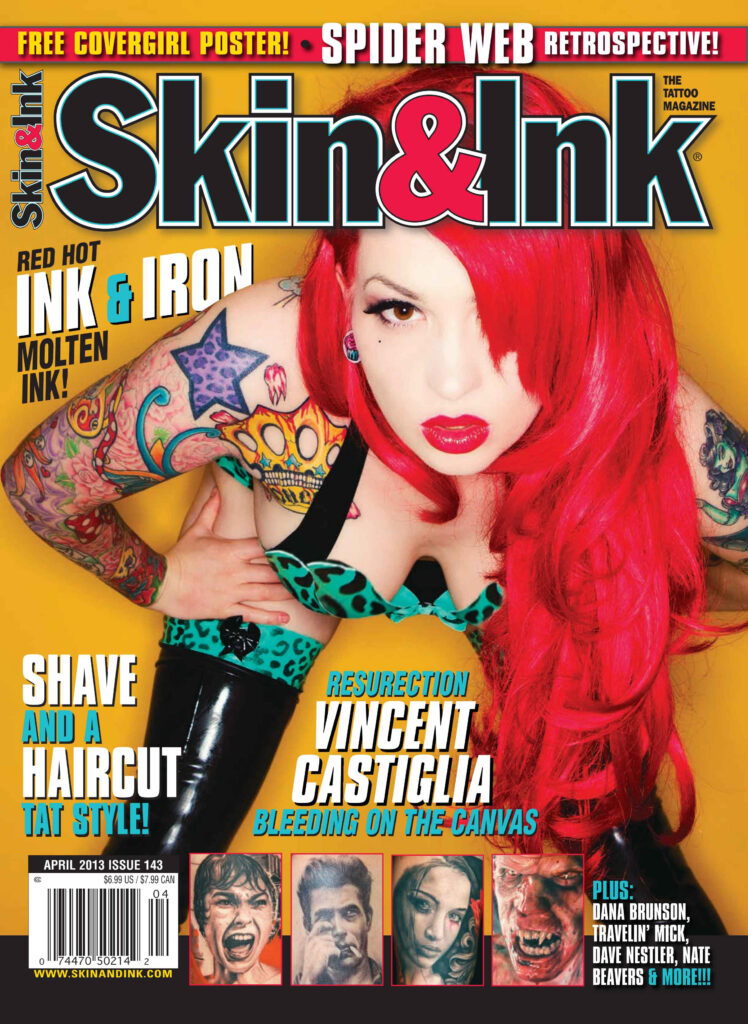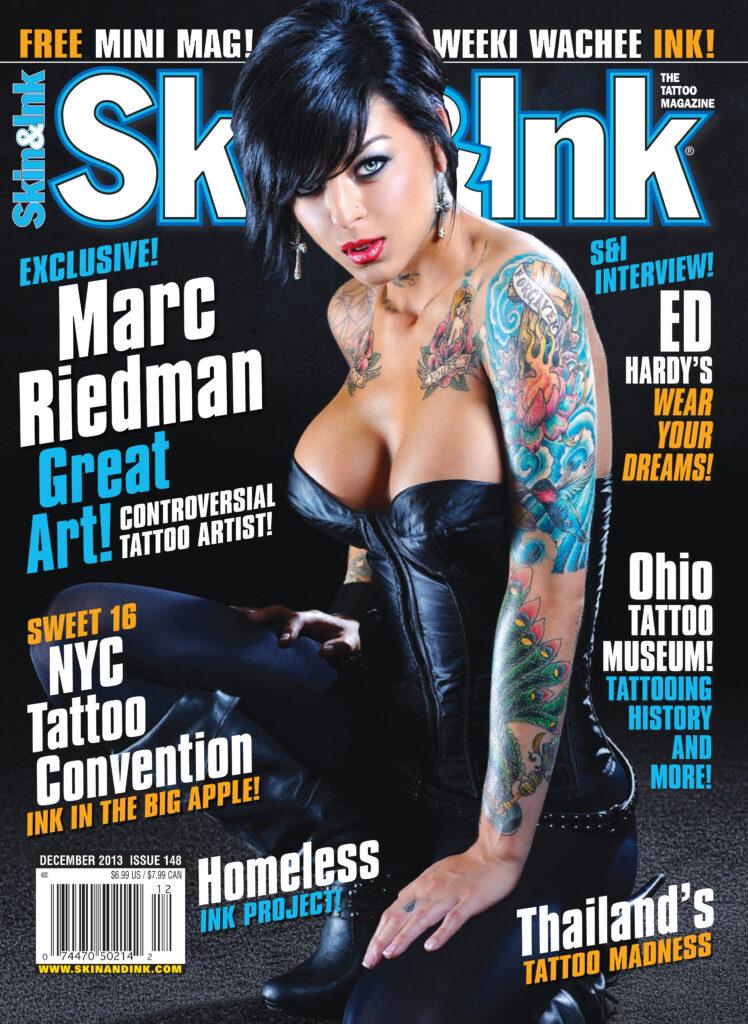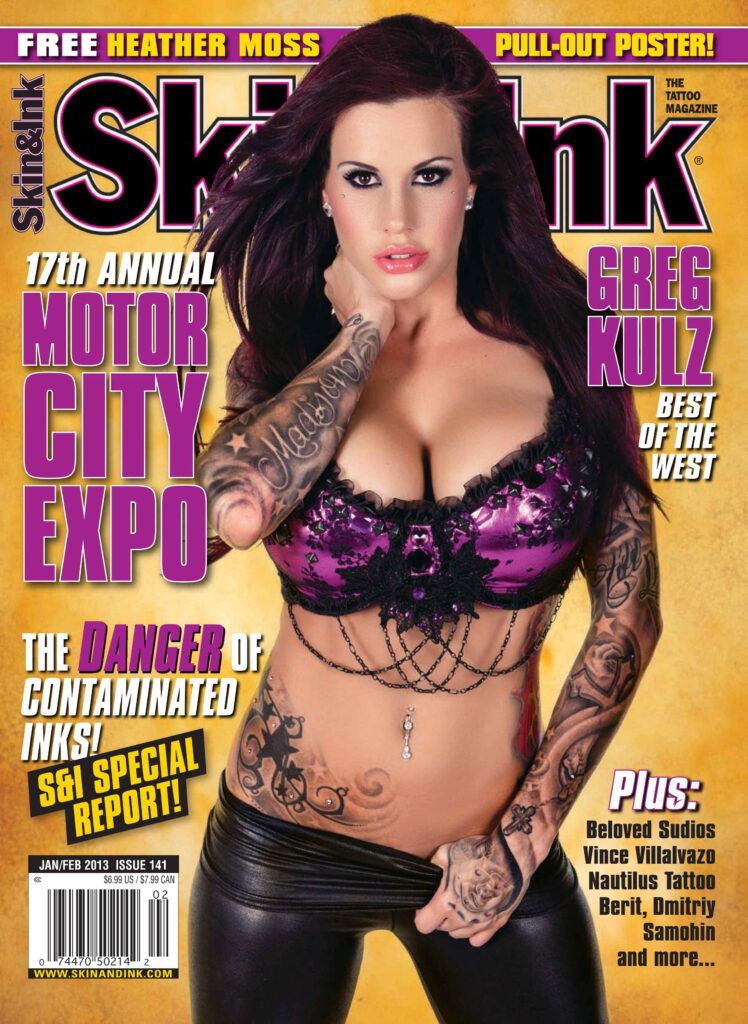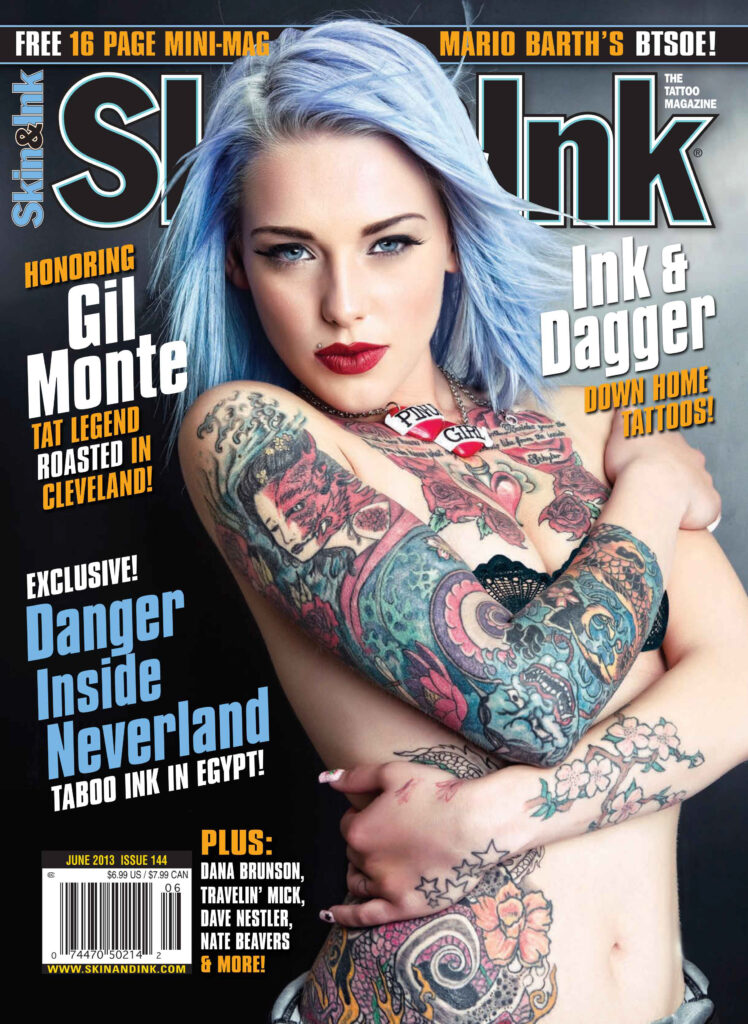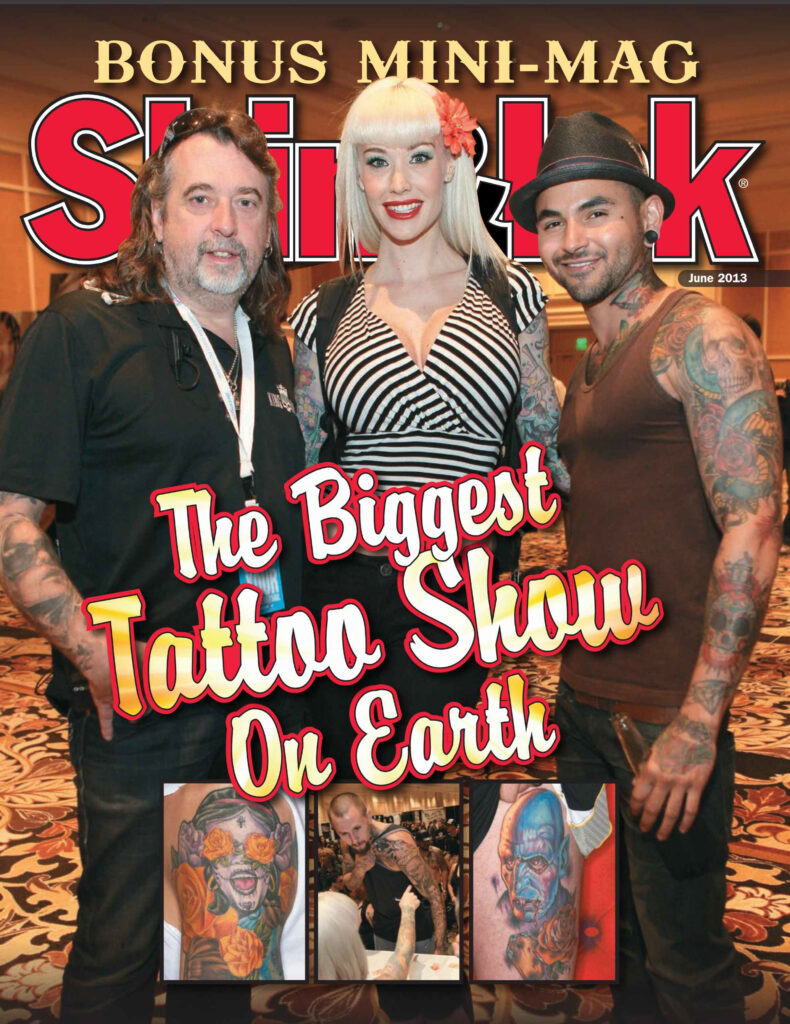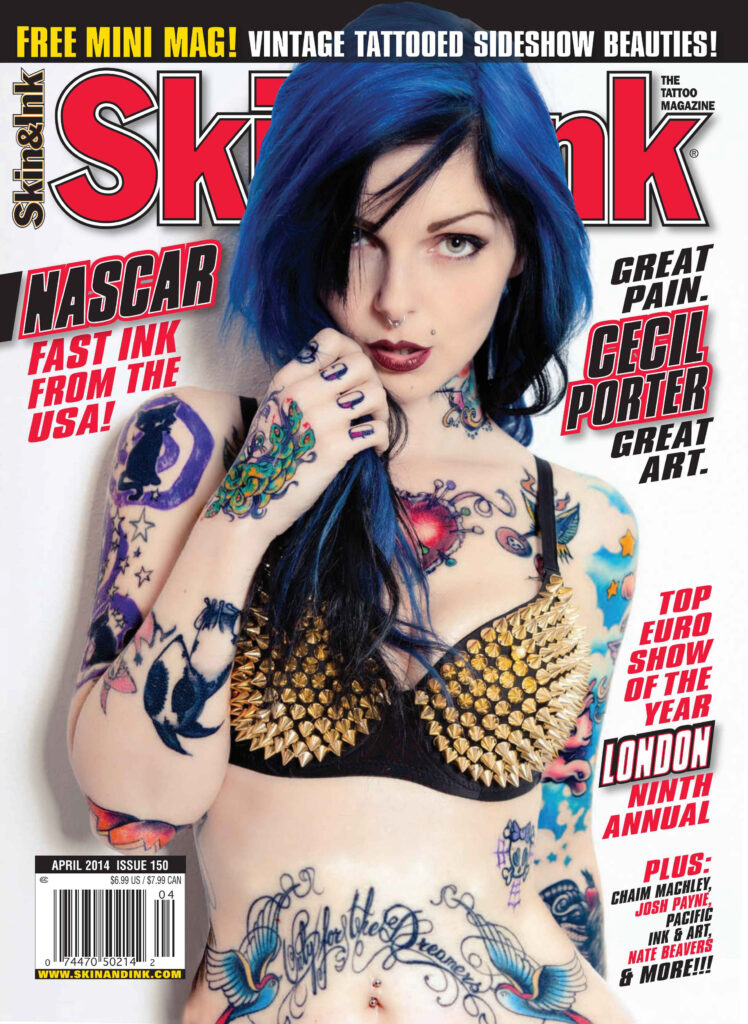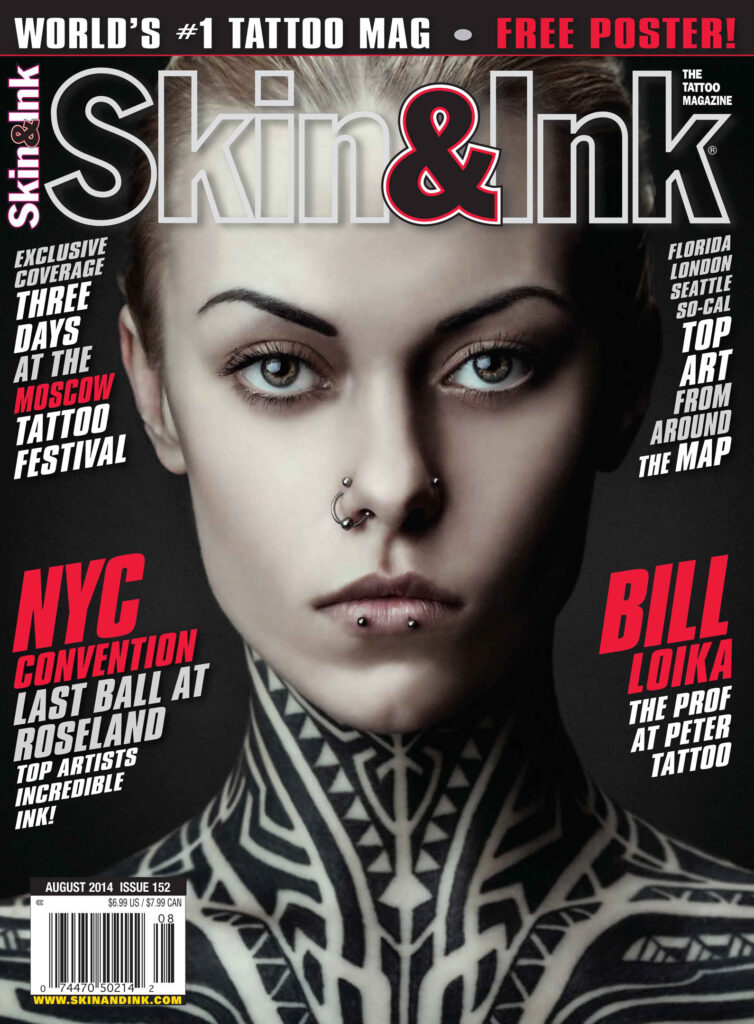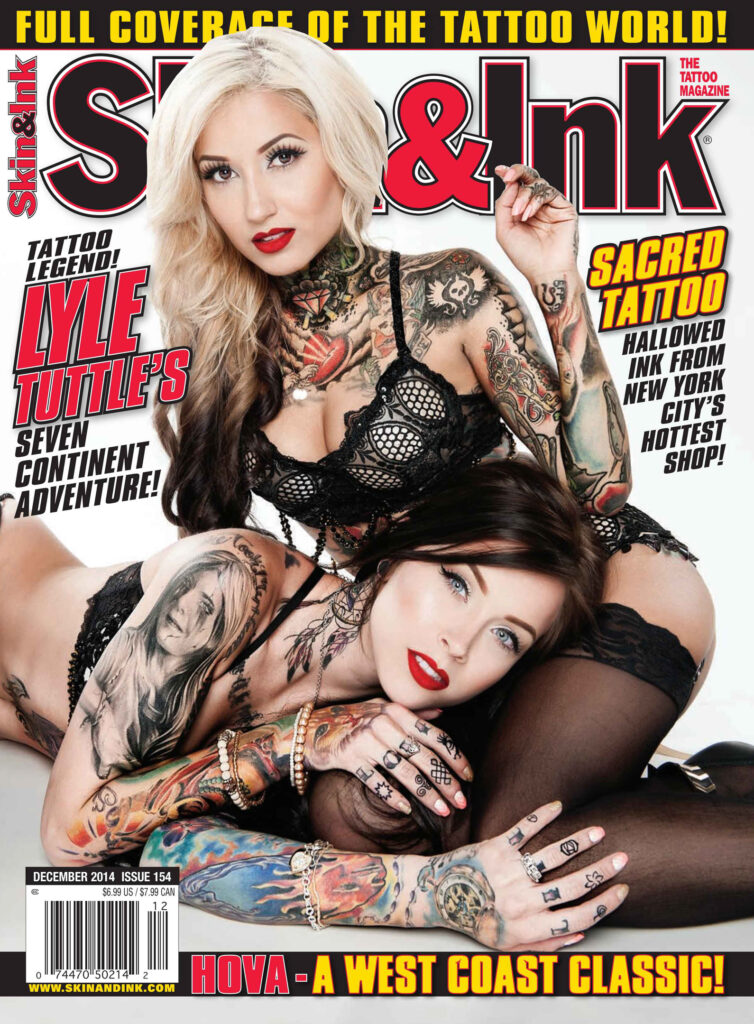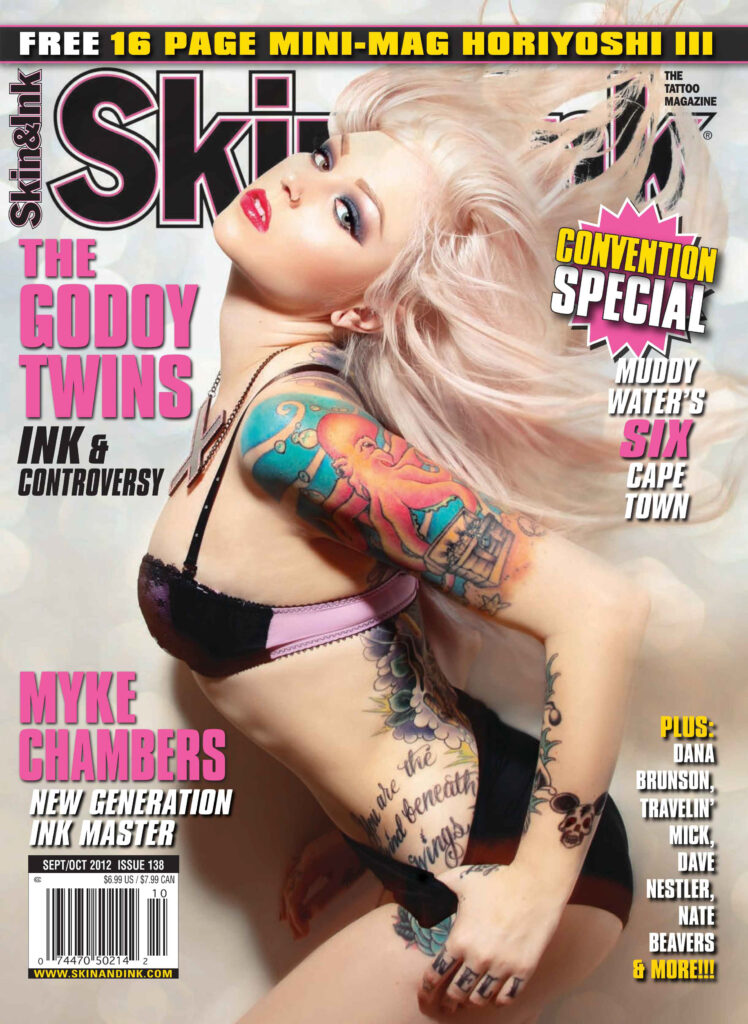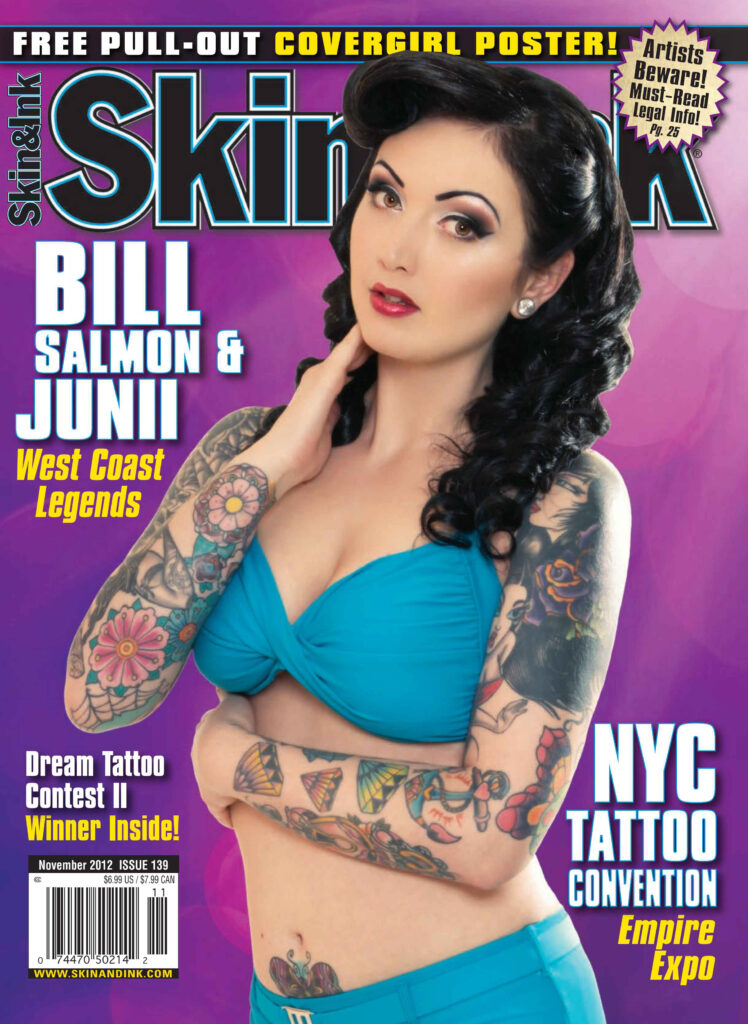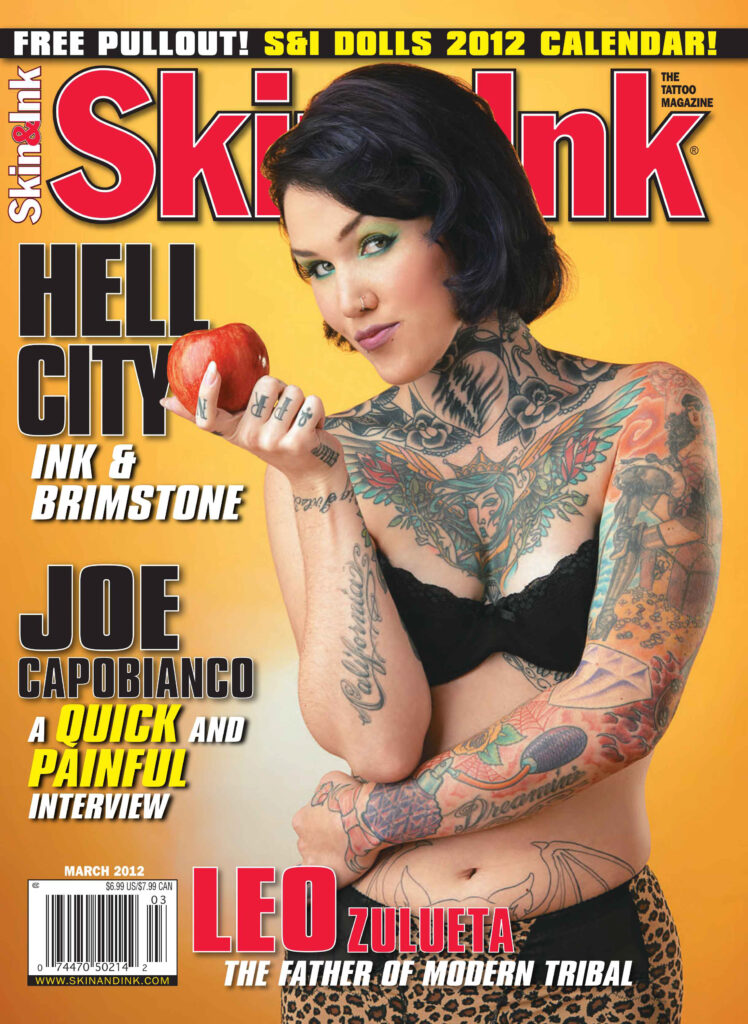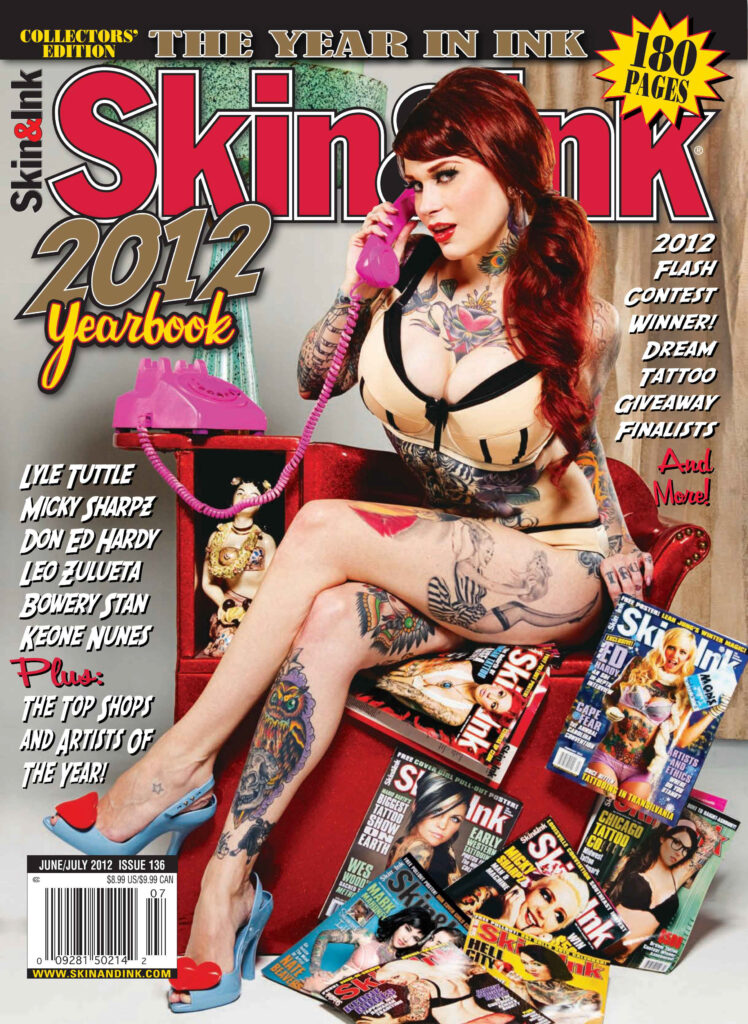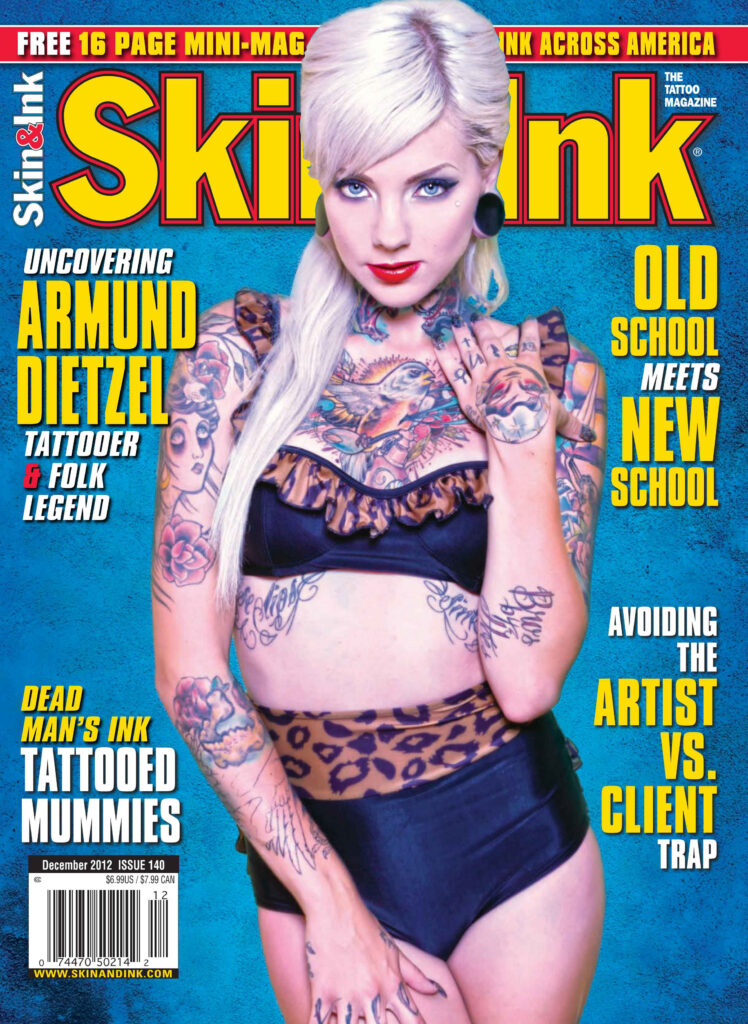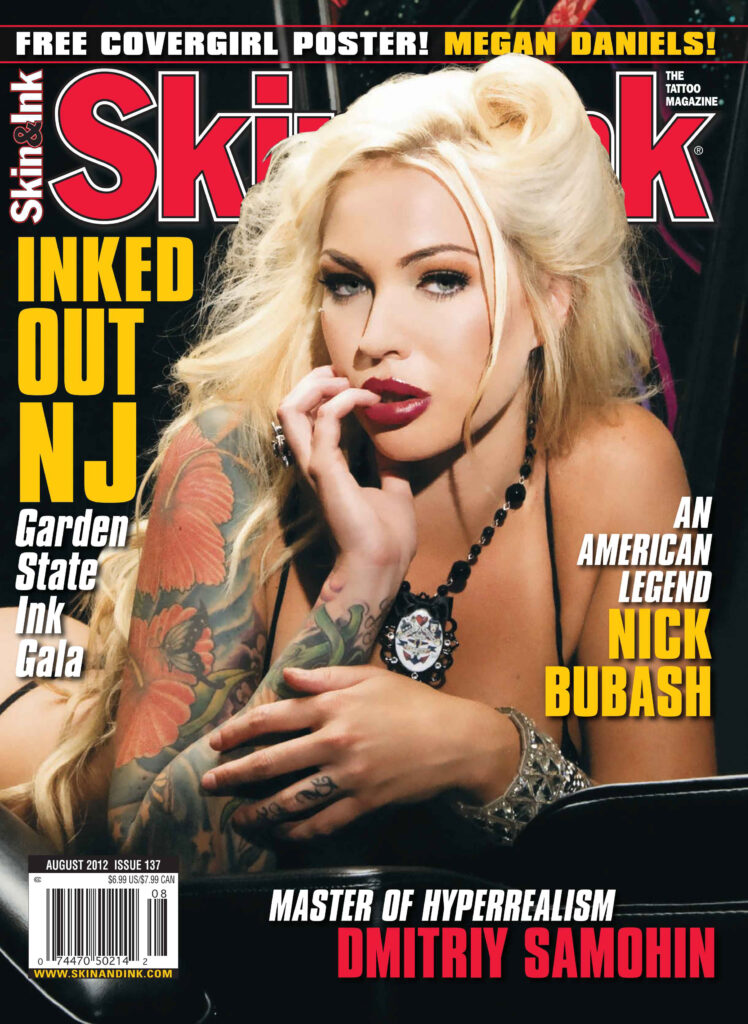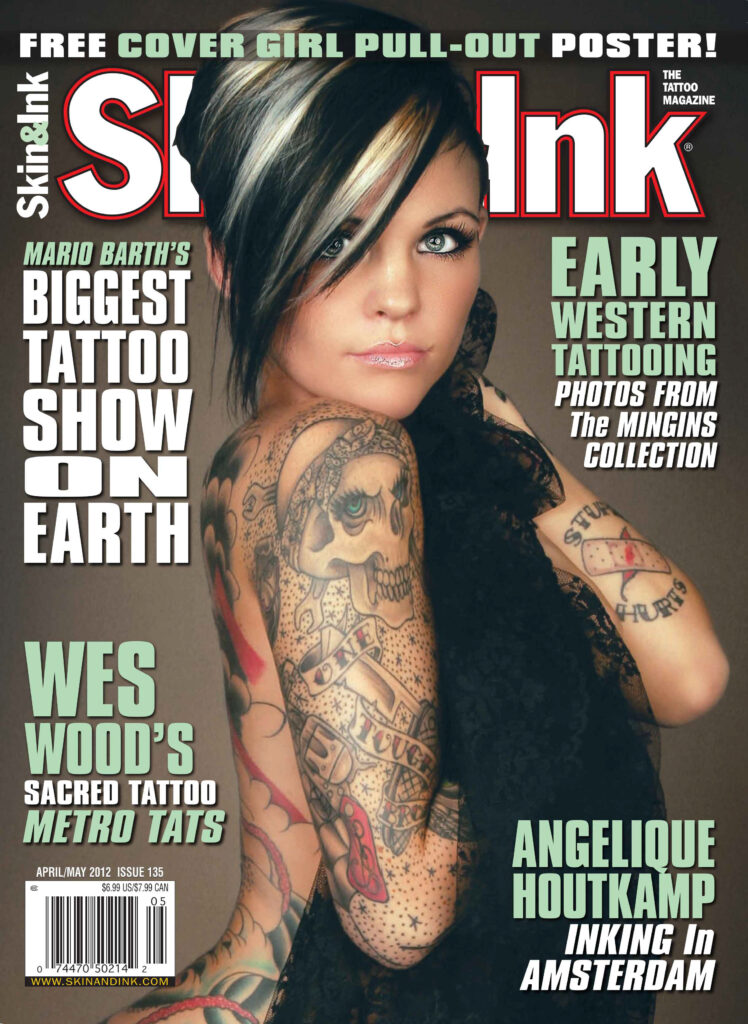

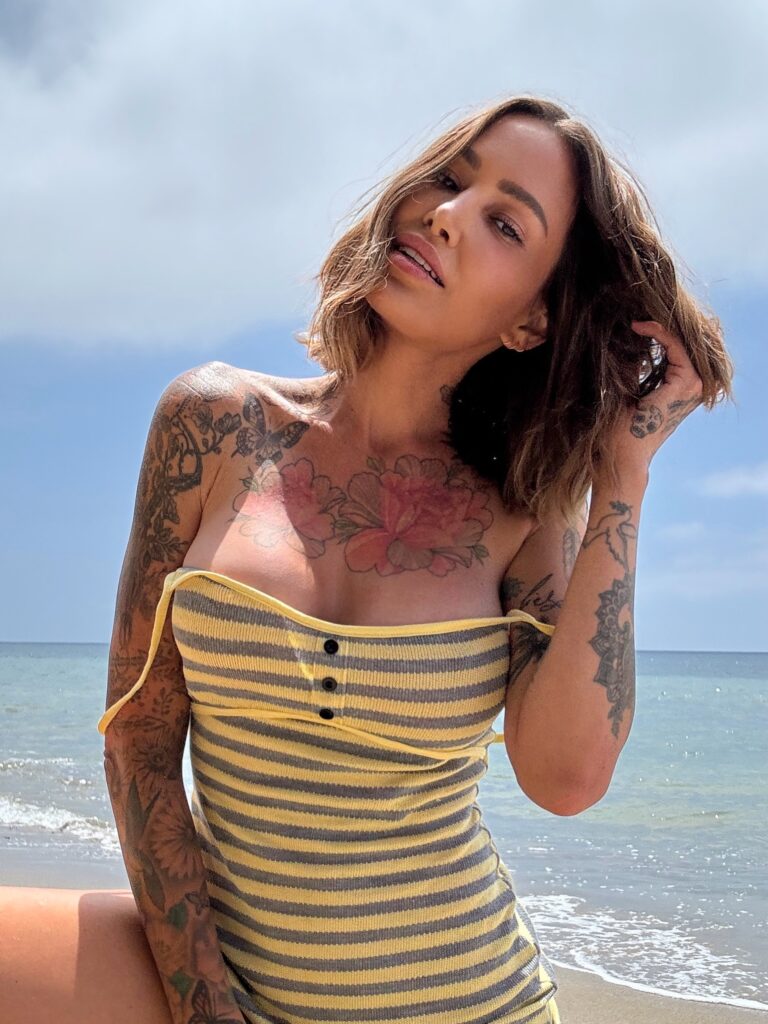
The pale blue dress in Tina Louise’s portrait leaves one arm clear from shoulder to wrist. In the beach photograph, stripes and direct light change the balance: you can see where the denser areas sit, but there’s more going on around them. The point isn’t which photograph is more flattering. It’s that two ordinary choices, sleeve length and light, can change how much of the tattoo you actually notice.
From a small start to a larger collection
In a 2015 conversation with Inked, Louise said her first tattoo was a small butterfly she got on her eighteenth birthday. She also said she waited before adding more ink because of modeling. By the time of the interview, her experience had reversed that worry: she reported booking more work as a tattooed model. It’s her account of her own career, not a rule every model or agency follows.
Trusting the artist
Louise told Inked that Kareem Masarani of Newport Tattoo had done most of her work at that point. She pointed to his style and the trust they had built. That’s a dated, firsthand credit, not a claim that Masarani made every motif visible in her later photos.
If you’re planning a larger sleeve, the useful detail here is how it reads when you stop posing. The hand comes up toward the face in the beach photograph, the shoulder rotates, and parts of the arm disappear. Look for the lines and darker shapes that still hold the piece together. That’s the kind of image worth bringing to a consultation, without asking another tattooer to copy it.
Cover: Portrait shared by Tina Louise (@tinalouise). Photographer not listed in the source caption. Source.