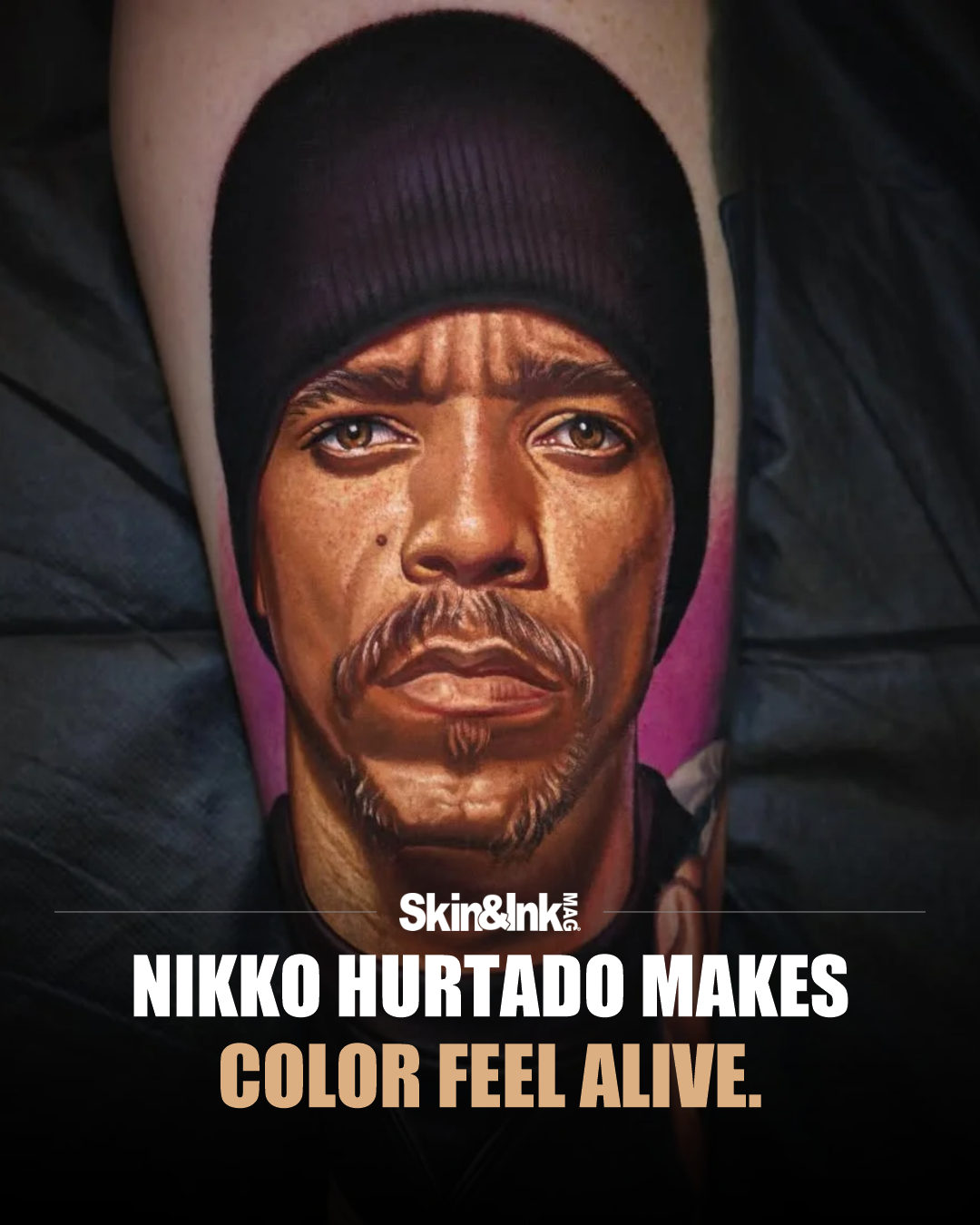
Nikko Hurtado's portrait work makes you look at the eyes first. Then you start noticing everything that makes them convincing.
A portrait displayed in his Freshly Inked portfolio shows a man in a dark knit cap against a purple background. The skin moves through warm browns, highlights and deeper shadow. The hat creates a dark boundary above the face, while the shirt anchors the image below it. The expression stays legible because the major light-and-dark relationships are clear.
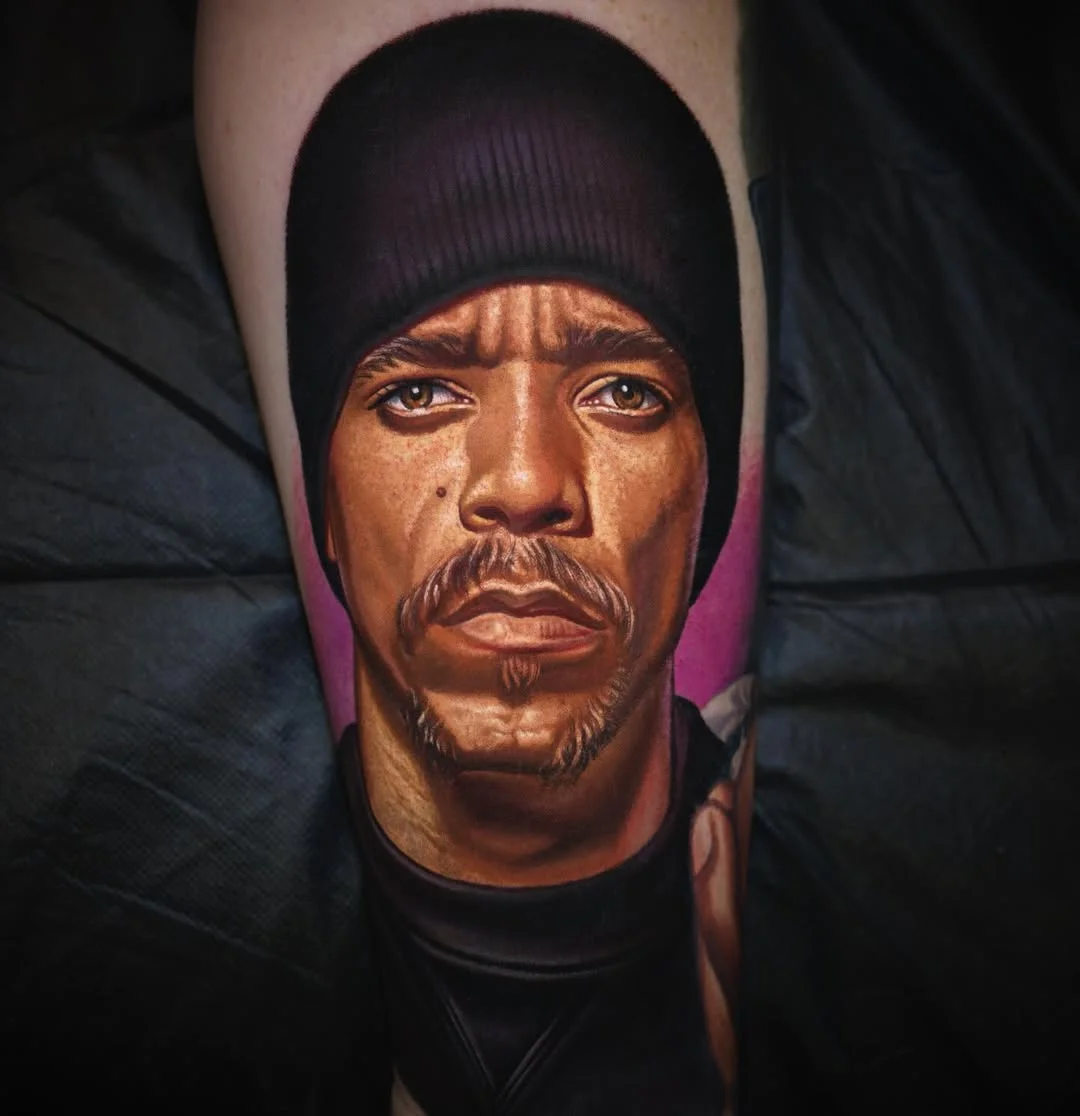
The small details help, but they are working inside a larger structure. Creases around the eyes give the face character. Changes around the lips and nose describe volume. The background separates the head without asking for the same attention. You can appreciate the surface and still read the person at a glance.
Hurtado's official biography traces his start in tattooing to an apprenticeship opportunity at Art Junkies in 2002. It identifies an early Batman color portrait as a significant turning point, and records the founding of Black Anchor Collective in 2009. Those facts give some perspective on a career built around the possibilities of representational tattooing.
Black Anchor's own site also presents the studio as a place for tattoo artists and art, rather than a portfolio belonging to only one person. The broader setting is worth acknowledging when looking at an artist whose public identity is so strongly attached to his individual work.
Portraiture makes the stakes unusually visible. We spend our lives reading faces. A tiny change in an eye or mouth can alter an expression, even when we cannot explain exactly what moved. That makes restraint as important as adding another detail.
The question I keep coming back to is whether a portrait still communicates when you stop inspecting it. Does the expression survive at normal viewing distance? Does the face hold together before you zoom in on the texture?
Hurtado's work gives you a reason to ask those questions. The technical finish draws you closer, while the larger expression keeps the image from becoming an exercise in detail alone. The person remains the point.