Pattern, repetition, and the body give ornamental tattooing its force.
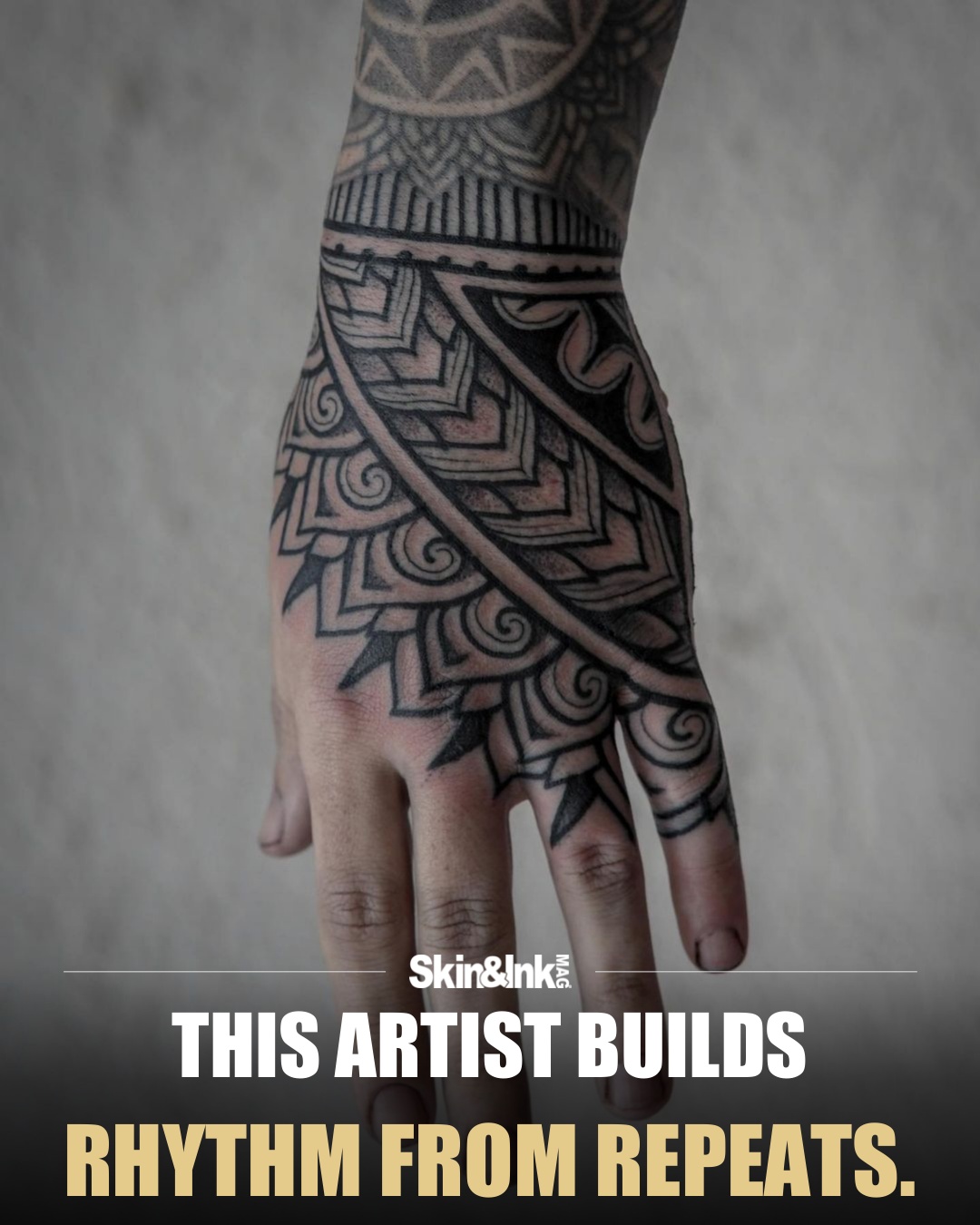
Stand back from a complex blackwork tattoo and the smallest marks disappear into a larger rhythm. Move closer and those marks return, each contributing to a structure you could first feel before you could inspect it. Thomas Hooper’s ornamental language works across those two distances.
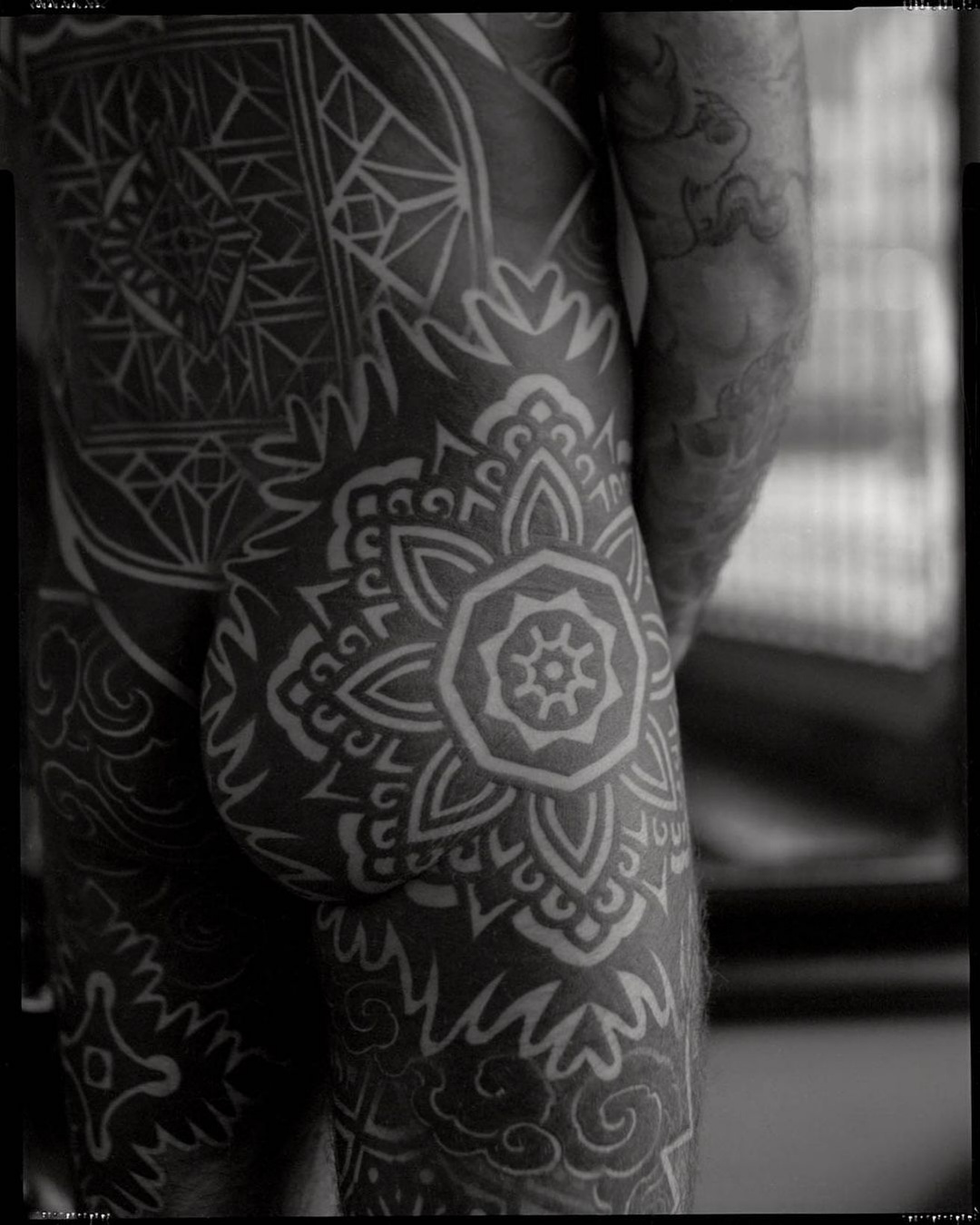
His official artist page at Nowhere Tattooing describes a practice joining blackwork, geometry, symbolism, and ornament. That combination opens a large visual territory, but repetition provides a useful thread through it. A form can echo another form, expand into a field, or establish a sequence that carries the eye around the body.
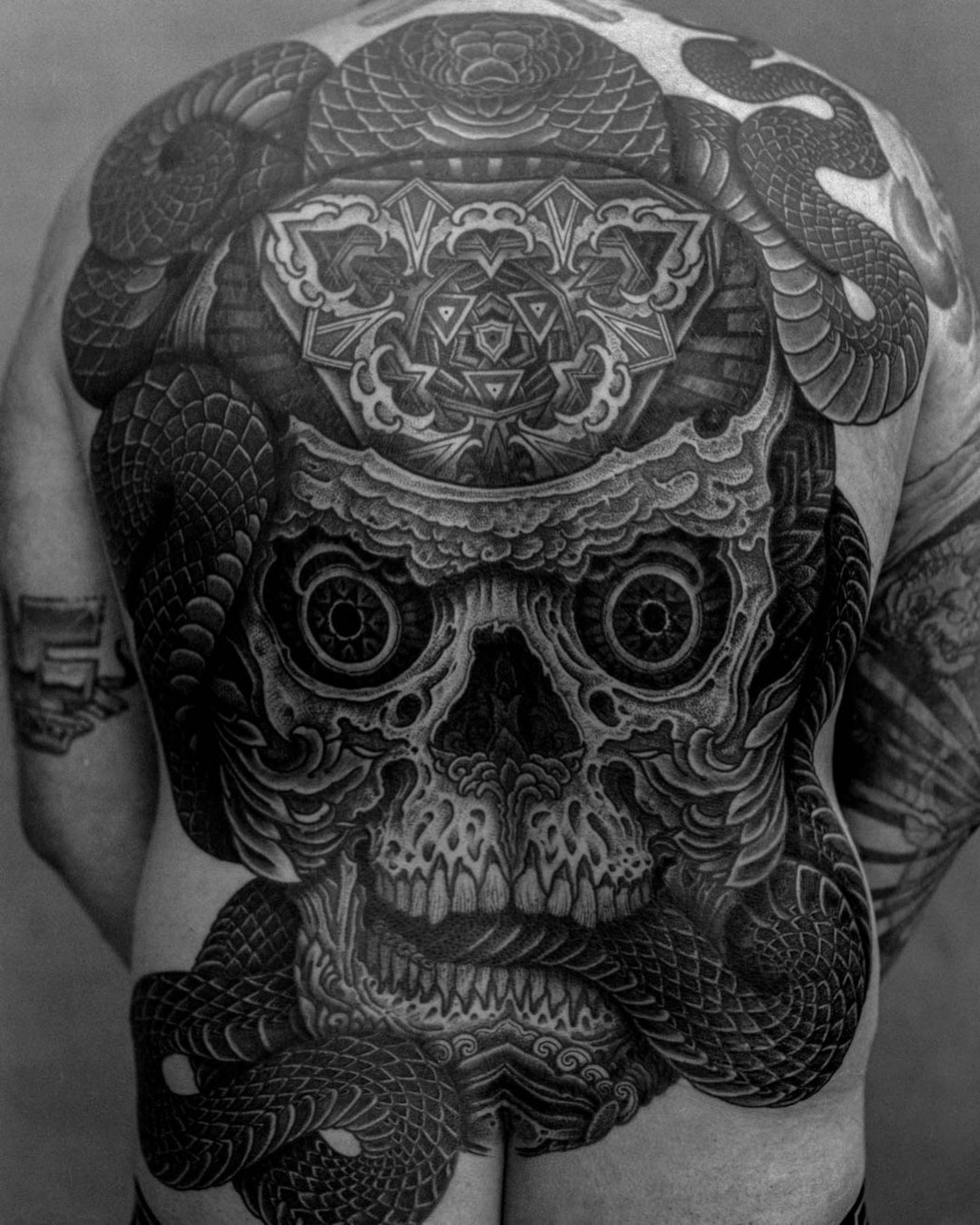
Pattern is demanding because every repeated element creates an expectation. The viewer begins to anticipate the next interval. A change in density, direction, or scale can then become powerful. The composition gains movement through the relationship between a rule and the places where that rule shifts.
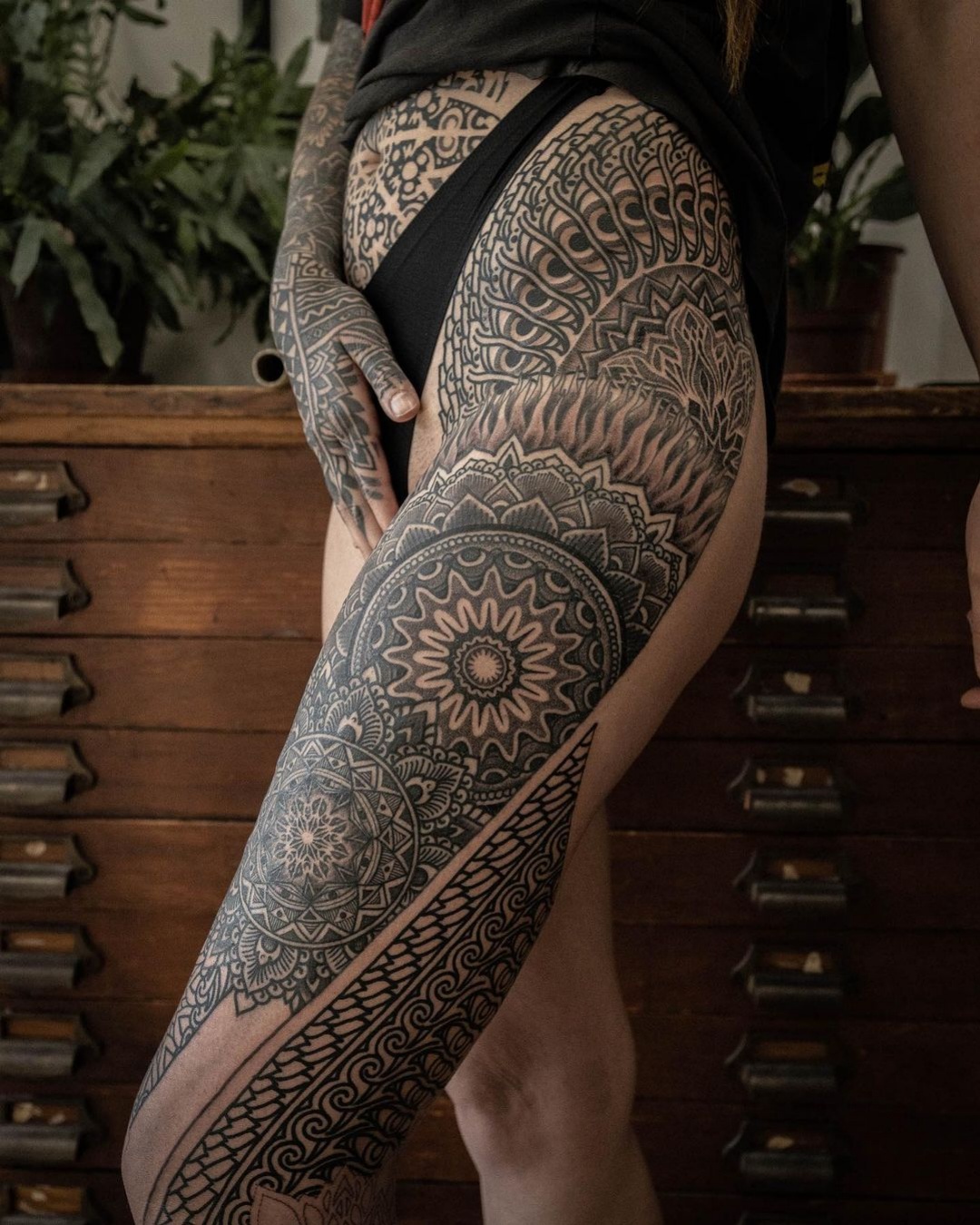
Black gives those relationships weight. Solid passages can anchor the image, while finer marks create transitions and visual texture. Open skin allows the design to breathe between them. The interesting question becomes how these different densities cooperate, especially when the work moves beyond a small, isolated placement.
The body adds a dimension that a flat drawing cannot resolve by itself. A shoulder turns. An arm narrows. A design moves in and out of view as its wearer changes position. Ornament can respond to those transitions, producing a composition that reveals itself over time rather than presenting every part at once.
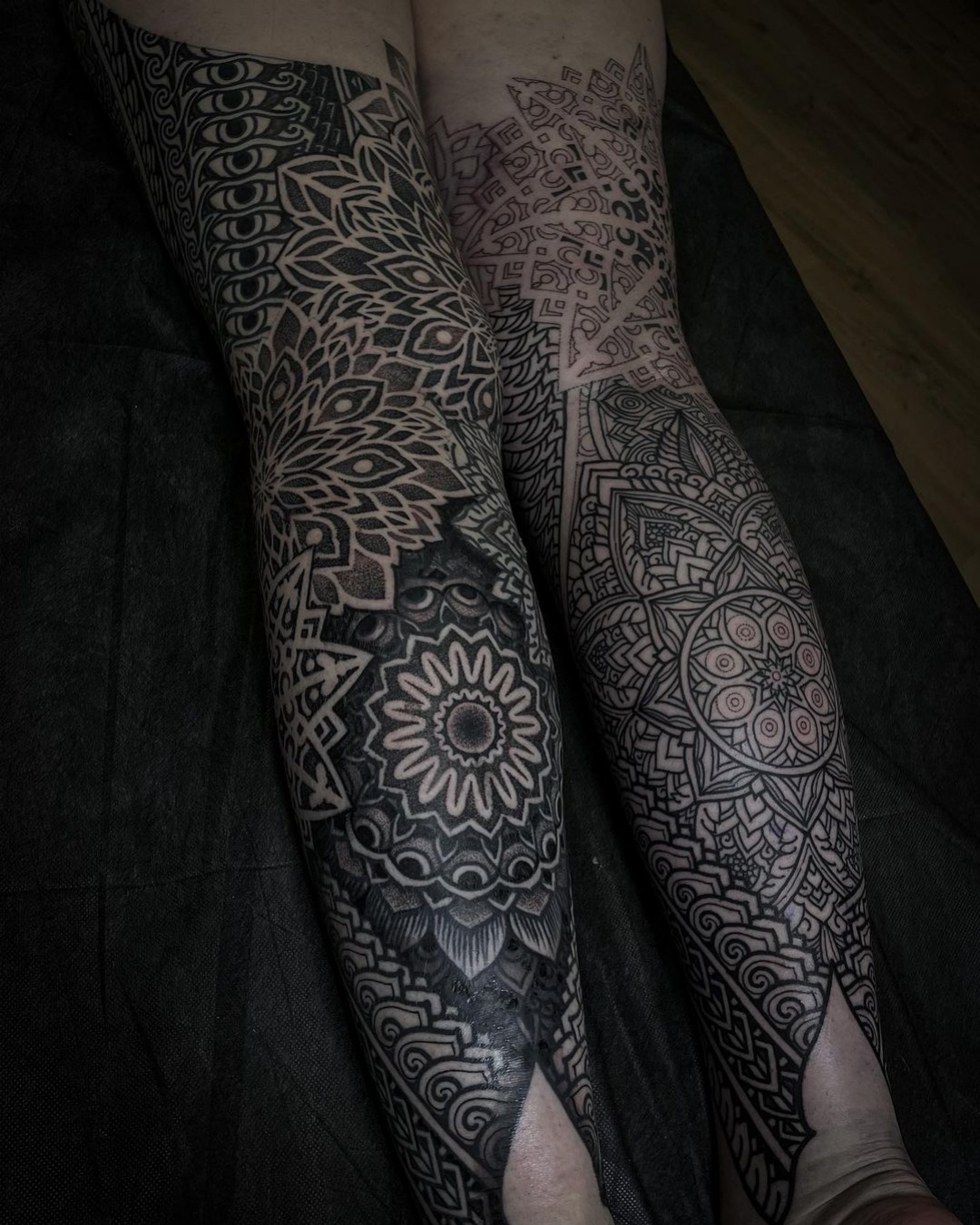
Hooper now runs Nowhere Tattooing in Brighton, according to the studio’s official biography. The same page describes a range extending from smaller pieces to full bodysuits, alongside painting and printmaking. That breadth is worth remembering when large, intricate work dominates the conversation around an artist. The underlying design concerns can operate at different scales.
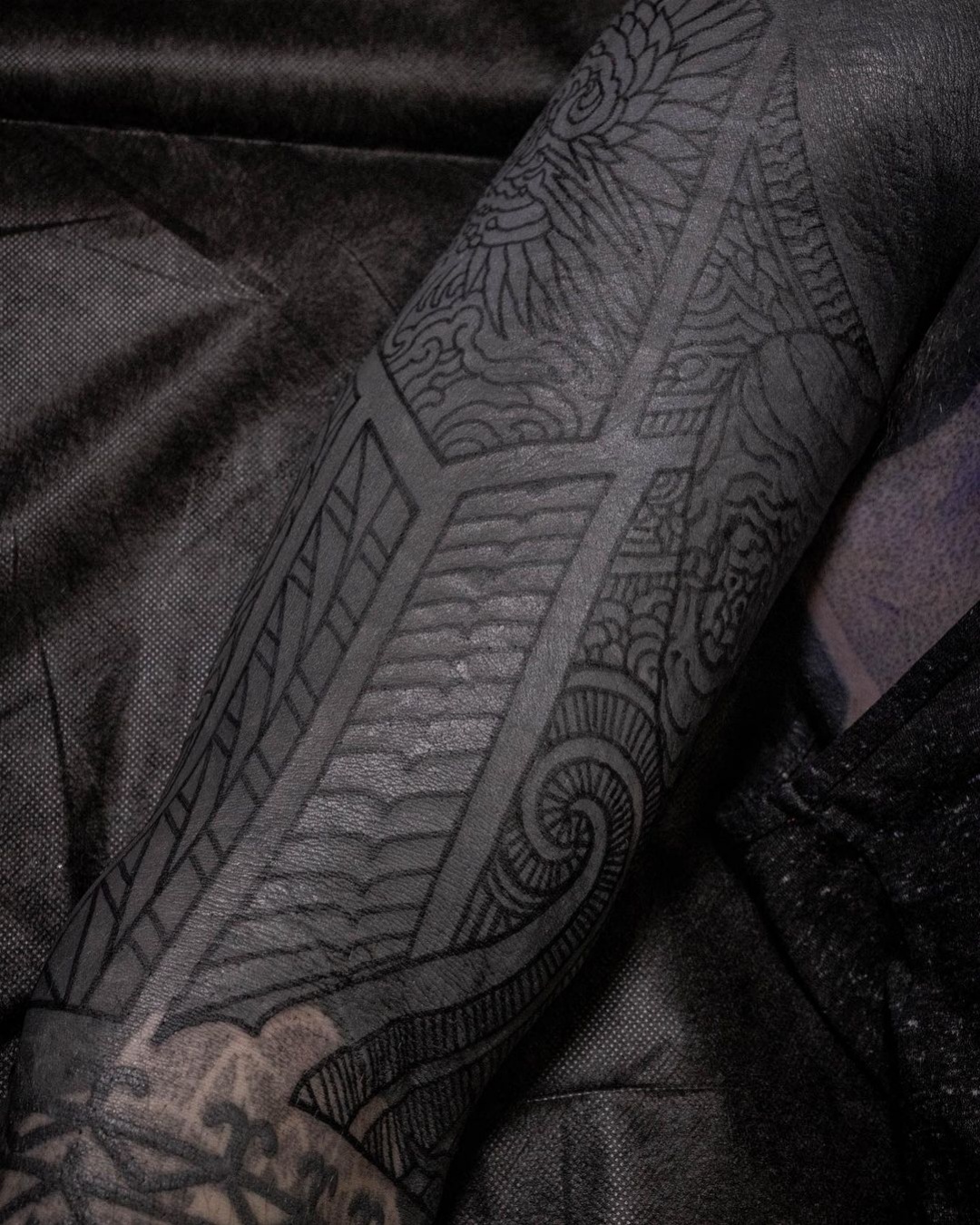
His work outside tattooing also gives a way to think about repetition without reducing it to decoration. A painted field, a printed image, and a tattoo all ask how a viewer’s attention moves through a surface. What changes is the surface itself, its scale, and the conditions under which we encounter it.
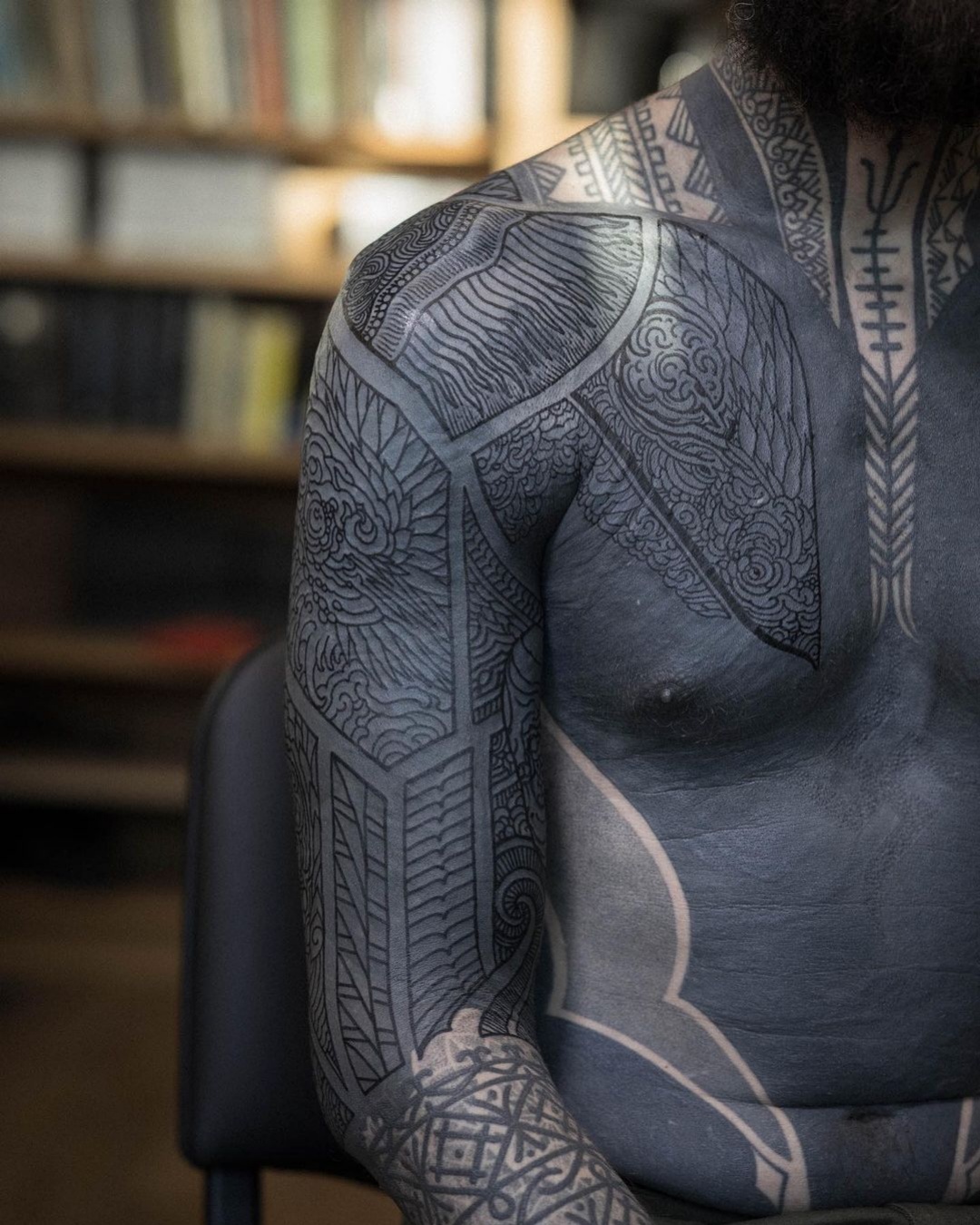
Looking closely at Hooper’s work means paying attention to both the individual mark and the whole arrangement. Notice where your eye settles, where it accelerates, and how a dense passage meets an open one. The strength of an ornamental composition lives in those relationships. Black ink establishes the vocabulary; the rhythm between its parts gives the image its voice.
Explore more work on Thomas Hooper’s official website.