One continuous route gives an image room to breathe.
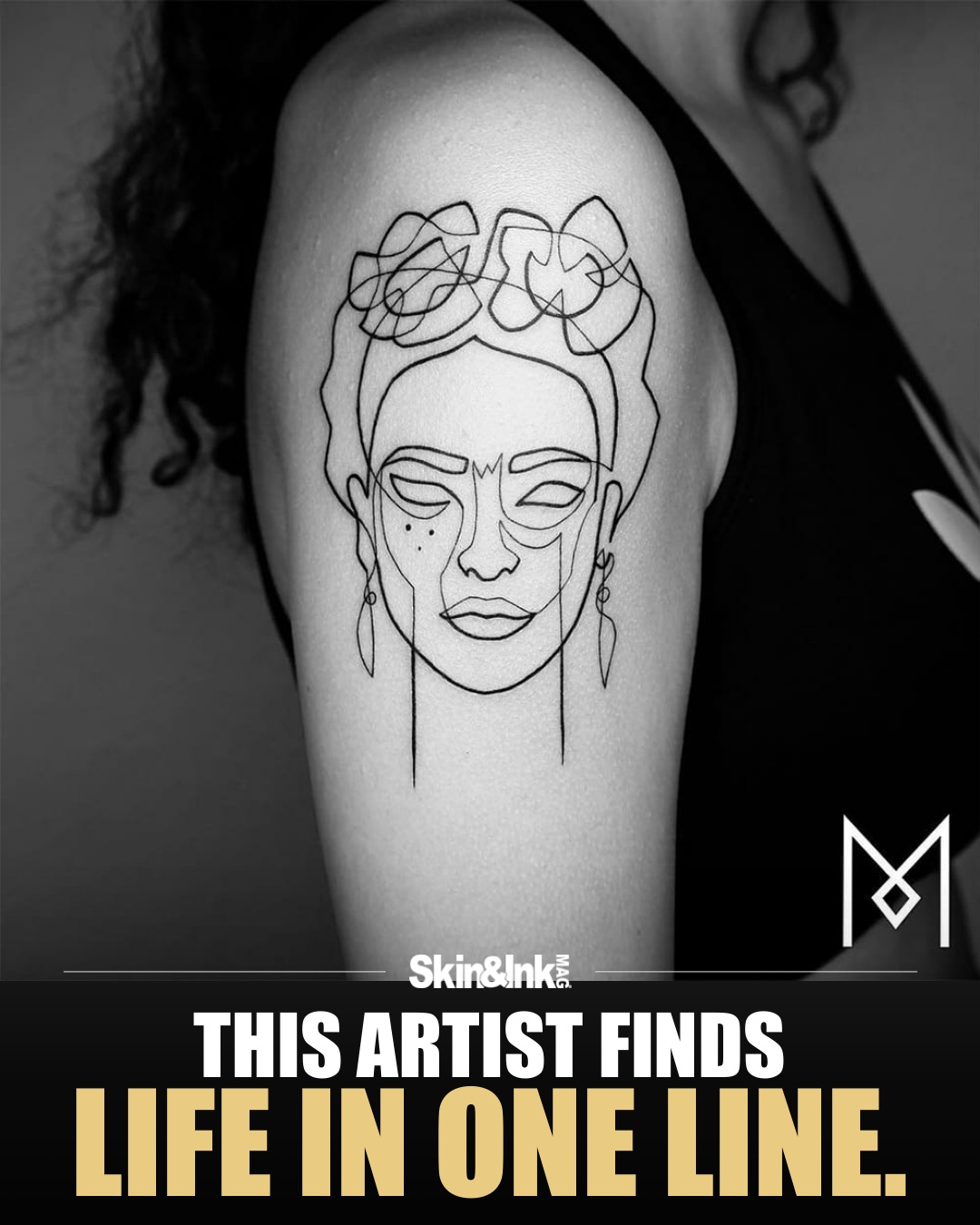
Your eye wants to follow it. That is the first pleasure of a Mo Ganji tattoo: the line offers a route, and you start tracing before you have fully named the subject. A turn becomes an ear, another becomes a cheek, and an open patch of skin suddenly feels essential to the picture.
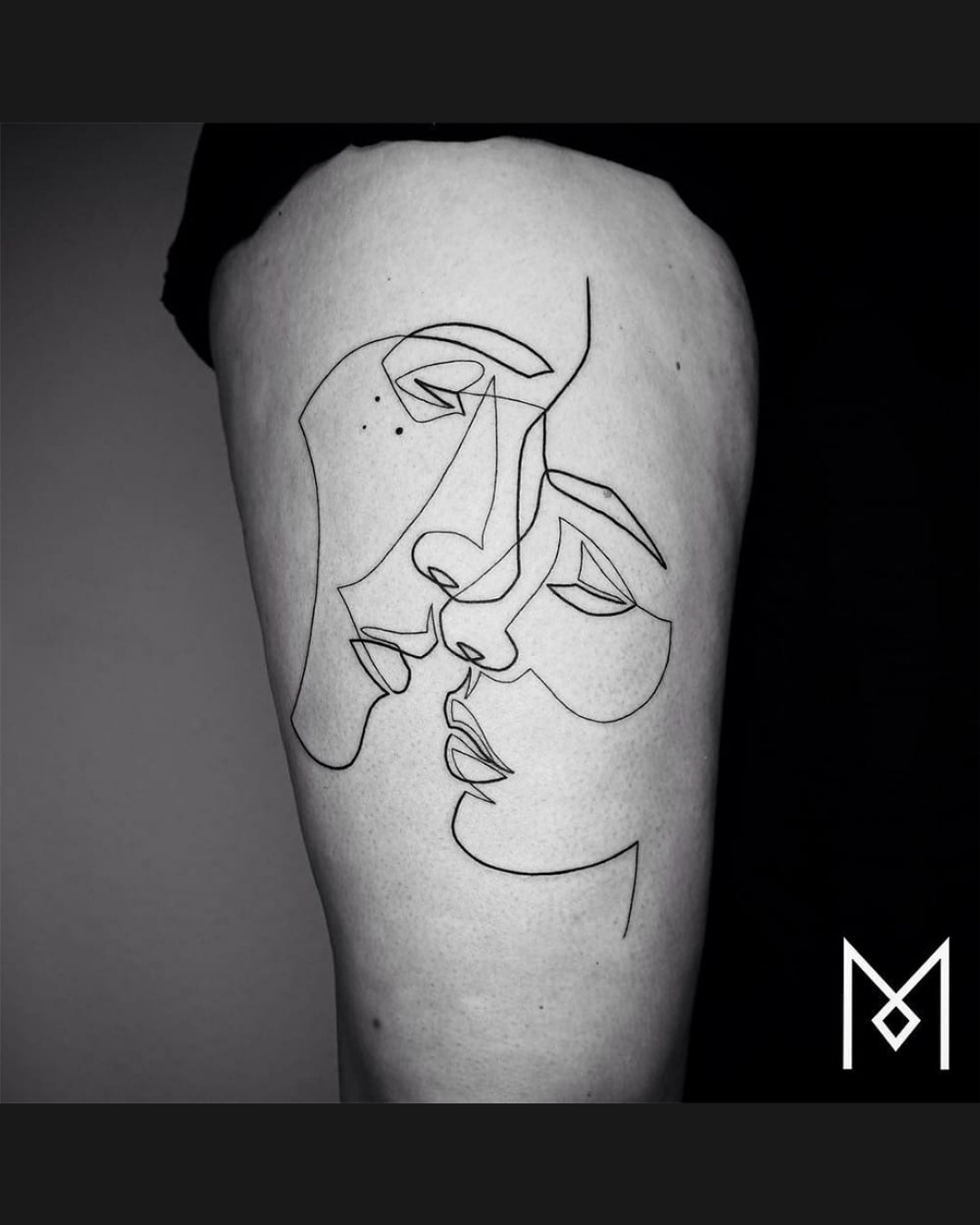
Ganji’s official portfolio describes a practice built around a single continuous line. Animals, portraits, and abstract forms all enter that constraint. The restriction gives the work its recognizable character, but it also creates a difficult design problem. Every turn has to serve the image while keeping the route alive.
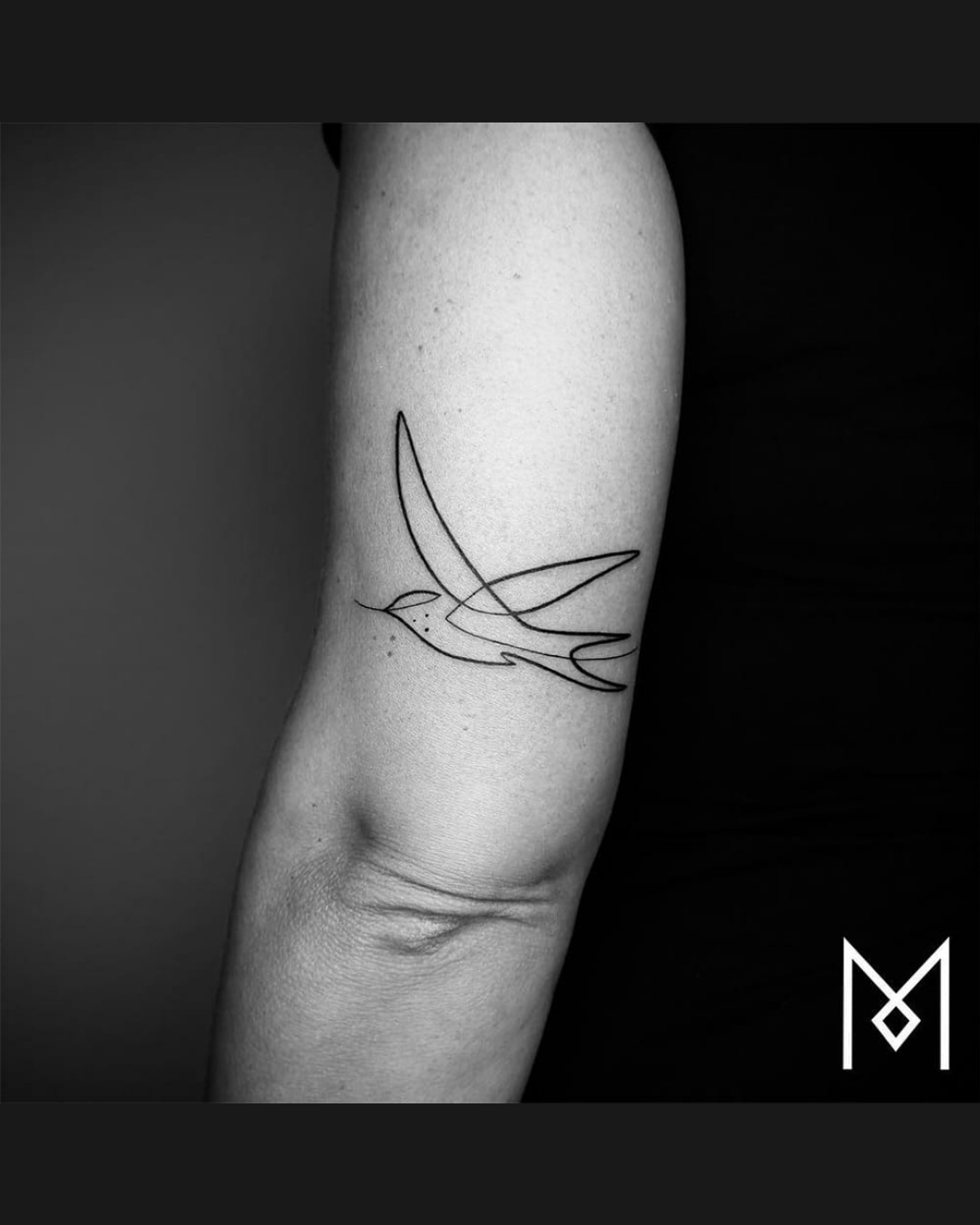
In a densely shaded tattoo, an artist has many ways to clarify a form. Here, a curve has to do more of the talking. Push it a little farther and an expression changes. Tighten an angle and a soft shape becomes alert. The apparent ease rests on decisions that have very little room to hide.
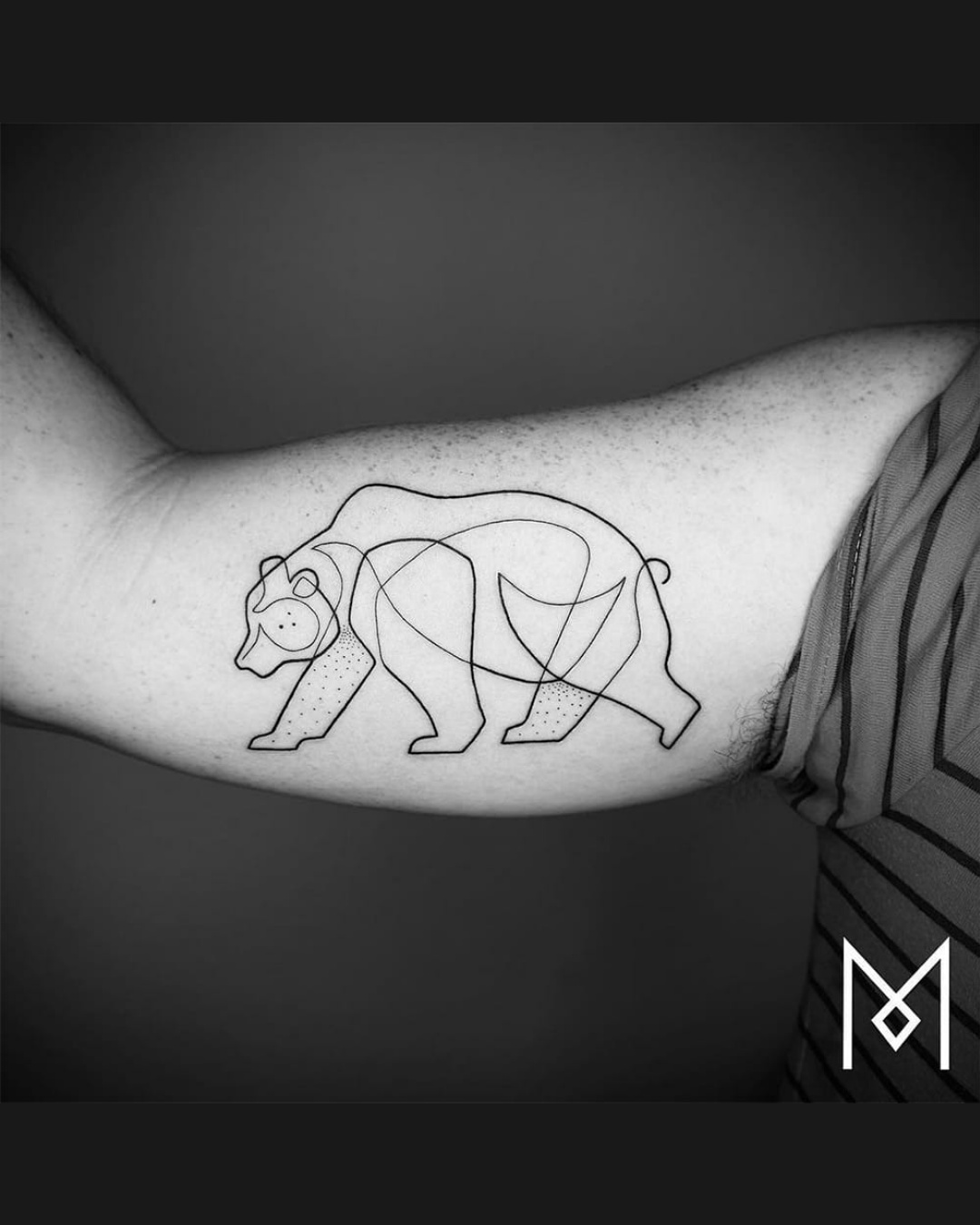
The bear tattoo in Colossal’s 2017 selection turns a rounded body and lowered head into a continuous route. Its open interior makes the economy easy to see: the drawing establishes a recognizable creature without filling its surface. Negative space carries an equal share of the composition. Untattooed skin becomes the interior of a face or the breathing room between two gestures. Because the image leaves so much open, the viewer supplies some of the connections. Recognition arrives as a small collaboration between the drawing and the person looking.
There is also a satisfying tension between stillness and motion. The finished tattoo stays fixed, yet reading it is an active experience. Your attention circles, doubles back, and moves onward. The image has something of a sentence about it: the meaning develops as you travel through the marks.
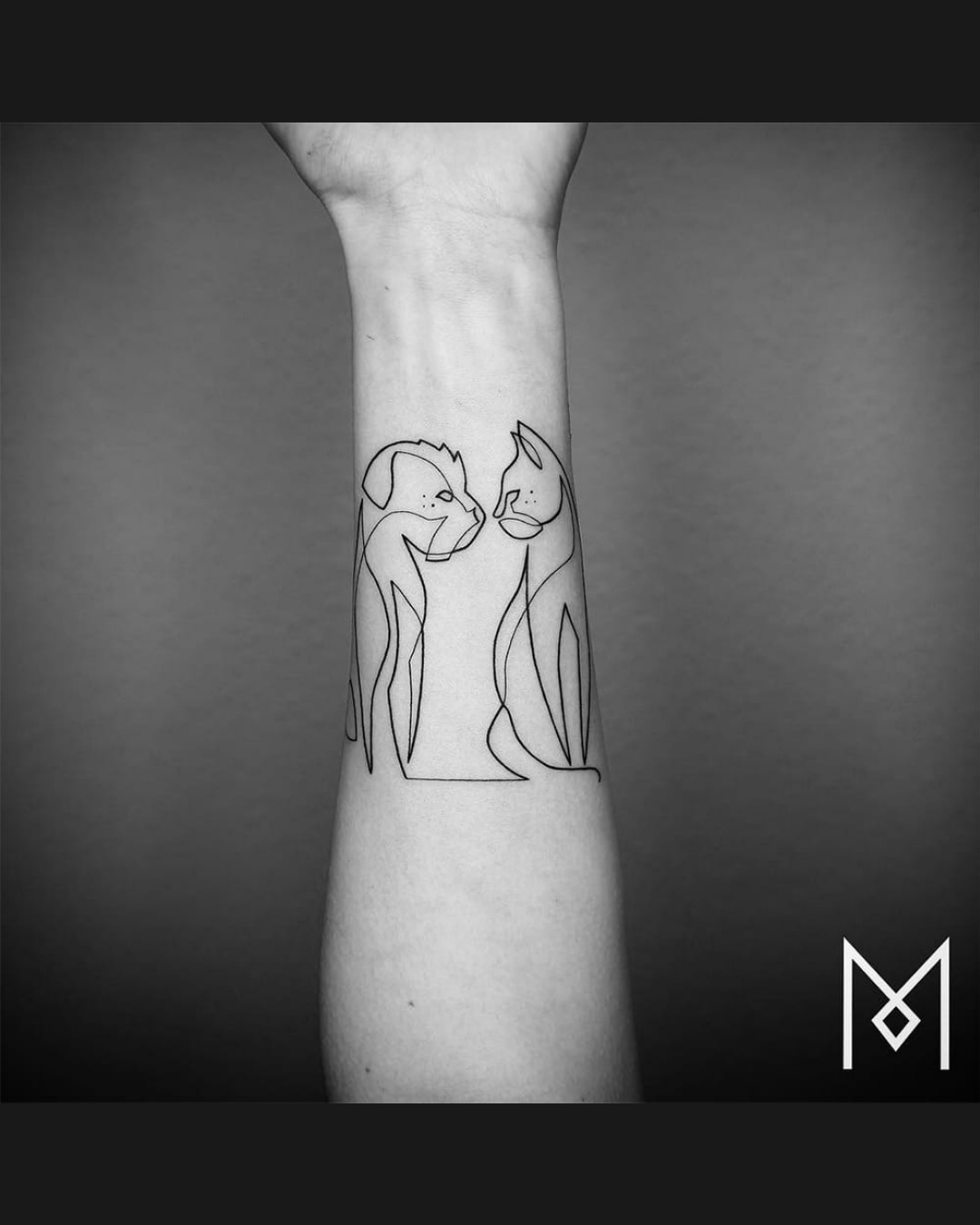
That makes placement worth considering alongside the drawing. Ganji’s booking information asks for an idea, size, and placement, and describes work made for the individual. A clean design still has to meet a moving body. Scale and orientation affect how clearly a line can be read and how naturally it belongs where it sits.
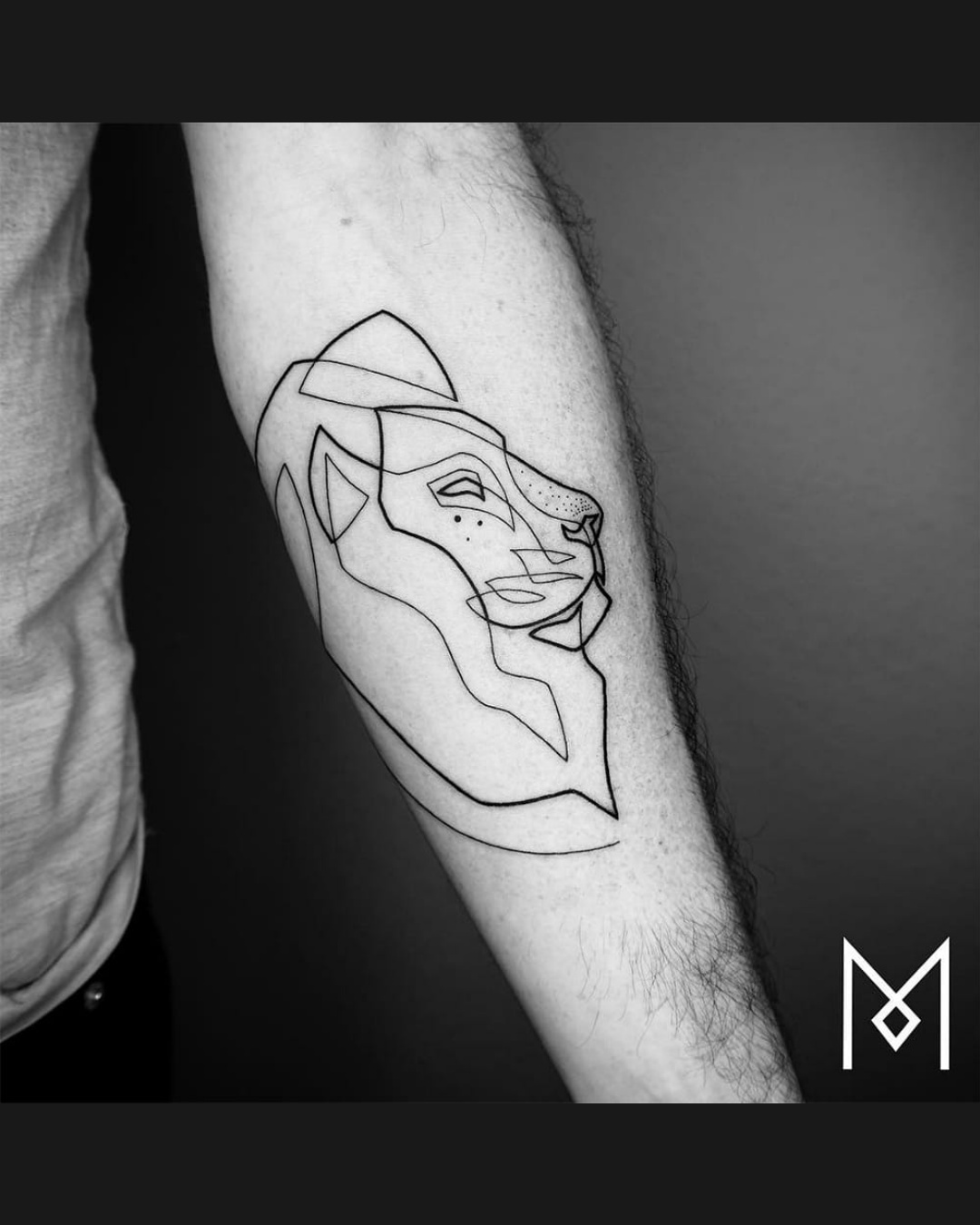
The official site also distinguishes commissioned work from a selection of free designs for personal use. Those categories deserve respect. An image appearing online is not an invitation to copy somebody else’s custom tattoo, and personal-use access does not become a commercial publishing license.
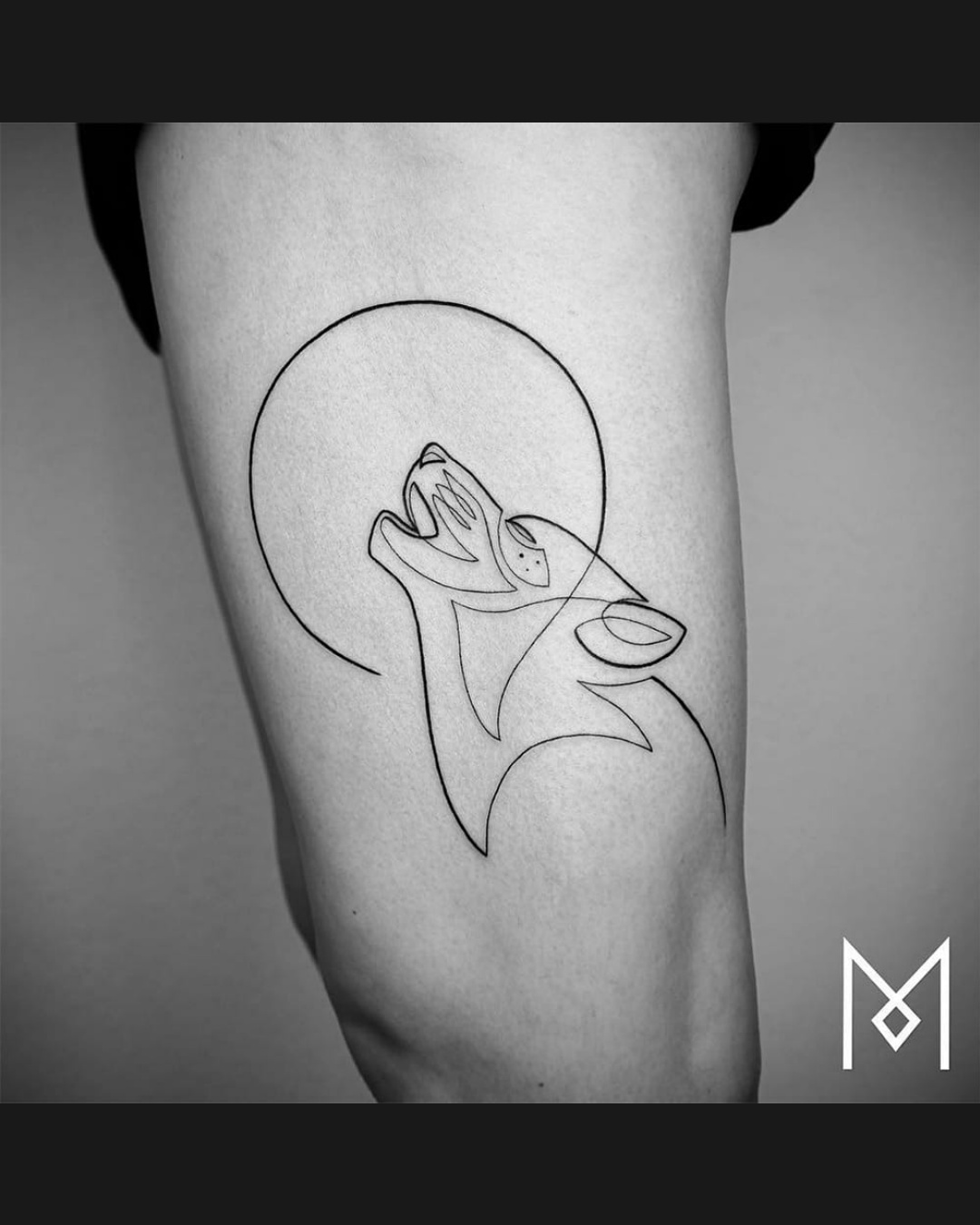
Spend a moment with this work and the modest vocabulary starts to feel expansive. One line can carry a recognizable subject, a rhythm, and a pause. Ganji makes that economy engaging by giving the viewer a simple action: begin somewhere, follow along, and see what appears.
Explore more work on Mo Ganji’s official website.