DotsToLines makes movement and open space central to the tattoo.
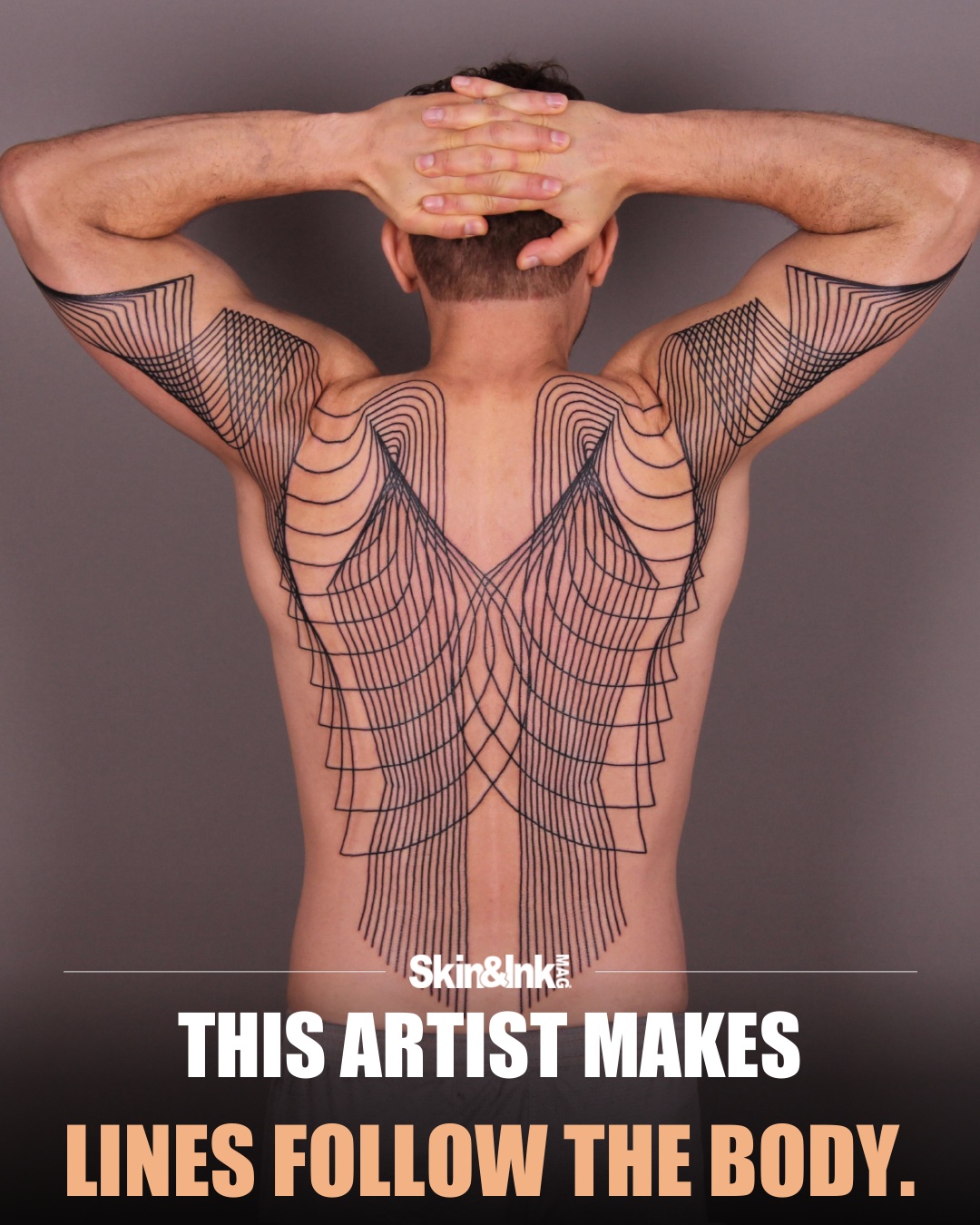
Follow one line across a shoulder and the body changes how you read it. A curve that would be simple on paper becomes something else when it turns out of sight. Chaim Machlev, the artist behind DotsToLines, builds much of his work around that relationship. The body supplies direction, volume, and movement before the first mark is made.
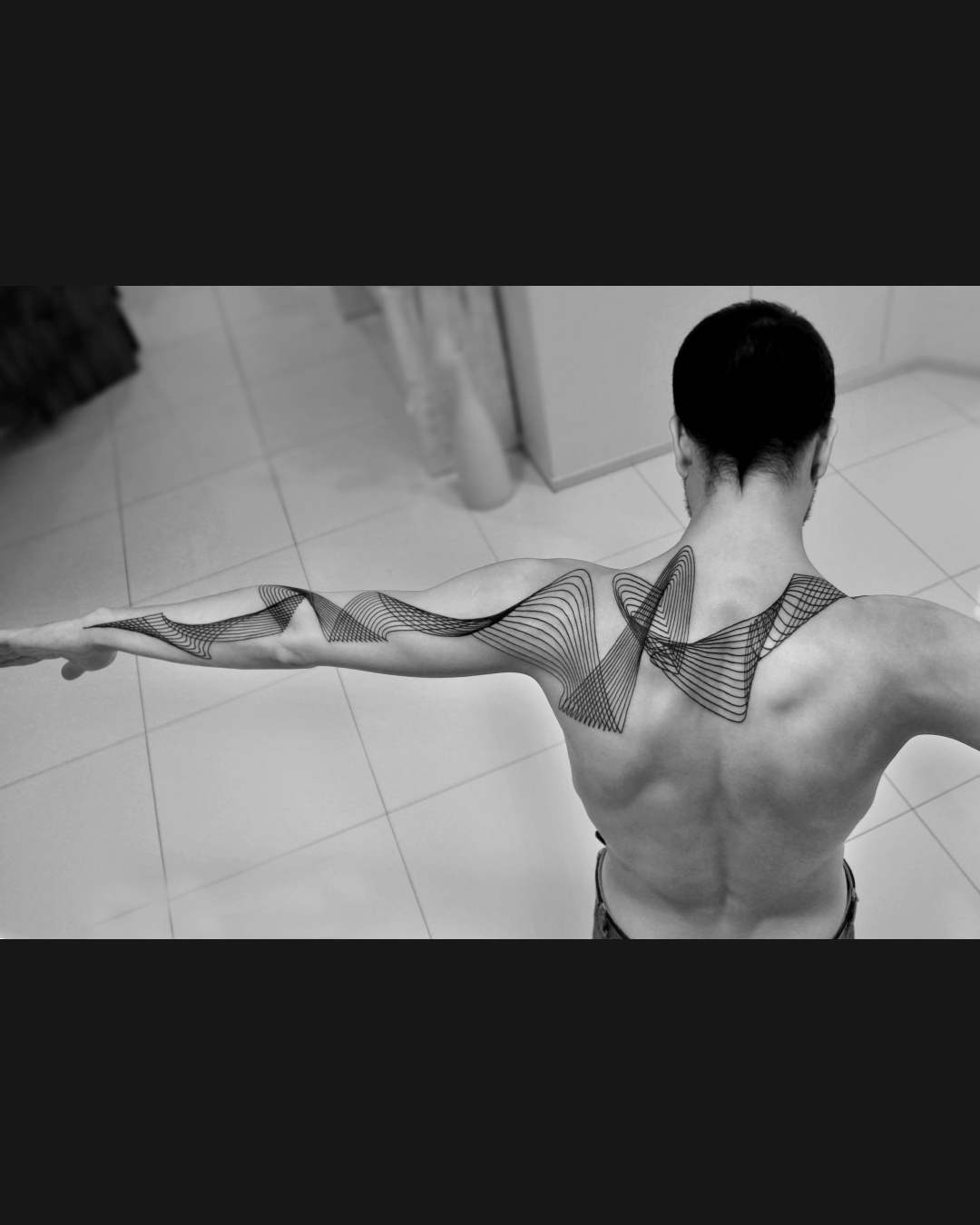
The work moves between several distinct visual approaches. Individualise emphasizes flowing lines and calligraphic gestures. Harmonise brings in mandalas and patterned geometry. Those categories offer different densities and rhythms, but they share a useful starting point: the tattoo must be understood in relation to the person wearing it.
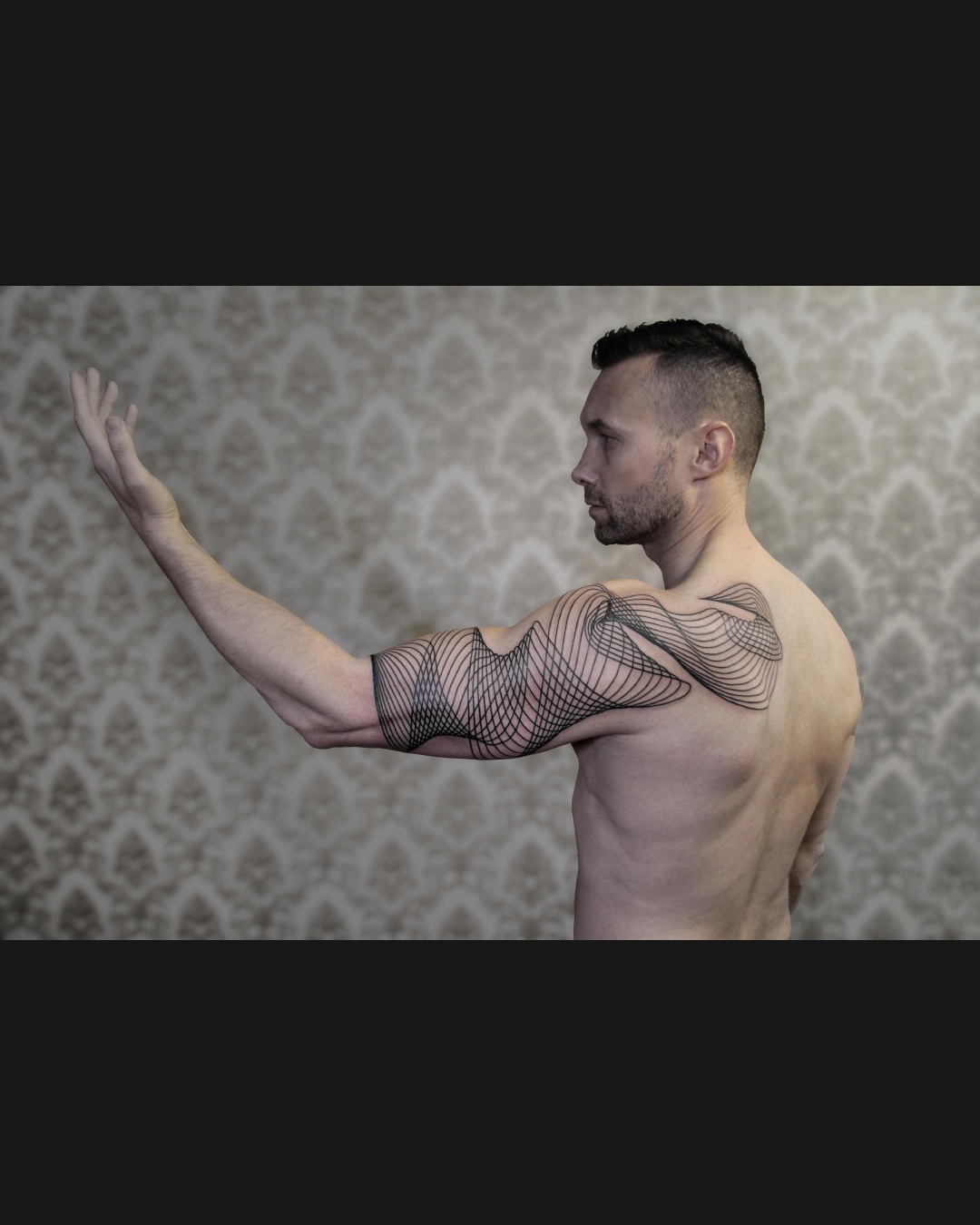
Machlev discussed that approach in a 2024 interview with notNeutral. He described designing around body structure and emphasizing movement with a limited visual vocabulary. The interview is also a reminder that apparent simplicity can require extensive consideration. When a design relies on relatively few elements, every change in spacing has more influence over the result.
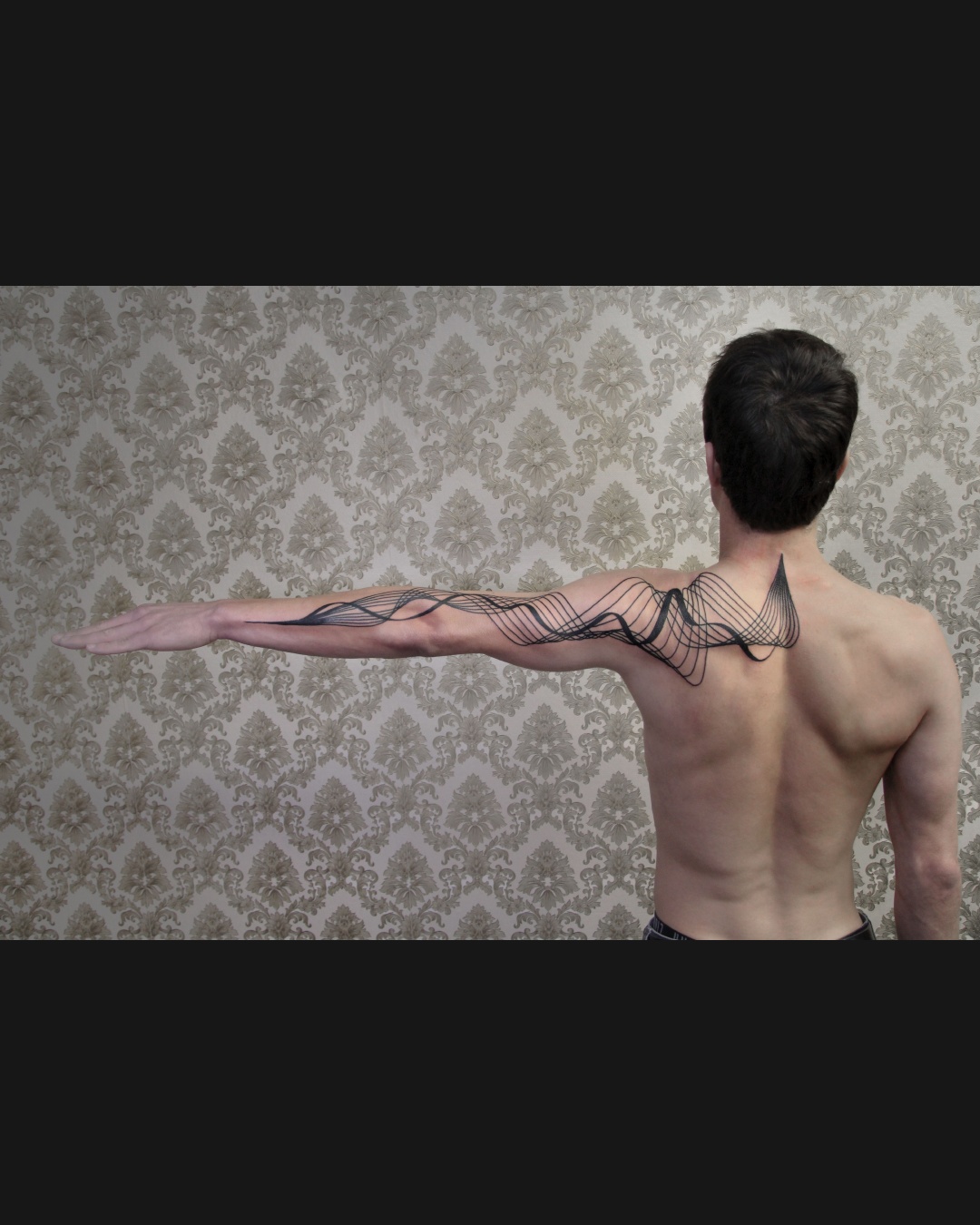
For viewers, the easiest way into this work is to watch the unmarked skin. A gap between lines can widen into a pause or narrow into a feeling of pressure. An open area can give a dense section room to register. The empty space participates in the composition, which means a close crop may hide as much as it reveals.
This is why full-placement photographs matter. A detail can show the character of a line, while a wider view shows where that line leads. A back, an arm, and a leg each give it different terrain. Looking across placements helps explain why the same general vocabulary can produce very different experiences.
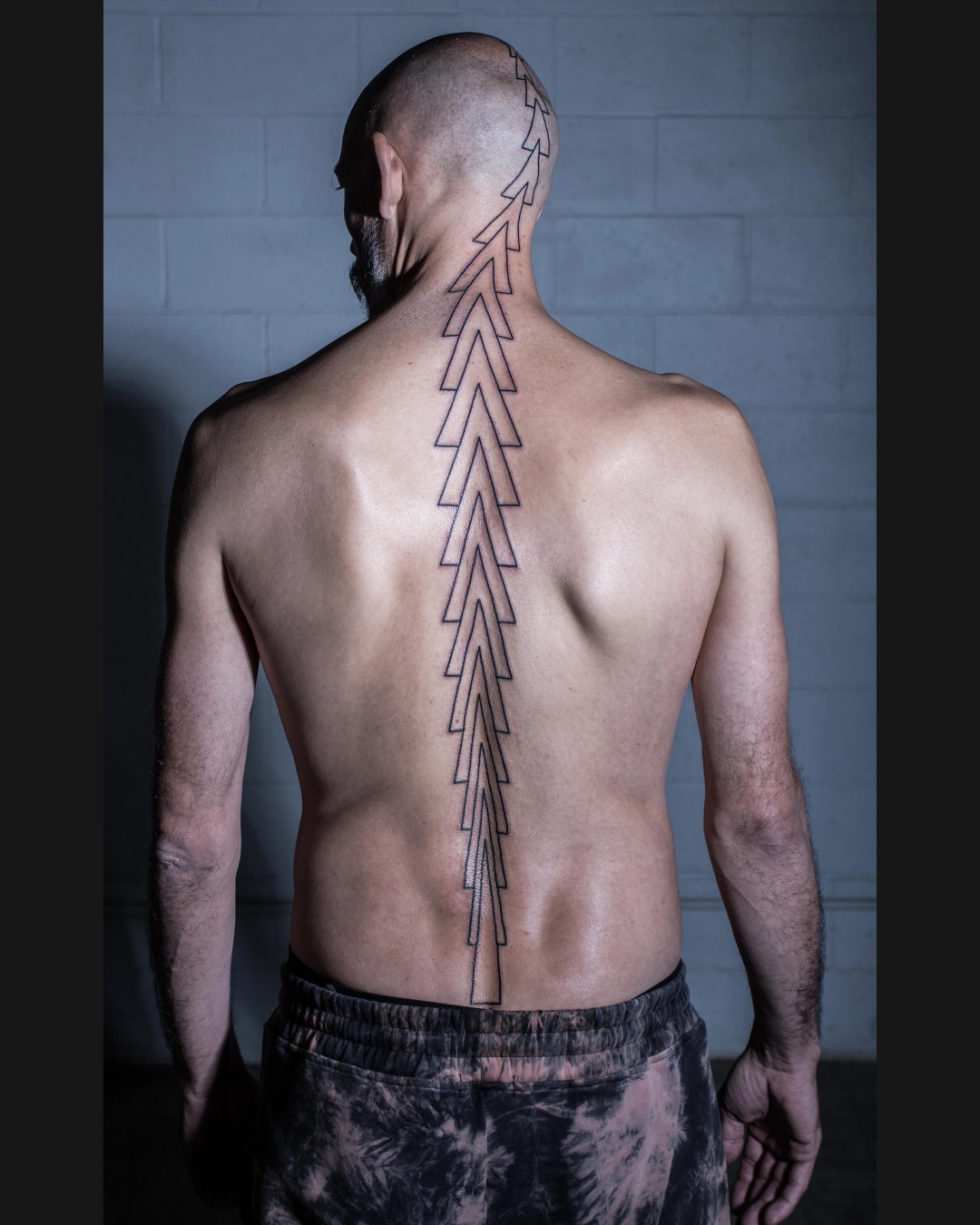
The work also invites us to loosen the demand that a tattoo must depict an object to hold someone’s attention. Direction, repetition, and interruption can be compelling on their own. A viewer may associate a flowing passage with water or a contour map, but those comparisons are ways of reading, not claims about the artist’s intended symbolism.
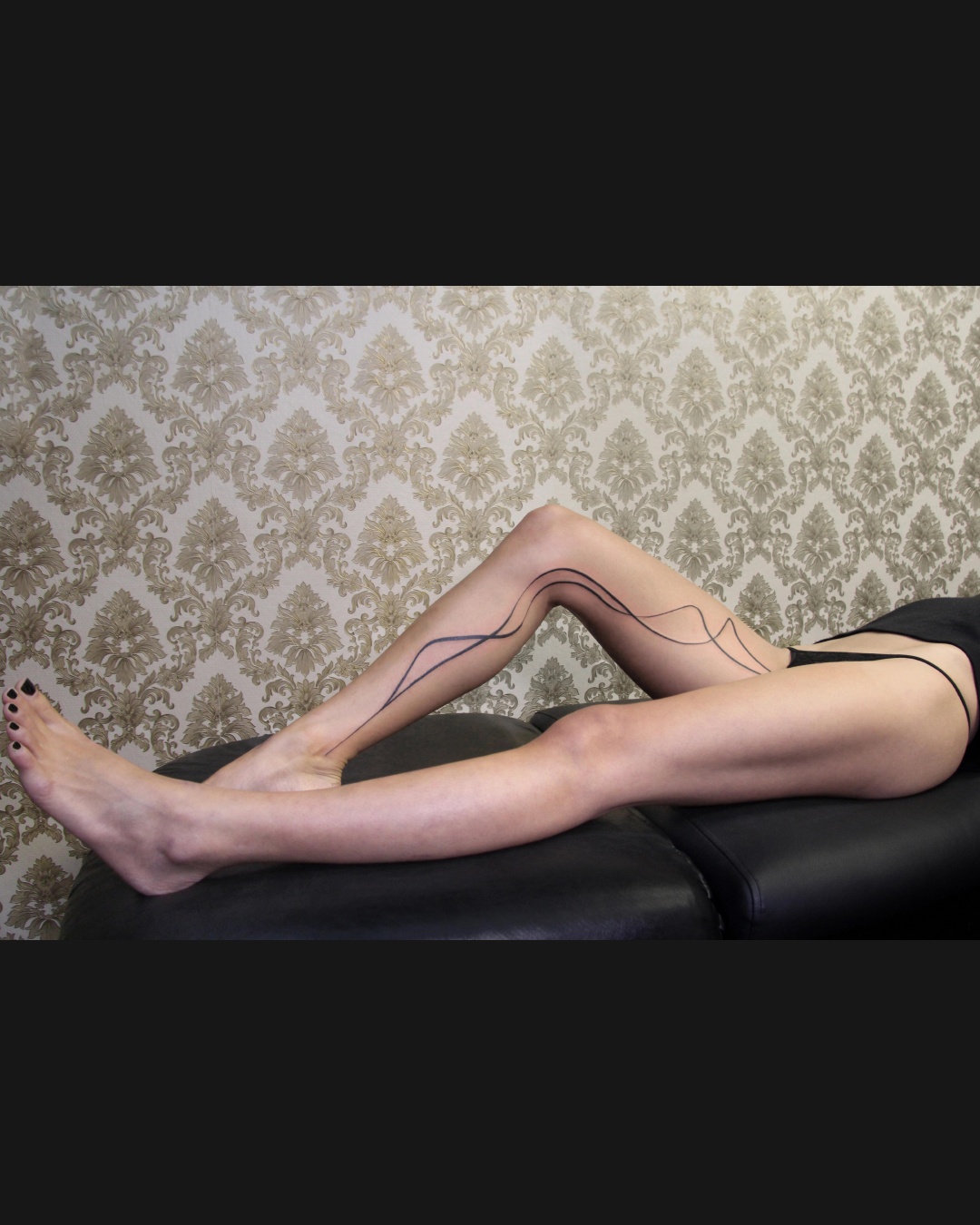
Machlev works through DotsToLines studios in Los Angeles and Berlin. Move between his spare line compositions and the denser patterned pieces, and notice how your eye changes speed. A flowing back piece offers one long passage to follow; a mandala sleeve breaks that journey into repeated forms.
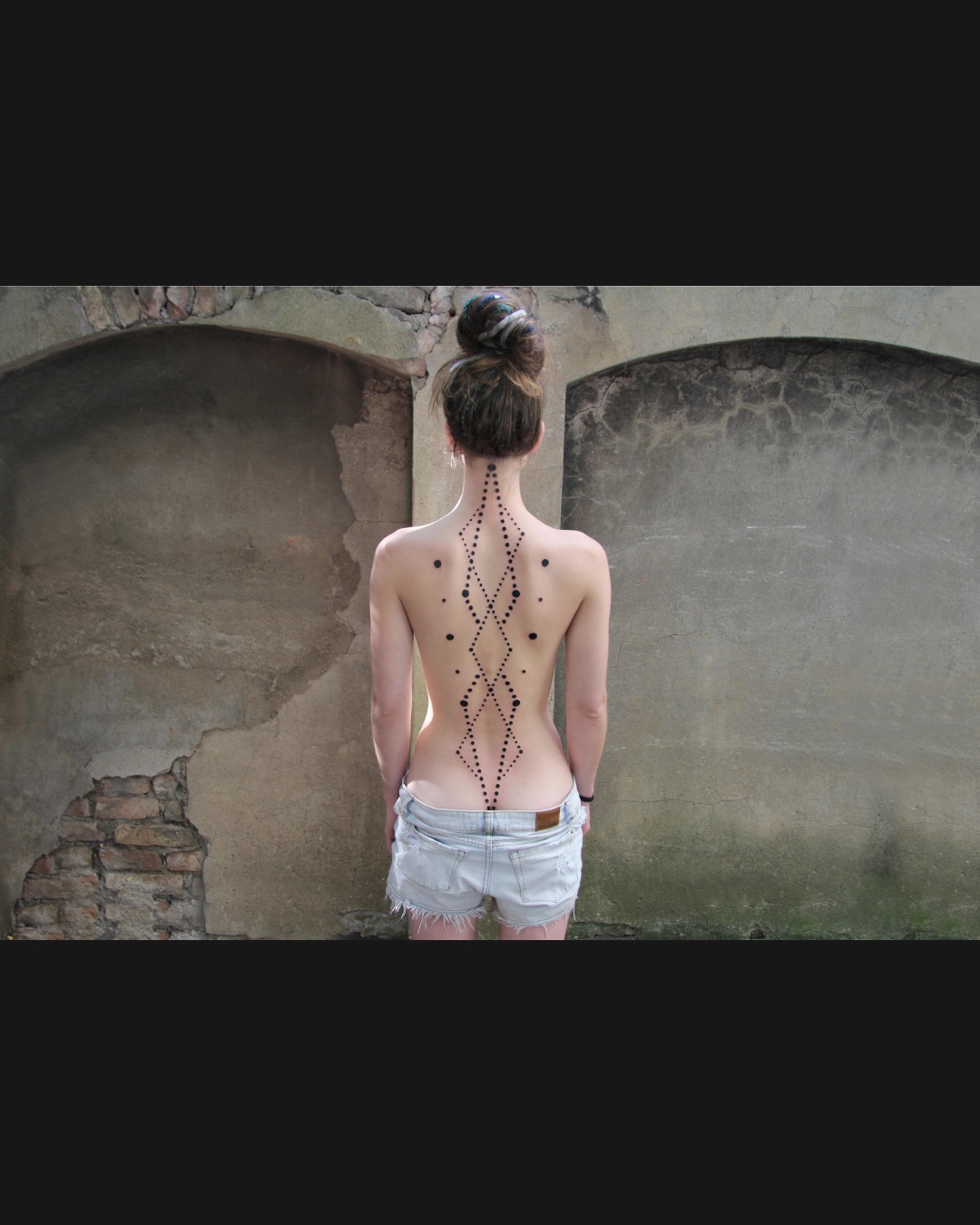
A line is a small thing until it starts organizing everything around it. In a DotsToLines tattoo, the space beside that line, the curve beneath it, and the movement carrying it forward all become part of the picture. The longer you look, the more the body seems to be doing the drawing.
Explore more work on Chaim Machlev’s official website.