Animals, insects, and diagrammatic structures turn the body into a place for close reading.
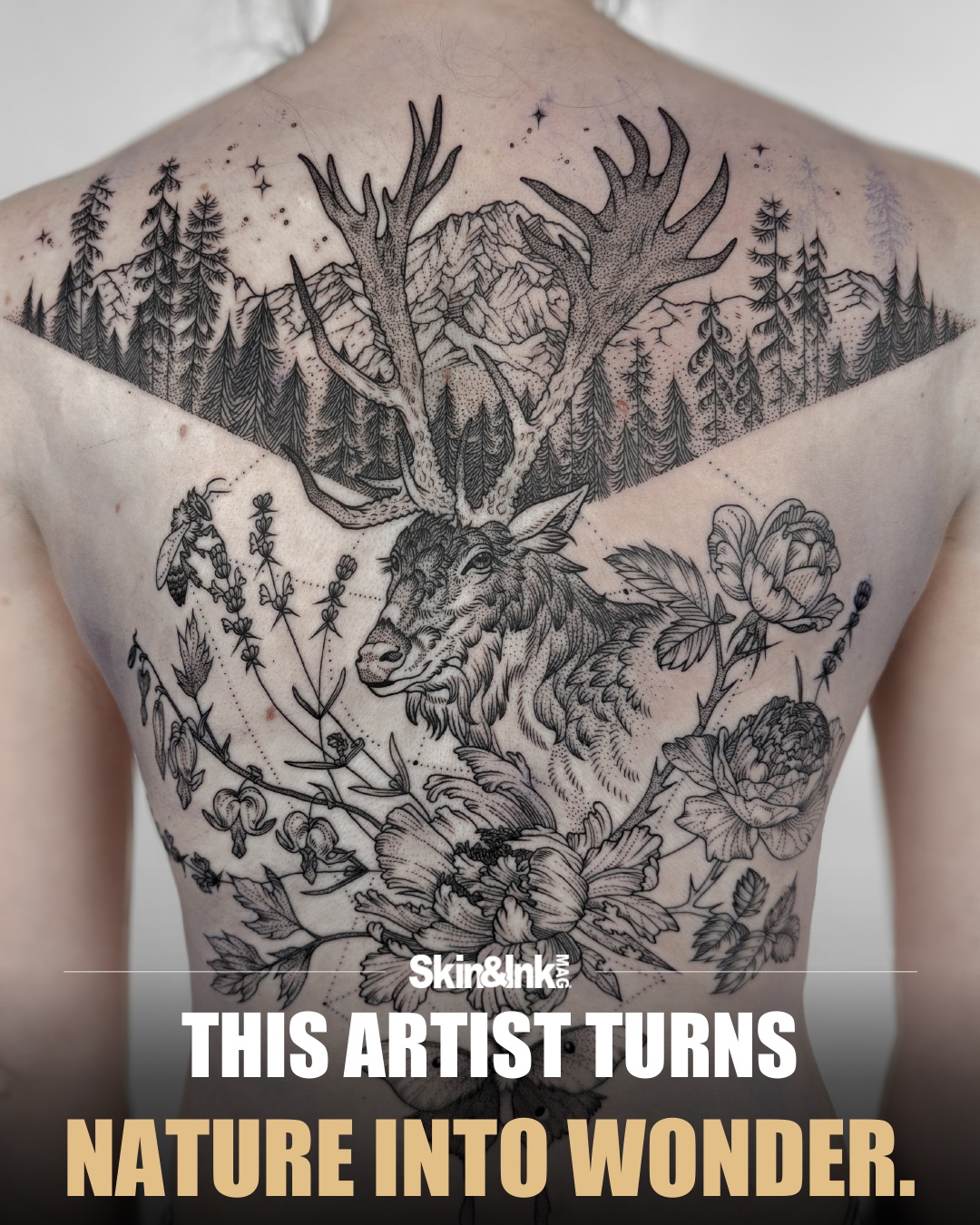
Some tattoos announce themselves in a second. Pony Reinhardt’s work rewards the next minute. An animal gives the eye something recognizable to hold, then the arrangement around it begins to complicate the picture. You can approach these compositions like pages from a field guide whose author has started asking stranger questions about the universe.
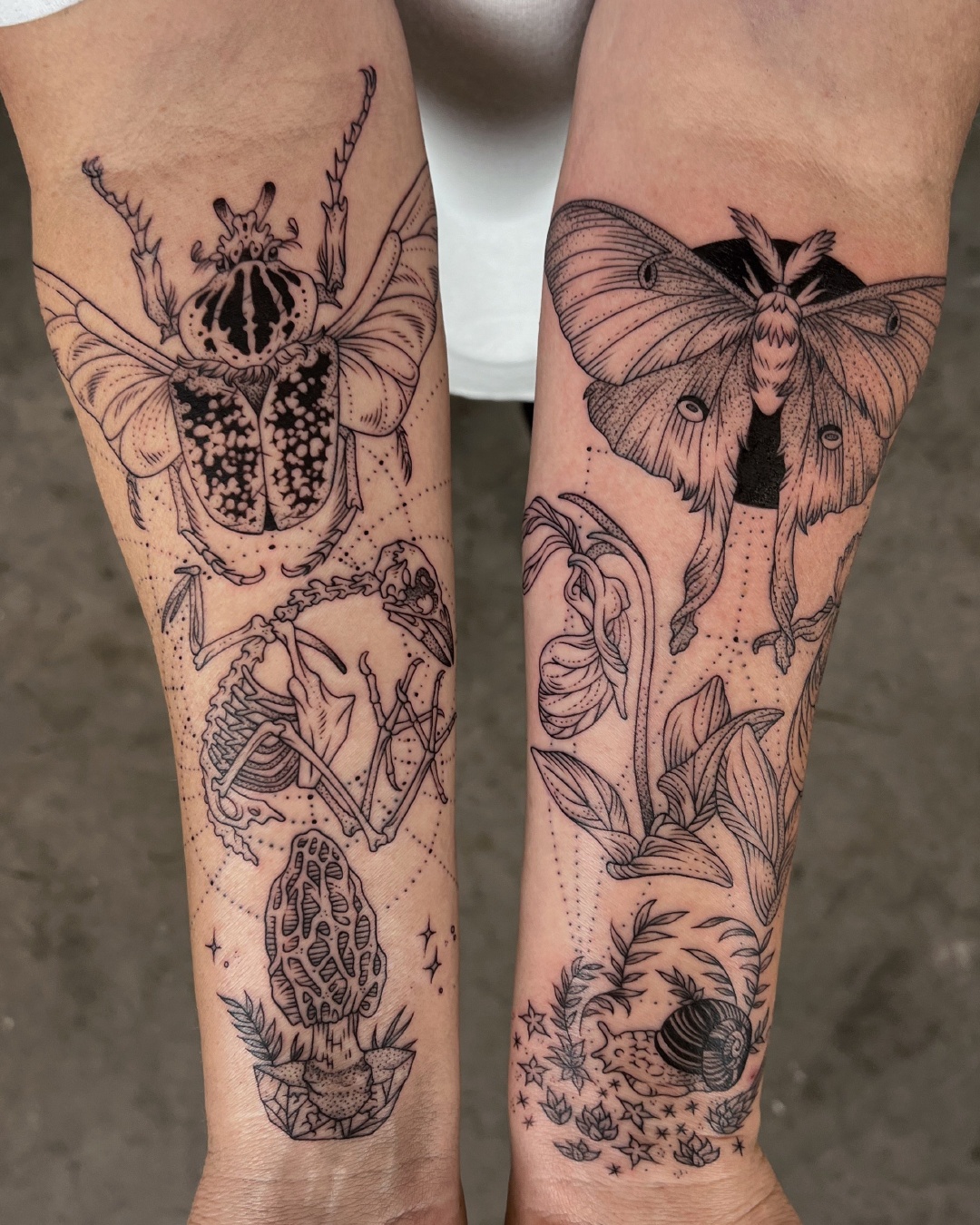
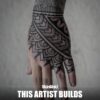
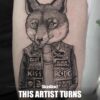
Reinhardt frames the work through ritual architecture and alchemical diagrams, linking small-scale life to larger systems. An elk occupies a back; elsewhere, a bat claims the same broad territory. A cicada becomes a chest composition, while insects and seeds find a smaller stage across hands. The subject list feels at home in a natural-history collection, but the body gives it a different kind of organization.
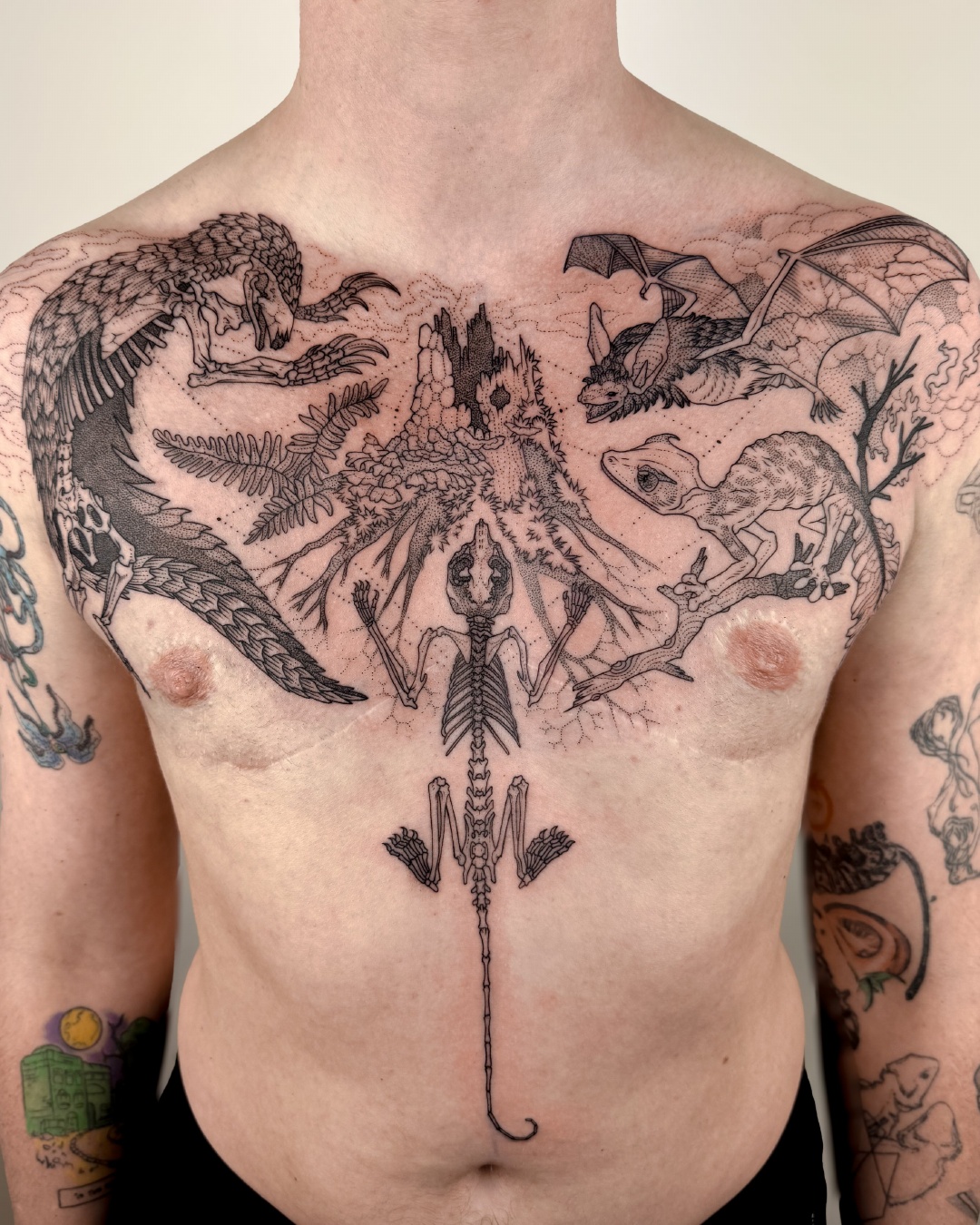
Scale is especially useful here. A hand makes an intimate stage for a small organism. A back allows a creature and its surrounding arrangement to unfold across a much broader field. As a viewer, you have to change your distance. The details invite a closer look, while the overall placement asks you to step away and see how the image occupies a person.
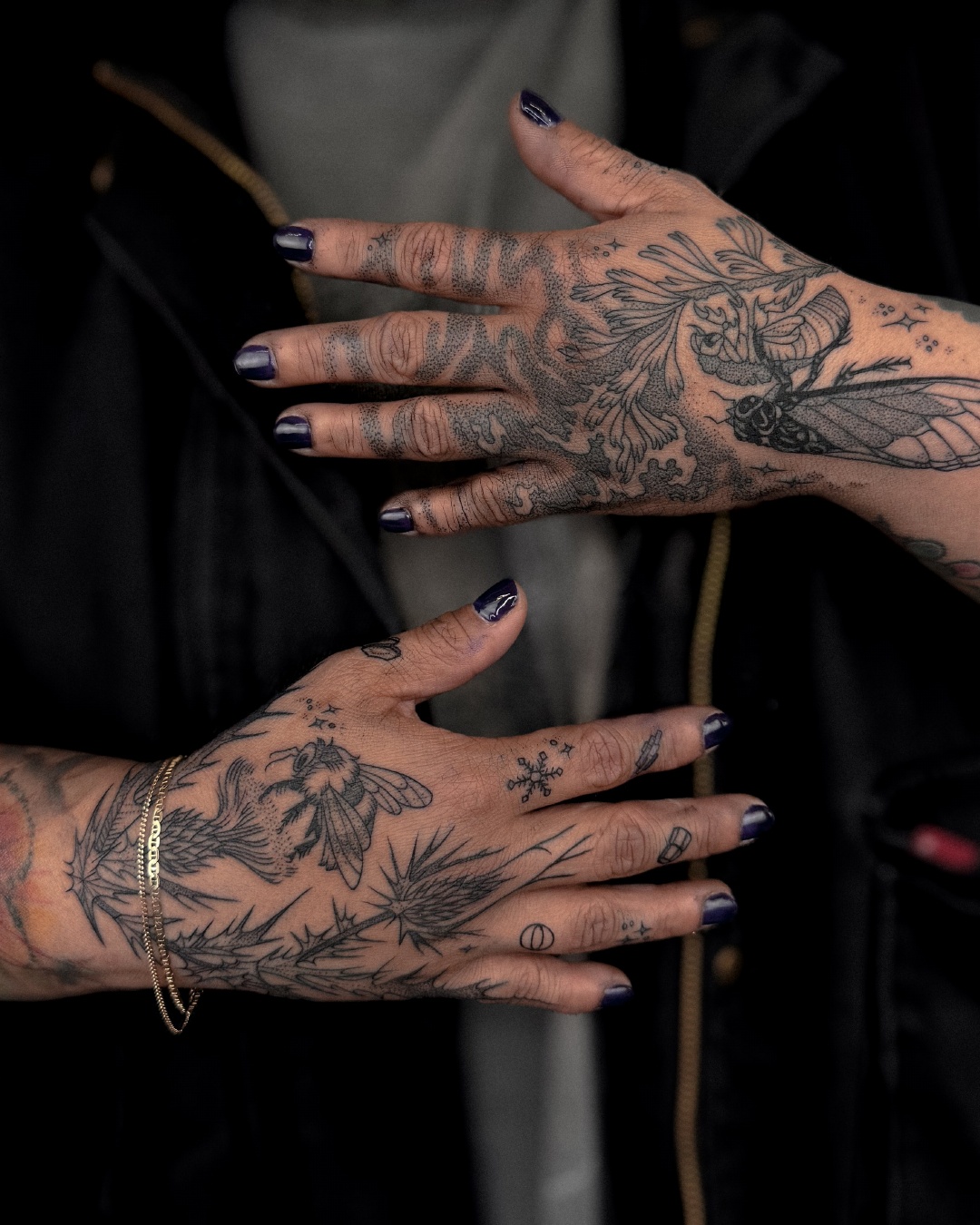
The attraction of diagrammatic art lies partly in its promise of explanation. A diagram suggests that relationships can be mapped, that one thing connects to another for a reason. Put that visual language beside an animal and it can produce a productive uncertainty. Are we seeing a specimen, an emblem, a cosmology, or a personal system whose key belongs to the wearer? The work leaves room for that question.
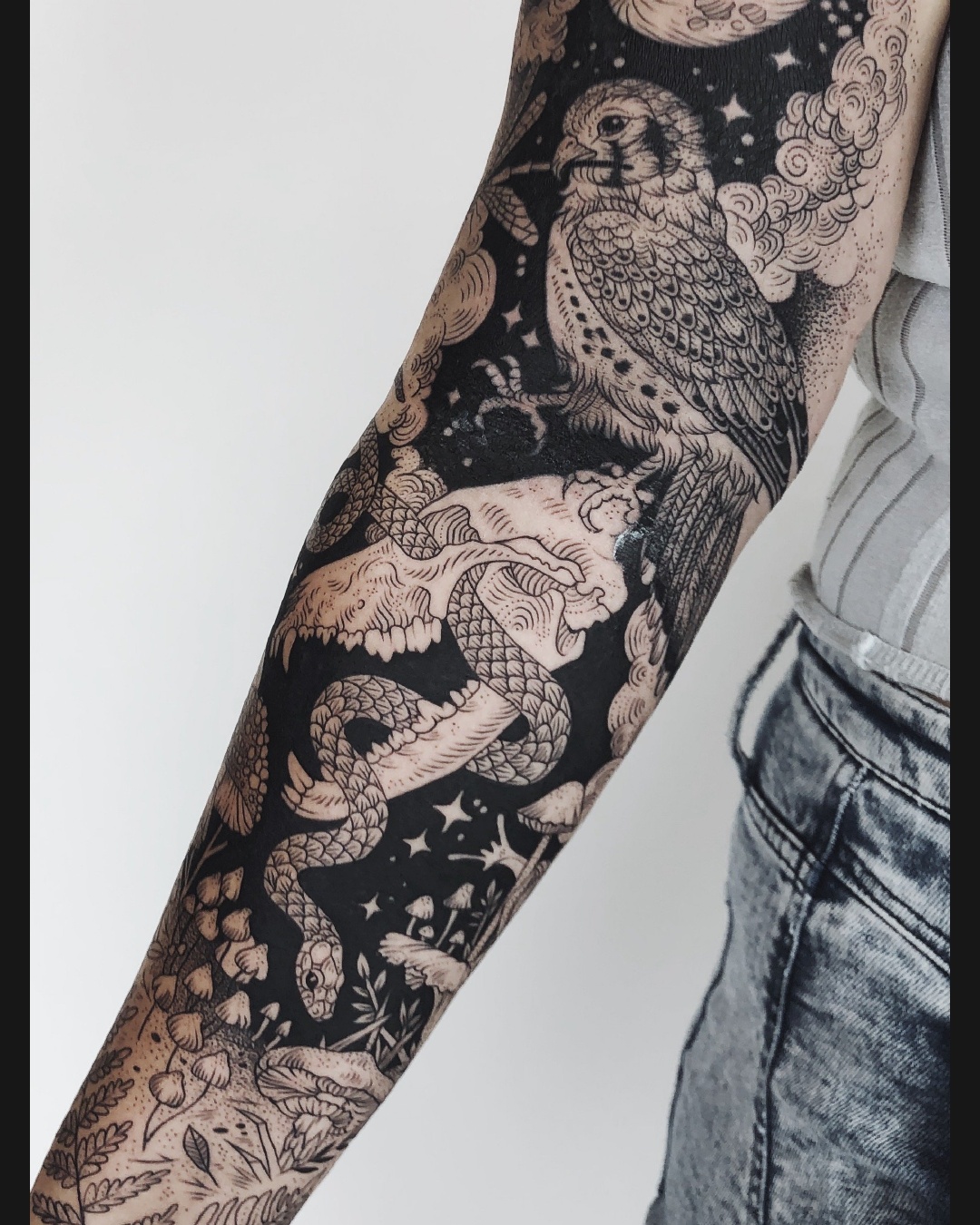
It would be easy to assign every insect a meaning and every animal a myth. That would also flatten the experience. These are commissioned tattoos on real people, and the wearer’s intention cannot be read from a photograph. The better approach is to describe the structure we can see and let private meaning remain private.
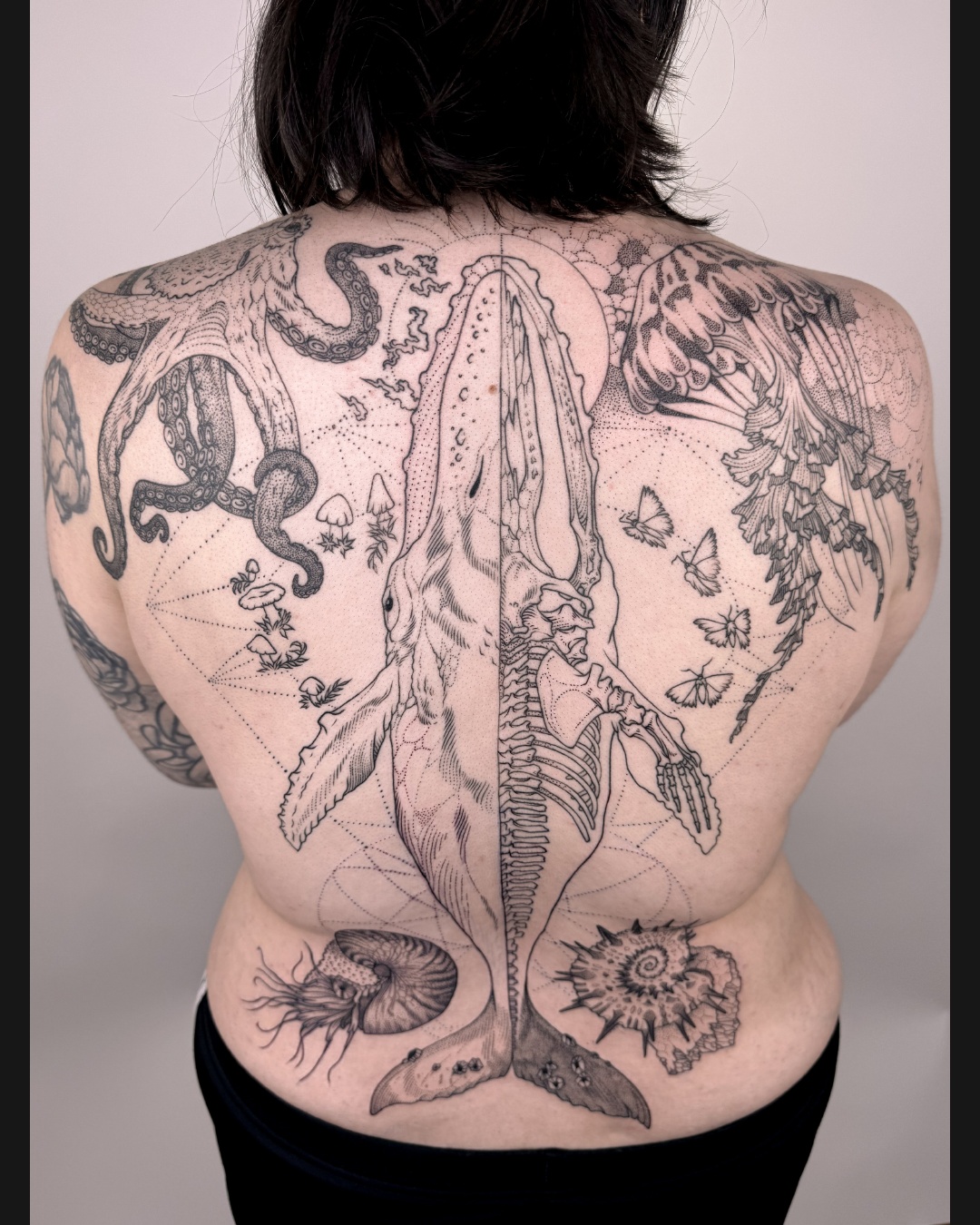
For anyone building a large tattoo project, Reinhardt’s portfolio offers a useful lesson in choosing relationships rather than collecting isolated motifs. A creature’s posture, the surrounding space, and the architecture of the placement can all carry weight. The picture works through how those decisions meet.
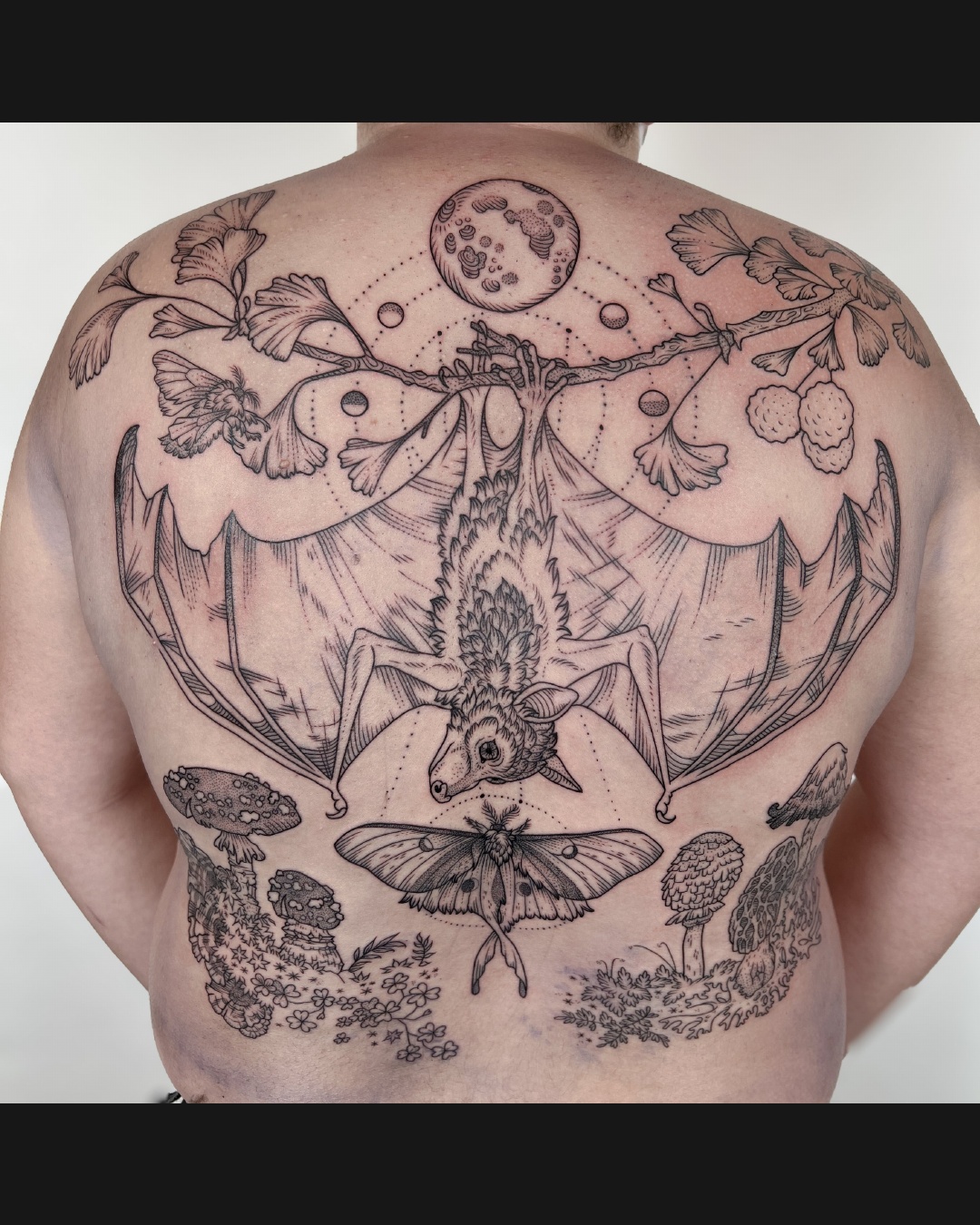
Pony Reinhardt Wulfgang shares the work at @freeorgy. Spend a little time with it. The most interesting part may be the point where recognition gives way to wondering.
Explore more work on Pony Reinhardt’s official website.