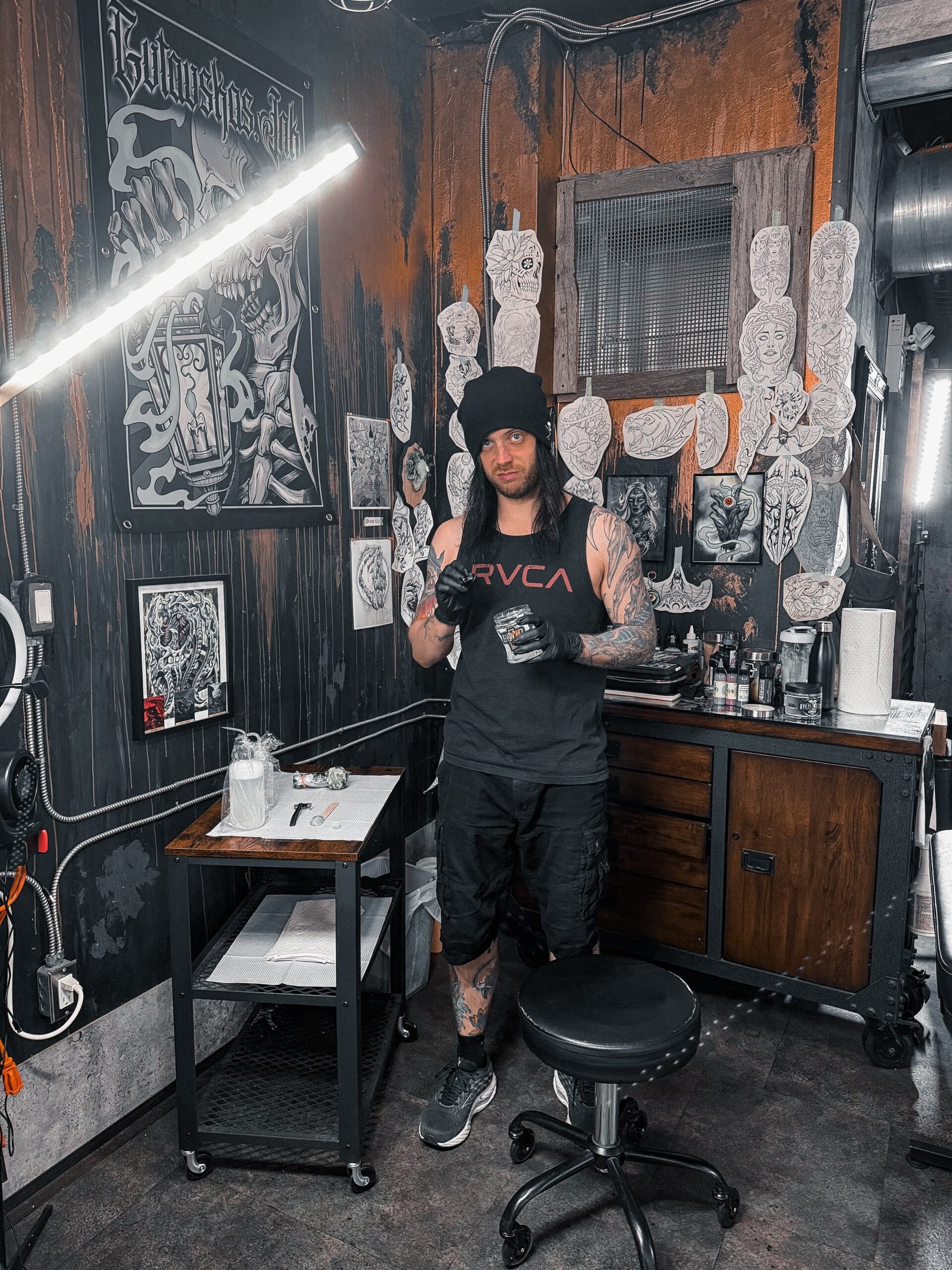
The Emotional Labor That Lives Behind the Tattoo Chair
You can see the tattoo…
You rarely see what it took to get there.
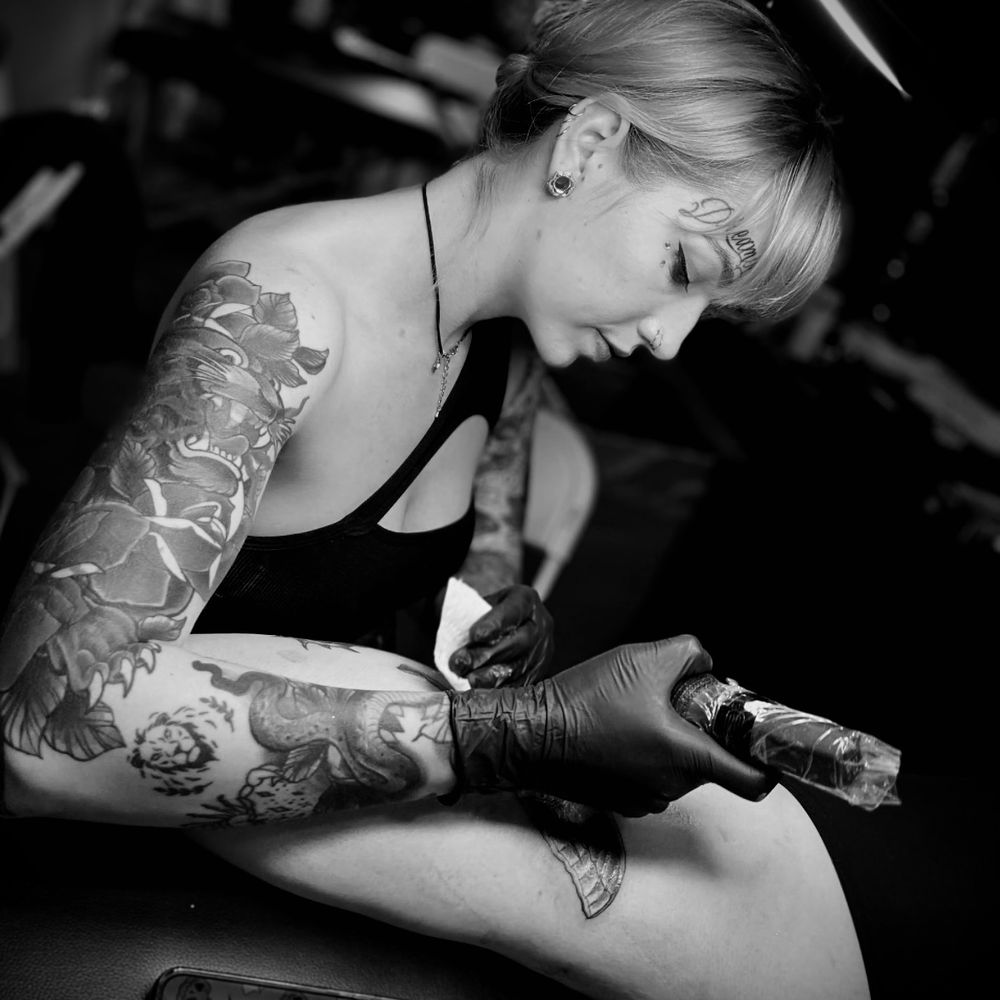
Tattoo artists are measured by what ends up on skin. Lines. Saturation. Composition. Longevity. What almost never enters the conversation is the invisible work happening alongside every tattoo…the emotional awareness, the constant calibration of human energy, the responsibility of holding space for people during moments that often carry more weight than they expected.
Tattooing is not only a technical craft. It is prolonged proximity to vulnerability. Over time, that proximity leaves a mark.
“Tattooing isn’t just about ink. It’s about being present when people are most exposed.”
Where the Work Actually Begins
A tattoo session doesn’t start when the machine turns on.
It starts the moment a client walks through the door.
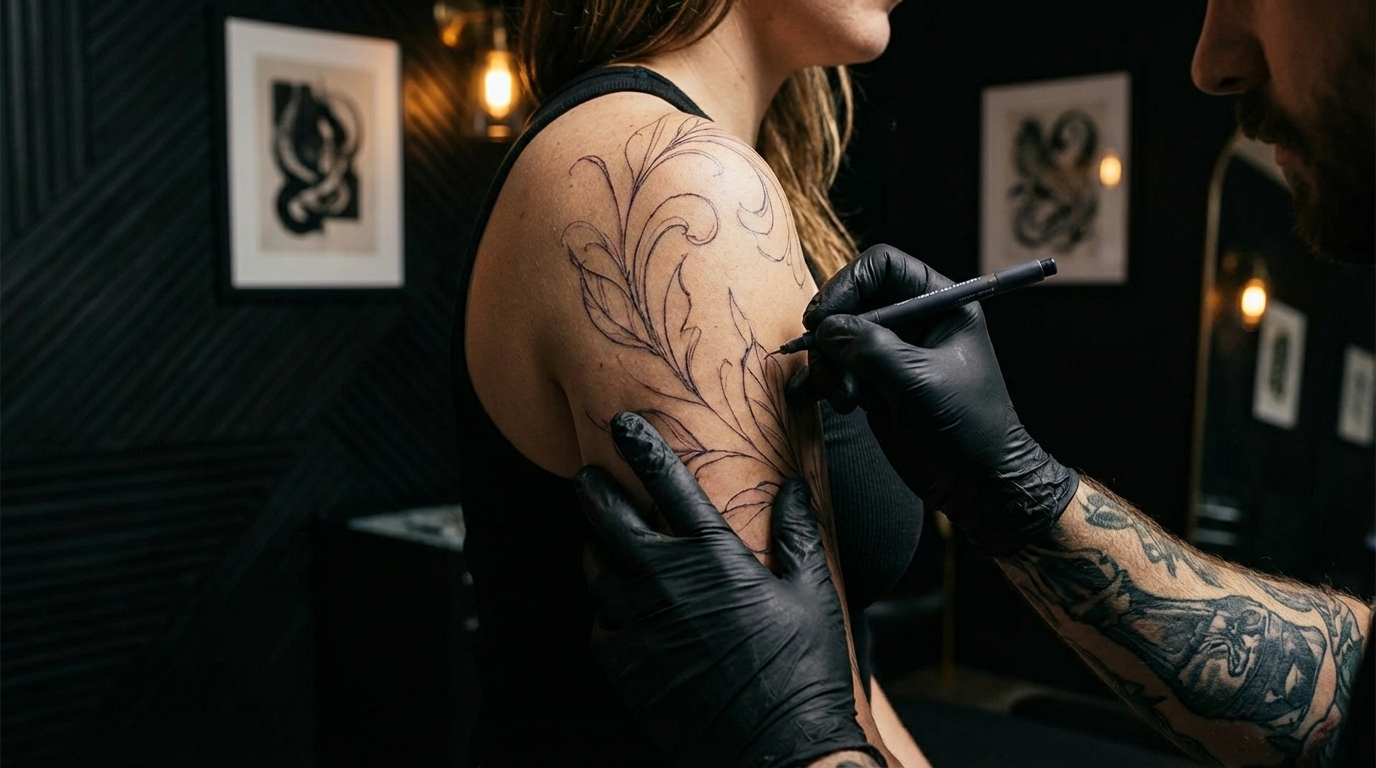
Before a stencil is placed, an artist is already reading the room. Body language. Tone. Nervous habits. Silence. The decision a client is making in that moment isn’t about design…it’s about trust.
Do I feel safe here?
Am I being rushed?
Is this person paying attention?
Artists answer those questions without words. Through posture. Through listening. Through restraint.
This is emotional labor, even if the industry rarely names it as such.
The Chair as a Confessional
Something shifts once a client sits down.
Phones disappear.
Time slows.
Defenses soften.
Stories surface that weren’t planned. Grief. Divorce. Addiction. Recovery. Loss. Identity. Tattooers become witnesses by default. Not because they ask, but because the setting invites honesty.
Some clients talk to distract themselves from pain. Others speak because they’ve been holding something alone for too long.
The artist listens… and keeps working.
“People don’t just trust you with their skin. They trust you with moments they haven’t said out loud yet.”
Holding Space Without Stealing It
Every client requires a different kind of presence.
Some need reassurance and grounding.
Some need humor and distraction.
Some need quiet and distance.
Knowing which is required isn’t instinct…it’s learned. Artists must stay emotionally available without becoming the focus of the experience. The session is not about the artist’s story. It’s about guiding someone through theirs.
When done well, clients leave lighter.
When done poorly, the tattoo never feels right… no matter how good it looks.
The Weight That Builds Over Time
One heavy conversation doesn’t break an artist.
Hundreds can.
Memorial tattoos. Trauma disclosed mid-session. Life-changing moments compressed into hours of close physical proximity. Tattooers absorb this quietly, often without time to process before the next appointment begins.
The impact rarely shows up dramatically.
It looks like fatigue that sleep doesn’t fix.
Like irritability that feels unfamiliar.
Like creative numbness mistaken for burnout or boredom.
Many artists blame their bodies, their schedules, or the industry itself… without realizing the emotional side of the work is what’s draining them.
“Burnout doesn’t always come from doing too much. Sometimes it comes from carrying too much.”
Why Burnout Isn’t Just Physical
Tattoo burnout is often framed as physical exhaustion. Long hours. Sore backs. Repetitive strain. Those things matter, but they’re only half the story.
Emotional burnout is slower and quieter. Constant empathy without recovery erodes energy faster than physical labor ever could. Artists give attention, patience, and care session after session. Without boundaries, generosity turns into depletion.
And tattoo culture hasn’t always made room for that conversation.
The Myth of Endless Toughness
Tattooing has long rewarded endurance.
Stay booked.
Push through.
Don’t complain.
That mentality keeps studios running, but it costs artists over time. Toughness without reflection leads to numbness. Passion turns mechanical. Tattooing becomes something to survive instead of something to engage with.
Artists who last learn a different definition of strength.
“Resilience isn’t ignoring the weight. It’s knowing how to carry it without letting it crush you.”
Boundaries as Professional Infrastructure
Boundaries aren’t weakness.
They’re structure.
They protect attention.
They preserve empathy.
They allow artists to remain present instead of depleted.
This might mean limiting session lengths, spacing emotionally heavy work, or acknowledging when rest is necessary. These choices don’t compromise professionalism. They sustain it.
Artists who respect their own limits create better work. They listen more clearly. They decide more thoughtfully. They last longer.
What Clients Rarely See
Clients remember how a tattoo made them feel.
They may never see the emotional calibration, the restraint, or the quiet processing that happens after the shop lights go off. That invisibility isn’t a failure…it’s part of the role.
Tattoo artists don’t just apply ink.
They hold moments.
They absorb stories.
Over time, those moments shape the artist as much as the artist shapes the work.
The tattoo stays on skin.
The weight stays with the artist.
Recognizing the artist no one sees doesn’t diminish tattooing. It deepens our understanding of it. This craft is not only about what is created…it’s about what is carried, quietly, session after session.